24:49FRPlt 5393 words
Union Pacific Starts Battery-Electric Locomotive Tests in California
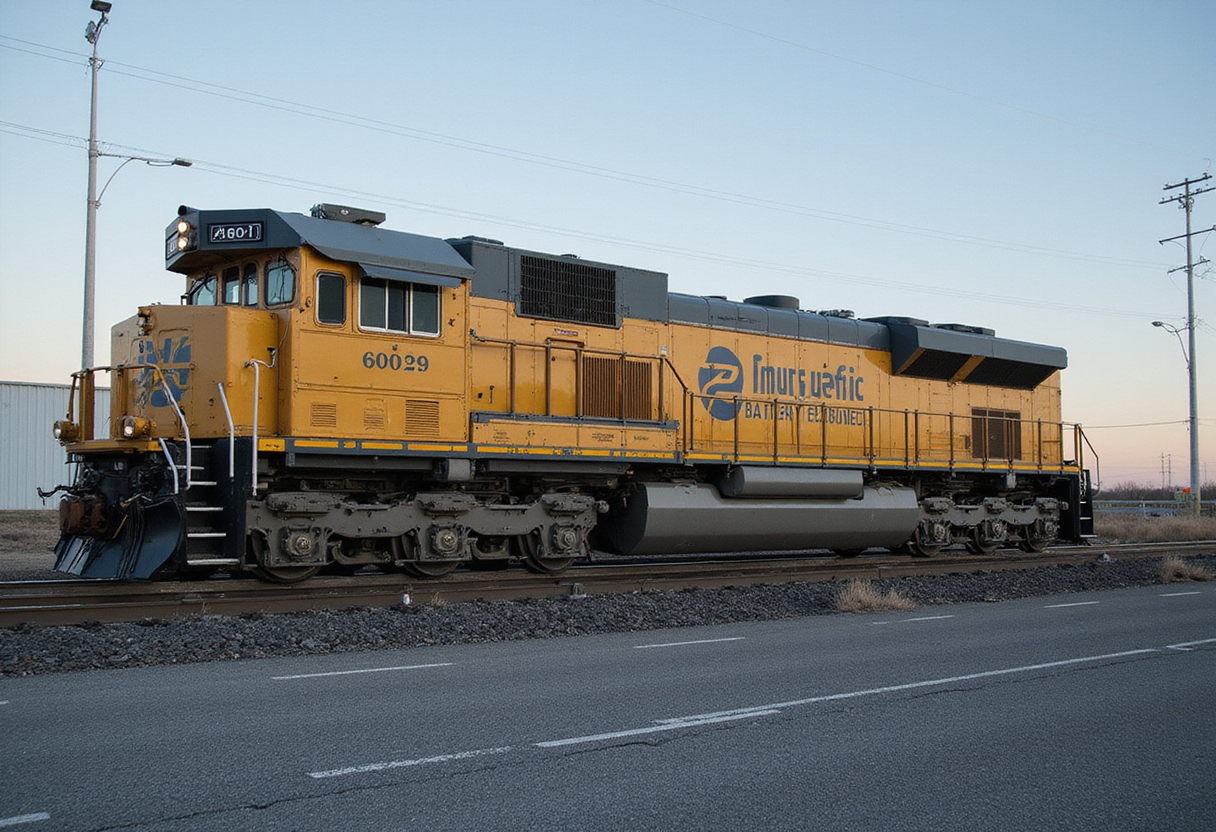
Union Pacific has begun testing battery-electric locomotives in California, marking the shift from pilot announcements to live evaluation on its freight network.
· 2 min journey
Calling at
- Union Pacific has started testing battery-electric locomotives in California.
- The testing moves the Class I railroad beyond announcements into live network evaluation.
- California is the testing jurisdiction, a state with the strongest US regulatory push for zero-emission rail.
- No performance results, locomotive counts, or deployment timeline have been published yet.
Union Pacific has begun testing battery-electric locomotives in California, moving one of the largest US freight railroads a step beyond pilot announcements and into live evaluation on its network.
The railroad confirmed the start of testing in an announcement reported by Railway-News. The testing is taking place in California, a state whose regulators and emissions rules have pushed freight operators toward zero-emission traction technology.
Why battery traction matters for a Class I freight railroad
Battery-electric locomotives replace or supplement diesel power with onboard energy storage, cutting exhaust emissions and potentially reducing fuel and maintenance costs. For a network of Union Pacific's scale, the operational questions are concrete: how far a charged locomotive can haul tonnage, how quickly batteries recharge between duty cycles, and how the technology behaves in daily freight service rather than under laboratory conditions.
Field testing in California lets the railroad measure those parameters in real operating conditions — terrain, weather, and train weights included — before committing to fleet-level orders.
What the tests can establish
For Union Pacific, the testing programme serves several practical purposes:
- Verify range and power delivery under freight loads, not just specifications supplied by manufacturers
- Measure charging time and infrastructure requirements at yards and terminals
- Assess battery performance over repeated duty cycles
- Evaluate how battery locomotives integrate with existing diesel fleets during transition
Supplier claims about battery performance routinely exceed what railroads record in service. Independent testing by the operator is the standard check before capital decisions, and Union Pacific's move signals that its evaluation has reached that stage.
California as the testing ground
California has positioned itself as the leading US market for zero-emission rail technology, with state policy pushing freight railroads toward cleaner traction. Testing there places Union Pacific's programme in the jurisdiction where regulatory pressure — and potential funding support — for battery-electric freight traction is strongest in the United States.
The state has also been the site of earlier zero-emission locomotive demonstrations by other operators, giving regulators and suppliers a growing body of comparative field data.
What comes next
Union Pacific has not yet published detailed results from the California tests, including performance figures, the number of locomotives involved, or a timeline for wider deployment. Those measurements will determine whether battery-electric traction moves from testing into planned fleet integration on the railroad's network.
via Google News: Rolling stock (Source)
More from Olivia Hart
Show full bio
Market editor covering industry trends and analytics at Mainline Report.
292 articles
Connecting services · Related articles
- 06:38
Union Pacific starts battery-electric locomotive tests in California
- 24:59
Union Pacific takes delivery of first Wabtec FLXdrive battery locomotives
- 24:44
Railway Age Updates Its Operating-Ratio Analysis of Union Pacific
- 12:35
Union Pacific Calls Its Own Numbers: Moving More With Less
- 11:23
Union Pacific Points to Data-Driven Track Inspections