15:09ROPlt 11613 words
Lokaltog picks Stadler RS ZERO for Copenhagen's Nærum Line
Lokaltog has chosen four Stadler RS ZERO battery-electric trains for the 7.8 km Nærum Line near Copenhagen, cutting some 800 tonnes of CO₂ a year from 2031.
· 3 min journey
Calling at
- Four battery-electric Stadler RS ZERO trains will replace diesel on the 7.8 km Jægersborg–Nærum line.
- Entry into service is scheduled for the first half of 2031.
- Lokaltog projects around 800 tonnes of CO₂ savings per year.
- The contract is expected to be signed in early 2027, pending regional council approval.
- Lokaltog has separately ordered 24 Stadler FLIRT Akku battery trains for service between 2028 and 2029.
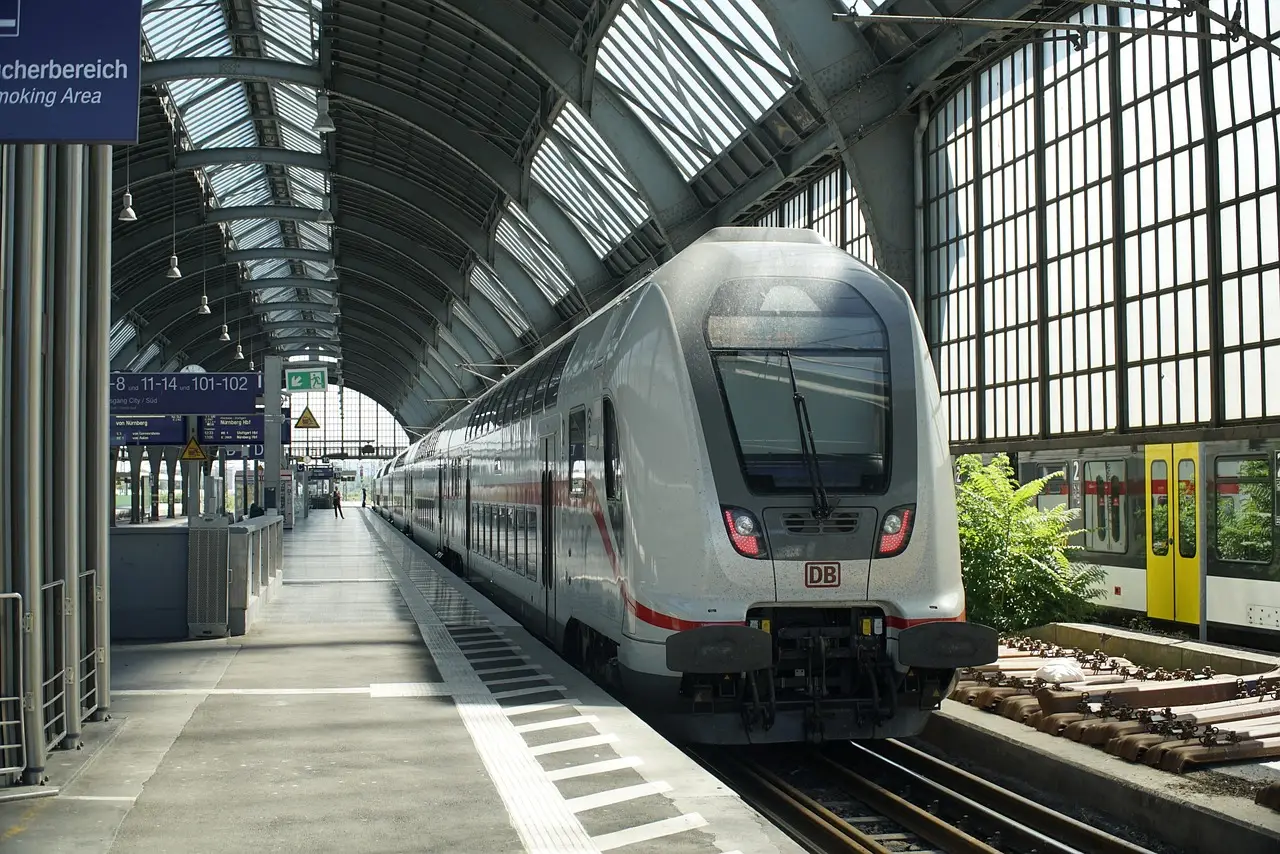
Danish regional operator Lokaltog has selected Stadler's battery-electric RS ZERO to replace its diesel fleet on the 7.8 km Jægersborg–Nærum line north of Copenhagen, with entry into service scheduled for the first half of 2031. The operator estimates the switch will cut CO₂ emissions by around 800 tonnes per year.
The deal covers four trains. The contract is expected to be signed in early 2027, subject to approval by the relevant regional councils. Until those approvals land, the order remains an intention rather than a signed purchase — a distinction that matters in Danish regional procurement, where councils control the financing of local rail investments.
What is the RS ZERO?
The RS ZERO is built on Stadler's Regio-Shuttle platform and is designed for regional services on non-electrified lines. The Nærum Line fits that profile exactly: it has no overhead contact wire, and battery operation allows Lokaltog to electrify the service without stringing catenary along the 7.8 km route.
Stadler will assemble the trains at its Berlin plant, keeping production inside the European Union for a Danish customer with no domestic train manufacturing base.
Who supplies the charging infrastructure?
Stadler will not deliver the trains alone. The Swiss manufacturer will also provide the required charging infrastructure, with Furrer+Frey supplying the charging and power systems. Furrer+Frey, a Swiss specialist in railway electrification equipment, takes on the shore-side element of the battery operation — the component that determines whether the four trains can complete their duty cycles without range constraints on the short suburban route.
The supplier pairing signals that Stadler is selling the Nærum Line package as a system — rolling stock plus energy infrastructure — rather than vehicles alone. For a 7.8 km shuttle operation, the charging design is the critical engineering question: trains must recharge during turnaround pauses at termini to sustain a full day of service.
What does this change for passengers and emissions?
For passengers, the change is a full fleet replacement on the Jægersborg–Nærum corridor: four new battery-electric trains in place of the current diesel sets, arriving in the first half of 2031. For the operator and the region, the measurable outcome Lokaltog itself cites is emissions — approximately 800 tonnes of CO₂ avoided per year once diesel operation ends on the Nærum Line.
That figure is an operator projection, not a measured result; it will depend on final service levels and electricity sourcing.
A second battery order from the same customer
The RS ZERO selection extends an existing relationship. Lokaltog has already ordered 24 Stadler FLIRT Akku battery-electric multiple units for three other Danish regional lines, with deliveries planned for entry into service between 2028 and 2029.
The two fleets serve different niches within the same strategy. The FLIRT Akku is a larger mainline battery EMU suited to longer regional runs; the RS ZERO, derived from the compact Regio-Shuttle, targets short, lightly trafficked branches such as the Nærum Line, where a full-size regional train would be oversized.
Taken together, the orders give Lokaltog a coherent battery-electric pathway across its non-electrified network: 24 FLIRT Akku units arriving from 2028, followed by four RS ZERO sets from 2031, with diesel traction phased out on the affected lines as each fleet enters traffic.
What happens next
The timeline now runs through regional council approvals, contract signature in early 2027, production at Stadler's Berlin plant, and the delivery of charging equipment from Furrer+Frey before the four RS ZERO trains enter service on the Jægersborg–Nærum route in the first half of 2031 — with the Nærum Line's roughly 800 annual tonnes of diesel CO₂ going with them.
via railmarket.com (Source)
More from Olivia Hart
Show full bio
Market editor covering people, launches and day-to-day practice in Rail industry news and analysis at Mainline Report.
376 articles
Connecting services · Related articles
- 09:08
Stadler shows Flirt Nordic Express cars bound for Norway's long-distance routes
- 13:15
Stadler to Unveil New FLIRT Akku at InnoTrans 2026
- 22:23
Teleste lands €40m on-board systems deal for Copenhagen S-bane fleet
- 20:54
Rail Unit assembles a two-locomotive freight fleet in Germany
- 14:09
ČD to run five battery trains on 550,000 train-km Pardubice contract