15:53ROPlt 2610 words
Chinese test vehicle accelerates from 0 to 800 km/h in five seconds
A Chinese prototype reportedly hit 800 km/h from standstill in five seconds — a figure only maglev or tube-based research could plausibly reach, far beyond any revenue rail service.
· 3 min journey
Calling at
- A Chinese prototype vehicle reportedly accelerated from 0 to 800 km/h in five seconds, per The Independent.
- 800 km/h exceeds the 574.8 km/h world record for conventional rail, indicating a maglev or tube-based test system.
- China's 600 km/h Qingdao maglev prototype has not yet entered revenue service; no date has been confirmed.
A Chinese prototype high-speed vehicle has reportedly accelerated from standstill to 800 km/h in five seconds, according to a report carried by The Independent. If the figure is accurate, the demonstration involves speeds roughly twice the cruise velocity of the fastest wheeled trains in commercial service anywhere in the world.
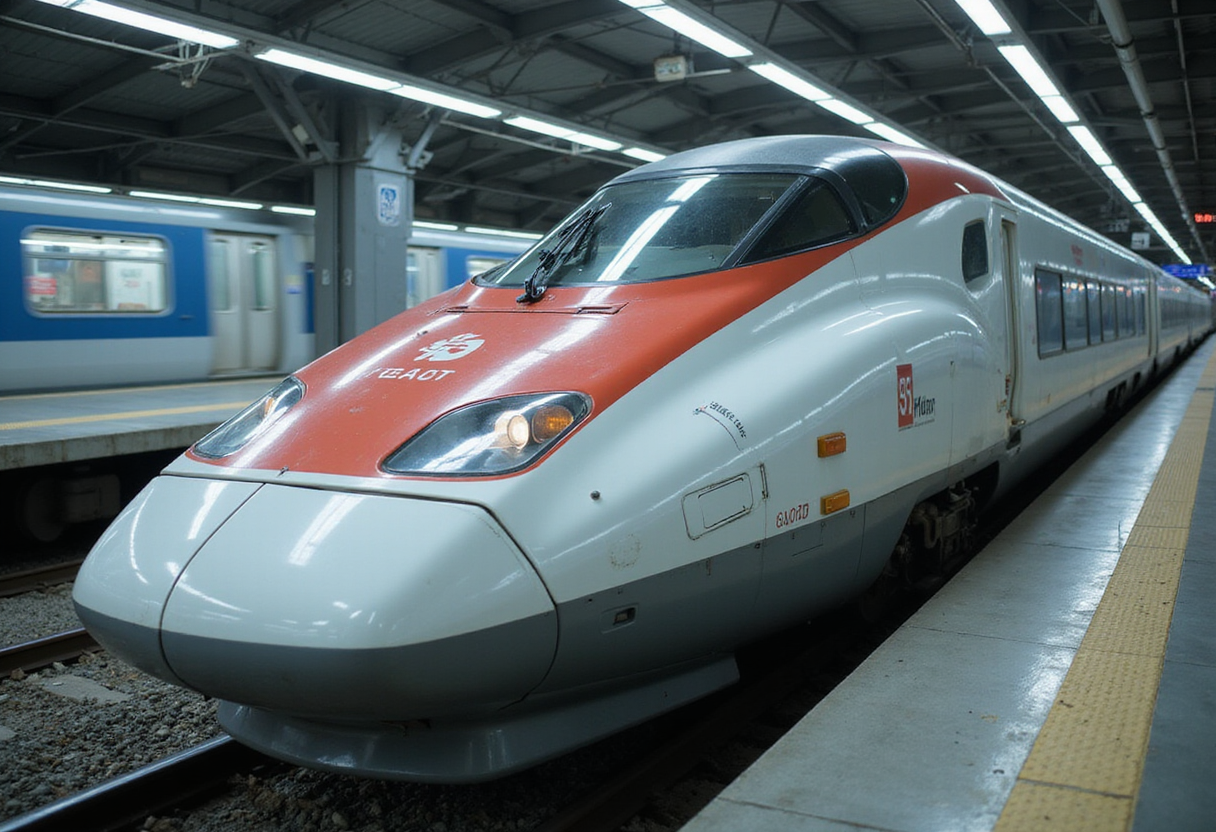
The claim needs context. No conventional rail vehicle, whatever its traction package, can reach 800 km/h on steel wheels. Adhesion between wheel and rail places a practical ceiling on tracked operation far below that mark; the world speed record for conventional rail, set by a modified TGV in 2007, stands at 574.8 km/h. An acceleration run to 800 km/h within five seconds therefore points to a non-adhesion system — most plausibly a maglev or low-vacuum tube testbed — rather than to any evolution of the 350 km/h bullet trains currently in revenue service on the Chinese network.
China has operated the Shanghai Transrapid maglev, sourced from German technology, at a commercial top speed of 300 km/h since 2004, with its 430 km/h design speed used on shorter segments. Domestic research programmes have targeted far higher figures for more than a decade. A CRRC-led consortium unveiled a 600 km/h-class high-speed maglev prototype at Qingdao in 2021, and state media have repeatedly described a 600 km/h system as a strategic technology priority intended to fill the gap between air travel and conventional high-speed rail on corridors of 1,500 km or more.
Beyond that, CASIC has been developing a low-vacuum tube maglev it calls a high-speed flying train, with staged research targets published at 1,000 km/h and above. Test facilities for that programme, including a tube test line in Shanxi province, have been reported in Chinese state media. An 800 km/h acceleration claim sits squarely within the envelope of these tube-maglev experiments, and the five-second figure would imply extreme acceleration of roughly 160 km/h per second — a rate no passenger-carrying system could apply, but one consistent with a short test sled or unmanned vehicle on a fixed guideway.
Operators should treat the announcement as a laboratory result rather than a service milestone. No regulator has certified passenger operation above 600 km/h in any country, and the gap between a five-second acceleration run and a vehicle that can sustain commercial speeds over a corridor — with interoperable stations, emergency braking, evacuation provisions and acceptable ride comfort — remains large. The Qingdao 600 km/h maglev programme itself has not yet entered revenue service, and no launch date has been confirmed by its developers.
For the rolling-stock market, the significance of the reported run lies in what it signals about the direction of Chinese state research spending: continued emphasis on beyond-rail-speed ground transport, with CRRC and CASIC competing on separate maglev architectures. Suppliers of traction, guideway and control systems in Europe and Japan, where maglev programmes at 500 km/h and above are also in development or limited service, will read the claim as a benchmark in that race rather than as an imminent product.
The Independent's report does not specify the test location, the vehicle's configuration or the measuring authority behind the 800 km/h figure. Until the operating organisation publishes instrumented test data, the result remains a claim. What is not in dispute is the stated ambition behind it: Chinese researchers have said they intend to push operational ground transport speeds toward and beyond 1,000 km/h within the coming decade, and this reported demonstration marks another step on that published roadmap.
via Google News: High-speed rail (Source)
More from Olivia Hart
Show full bio
Market editor covering industry trends and analytics at Mainline Report.
149 articles
Connecting services · Related articles
- 23:13
CRRC readies world's first high-speed hydrogen train for launch
- 02:08
Four New Rail Lines Extend China's High-Speed Network
- 10:18
High-speed line through central China's mountains enters service
- 11:48
China opens four new high-speed lines, extending national network
- 10:18
China Opens Four New High-Speed Rail Sections