23:13ROPlt 8578 words
CRRC readies world's first high-speed hydrogen train for launch
CRRC says it is preparing to launch the world's first high-speed hydrogen train, extending fuel-cell rail traction beyond the 140 km/h regional class. No in-service date or operator is confirmed yet.
· 3 min journey
Calling at
- CRRC is preparing to launch what it calls the world's first high-speed hydrogen train, moving fuel-cell propulsion beyond the regional segment.
- Existing hydrogen trains in service, such as Alstom's Coradia iLint in Germany, operate at up to 140 km/h; CRRC has not disclosed its train's target speed.
- No in-service date, initial operator, procurement volume or deployment route has been announced with the project.
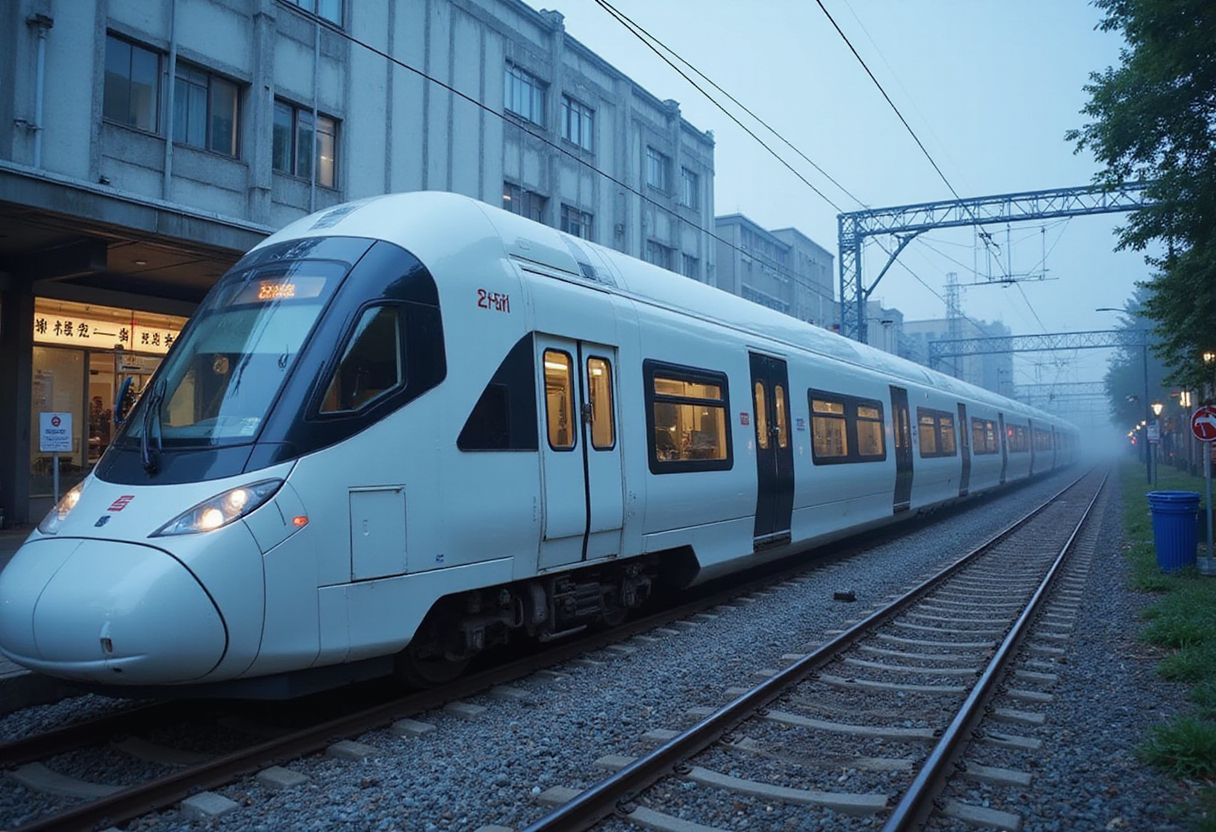
China's CRRC is preparing to launch what it describes as the world's first high-speed hydrogen train, moving fuel-cell propulsion from regional and tram applications into the higher-speed segment of the market.
The announcement positions CRRC ahead of European competitors that have so far confined hydrogen trains to regional services. Alstom's Coradia iLint, the first hydrogen passenger train in regular service, runs at up to 140 km/h in Germany. CRRC's project would take hydrogen traction significantly beyond that performance envelope, although the Chinese manufacturer has framed the launch as a preparation stage rather than a completed delivery, and no in-service date or initial operator has been confirmed in the announcement.
The claim to a world first rests on the definition of "high speed." Trains in China's high-speed fleet typically operate at 250 to 350 km/h on dedicated lines, and CRRC has not yet published the target maximum speed of the hydrogen variant. If the train is certified at speeds substantially above the regional benchmarks set by existing fuel-cell fleets, it would mark a technical milestone for hydrogen rail propulsion, where energy storage density and power delivery at sustained high speed remain the central engineering constraints.
Hydrogen traction has so far found its commercial niche on non-electrified regional lines, where overhead wire installation does not justify the traffic volume. The business case for hydrogen at intercity or high speeds is unproven: on heavily used corridors, electrification delivers lower lifetime energy costs, and China itself operates the world's most extensive electrified high-speed network. A high-speed hydrogen train would therefore compete for applications where full electrification is uneconomic but higher speeds are still required — a segment that is largely theoretical until a service is launched.
CRRC is the world's largest rolling stock manufacturer by revenue, and its investment in hydrogen traction signals the company's intent to offer the technology in export markets as well as domestically. Several countries, including Germany, France and Italy, have funded hydrogen train pilots or frame agreements as alternatives to diesel on non-electrified routes, and a supplier able to offer higher-speed hydrogen rolling stock could address a wider range of those tenders.
The company's claim should be read against fleet plans and network data. China's state railway operator has continued to order conventional electric high-speed trains at large volume, and hydrogen units — if ordered — would likely serve demonstration corridors or newly developed regional express services rather than the main high-speed spine. No procurement volume, unit cost or deployment route has been disclosed with the announcement.
Fuel-cell trains currently in service worldwide remain few. Alstom has delivered the largest fleet, with 41 Coradia iLint-derived trains on order for the LNVG network in Lower Saxony and dozens more under frame agreements in France and Italy. CRRC itself has already tested hydrogen trams and lower-speed regional units in China, giving it operational fuel-cell experience to draw on for the higher-speed design.
The launch, when completed, would extend the performance range of hydrogen rail traction and give operators a zero-exhaust option above regional speeds. Whether it opens a genuine market segment will depend on certification, energy costs at the hydrogen production and dispensing end, and the willingness of operators to place volume orders rather than pilots — questions that the initial rollout, once CRRC discloses its service plans, will begin to answer.
via Google News: Rolling stock (Source)
More from Rebecca Stone
Show full bio
Senior reporter covering business strategy at Mainline Report.
120 articles
Connecting services · Related articles
- 22:23
Hyundai Rotem targets 400 km/h exports and hydrogen traction
- 15:53
Chinese test vehicle accelerates from 0 to 800 km/h in five seconds
- 02:08
Four New Rail Lines Extend China's High-Speed Network
- 11:48
China opens four new high-speed lines, extending national network
- 08:43
China Puts Its Northernmost High-Speed Railway Into Service