11:18PAPlt 3413 words
China Opens Four High-Speed Lines, Extending Fast Rail to Smaller Cities
China has opened four new high-speed rail lines, extending 350 km/h services to smaller cities beyond its core metropolitan corridors, with early demand the key test.
· 2 min journey
Calling at
- China has opened four new high-speed rail lines serving smaller cities
- The openings extend fast services beyond the core metropolitan corridors of the national network
- Early ridership on secondary-city lines will test whether traffic matches construction projections
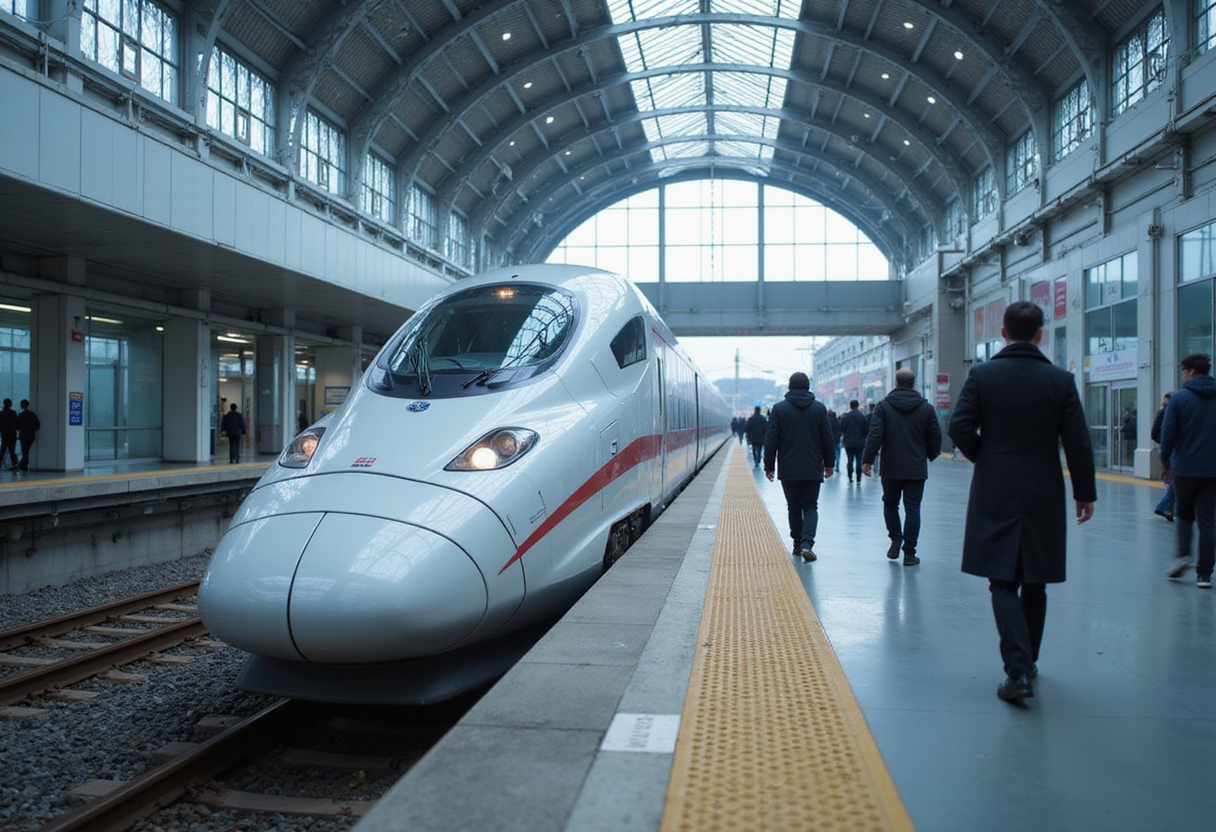
China has opened four new high-speed rail lines, extending fast train services to a set of smaller cities that previously sat outside the country's core 350 km/h network.
The four openings mark the latest step in a construction programme that has already given China the world's largest high-speed network, measured in both route-kilometres and annual passenger volumes. Each new line connects cities that until now relied on conventional-speed services, cutting journey times and plugging regional centres into the national grid operated primarily by China State Railway Group.
For the smaller cities concerned, the openings change more than headline journey times. High-speed connections typically shift passenger traffic off conventional lines, freeing capacity for freight — a relevant consideration on corridors where coal and container flows compete with passenger trains for paths. They also redraw catchment areas: a city brought within two or three hours of a provincial capital by 350 km/h trains becomes a more viable location for business travel and weekend commuter flows.
The geographic pattern matters. China's earliest high-speed corridors linked the largest metropolitan clusters — Beijing–Shanghai, the Pearl River Delta, the Yangtze Delta. The newest lines extend the network into less densely served provinces and secondary cities, a phase of the build-out that trades lower projected traffic densities for broader regional coverage and the economic development goals attached to it.
Whether the new lines meet traffic projections remains an open question. Secondary-city lines opened in previous years have shown a wide spread of performance: some quickly reached capacity, while others carried passenger volumes well below the forecasts used to justify construction. The four lines opened now will face the same test as timetables settle and operators adjust service frequencies to actual demand.
China State Railway Group has not announced fleet additions tied specifically to these openings, suggesting initial services will run with existing CR400-series and related trainsets reallocated from the wider network. Frequency decisions in the first months of operation will offer the clearest early signal of how demand on the new corridors compares with planning assumptions.
Passengers in the newly connected cities gain direct fast links for the first time, and the operators gain flexibility in diagramming trains across a network that continues to grow each year. The pace of openings shows no sign of slowing, with further lines under construction aimed at completing a planned national grid linking virtually all cities above a defined population threshold.
via Google News: High-speed rail (Source)
More from Rebecca Stone
Show full bio
Senior reporter covering business strategy at Mainline Report.
120 articles
Connecting services · Related articles
- 10:18
China Adds Four High-Speed Lines to Expand Regional Travel
- 12:48
China Puts Four New High-Speed Lines Into Service
- 22:28
China Puts Four New High-Speed Lines Into Service
- 11:48
China opens four new high-speed lines, extending national network
- 14:18
Four new high-speed lines join China's national network before holiday rush