08:23GLPlt 1554 words
China opens four high-speed rail sections, extending national network
China has commissioned four new high-speed rail sections, adding passenger capacity and cutting journey times on regional corridors across the national network.
· 3 min journey
Calling at
- China has opened four new high-speed rail sections in a single batch of commissionings.
- The sections extend the world's largest high-speed network, which has grown from the first Beijing–Tianjin line opened in 2008.
- New sections raise service frequencies, cut journey times and free conventional capacity for freight.
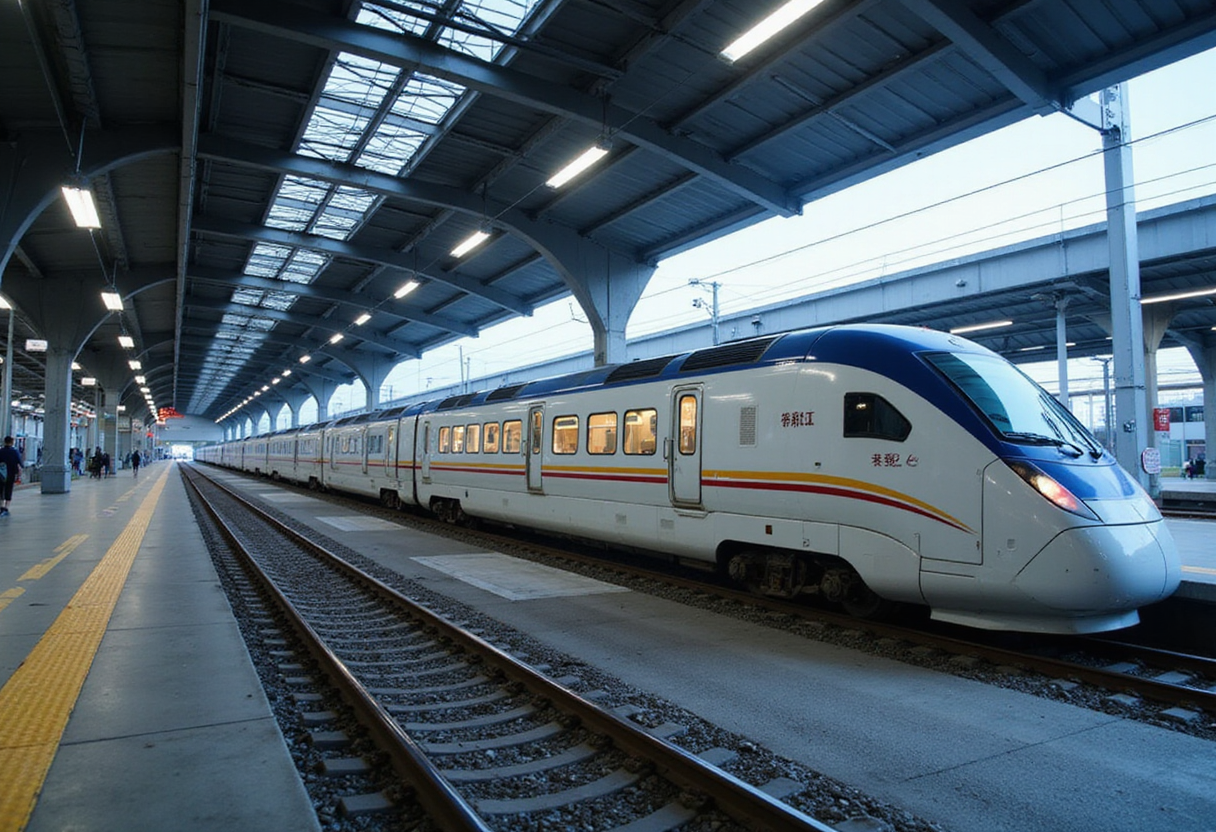
China has opened four new high-speed rail sections, extending the national network that already ranks as the largest in the world by route-kilometres.
The four sections entered service in the latest phase of a construction programme that state planners have run for more than a decade. Each opening adds passenger capacity on corridors linking provincial cities to the national grid, cutting journey times on the affected routes and shifting traffic from conventional rail, road and air.
The commissioning of multiple sections in a single batch follows the pattern Chinese railway authorities have used in recent years, when openings cluster ahead of peak travel periods such as the Lunar New Year. The newly opened lines allow operators to raise frequencies on the corridors they serve and to redeploy conventional rolling stock onto freight paths, an operational change that matters for a network carrying the bulk of China's domestic passenger rail traffic.
For passengers, the practical outcome of each new section is a shorter journey. High-speed services on newly built alignment run at commercial speeds of up to 350 km/h where the track design permits, and the sections opened in this batch bring additional cities within a few hours of the major hubs they connect.
The openings also carry an economic rationale. Provincial governments and the national railway operator have justified the capital cost of these lines on the grounds that faster connections stimulate business travel, tourism and labour mobility between second-tier cities and coastal industrial regions. That argument has driven the expansion of the network from its first Beijing–Tianjin line in 2008 to a system that now serves the vast majority of provincial capitals.
Construction on the four sections proceeded under the supervision of China State Railway Group, the national operator, with civil works delivered by the state construction groups that handle most of the country's rail building. Commissioning followed the standard sequence of static testing, dynamic testing with inspection trains, and trial running before revenue service began.
The new sections form part of the medium- and long-term railway plan under which China continues to extend high-speed lines into less densely populated provinces, even as the pace of approvals has slowed compared with the peak construction years. Planners have shifted emphasis toward completing trunk corridors and improving regional connectivity rather than adding parallel lines on already-served axes.
Ridership on the national high-speed network has recovered strongly since pandemic-era restrictions ended, and operator reports show the high-speed segment now accounts for the majority of passenger trips on the national rail system. The newly opened sections add capacity on exactly the corridors where demand growth has been concentrated: intercity links between regional centres rather than the long-distance trunk routes completed earlier in the programme.
Suppliers benefit as well. Each new section entering service generates demand for additional electric multiple units, signalling equipment and maintenance capacity, with domestic manufacturers supplying nearly all of the rolling stock on the network.
Chinese railway authorities have indicated that further sections will open on the current construction schedule, with additional corridors under way that will extend the network in the coming years. The pace of those openings will indicate whether the current phase of expansion maintains the momentum shown by this week's batch of four commissionings.
via Google News: High-speed rail (Source)
More from Olivia Hart
Show full bio
Market editor covering industry trends and analytics at Mainline Report.
149 articles