10:18PAPlt 5461 words
US high-speed rail projects face renewed scrutiny over delivery
Smart Cities Dive asks whether US high-speed rail projects will ever reach revenue service, as cost overruns and delays continue to dog the country's flagship corridors.
· 2 min journey
Calling at
- Smart Cities Dive published an analysis questioning whether US high-speed rail projects will ever enter service
- No US line currently operates at internationally recognised high-speed standards
- Delivery delays push up costs and push back ridership and development benefits for host cities
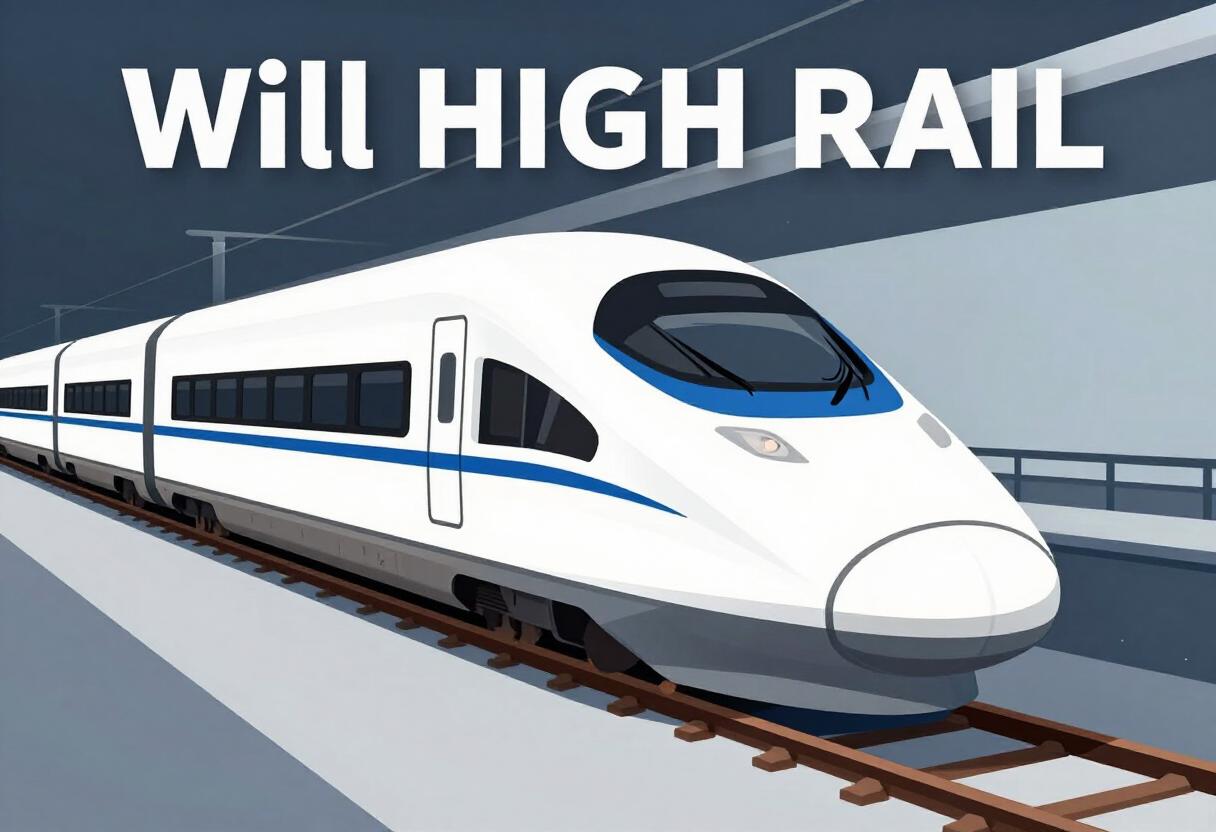
A new analysis published by Smart Cities Dive poses a question that has shadowed American rail policy for more than a decade: will US high-speed rail projects ever leave the station?
The headline frames the core problem for planners, funders and suppliers. The United States remains the only major industrialised economy without a single train service operating at what international practice defines as genuine high speed — generally 250 km/h or more on newly built lines. Every project that promised to change that has encountered schedule slippage, cost escalation, legal challenge or political uncertainty.
The question is not rhetorical. It lands at a moment when several flagship programmes are competing for the same federal funding channels and the same pool of engineering and construction capacity. For state departments of transportation, the practical stakes are concrete: each year of delay pushes ridership projections further out, inflates land-acquisition and materials costs, and shortens the period over which capital assets can earn back their investment.
The Smart Cities Dive piece belongs to a growing body of trade and mainstream coverage that treats supplier and operator optimism with caution. Announcements of groundbreaking, fleet orders or phased openings are, in this reading, claims to be tested against actual construction progress, completed environmental clearances and committed appropriations — not milestones in themselves.
That testing matters because the gap between announcement and delivery in US passenger rail has historically been wide. California's intercity programme, the most advanced genuine high-speed effort in the country, has repeatedly revised its cost estimates and service dates. Brightline West, the private venture targeting Las Vegas–Southern California, has moved through federal approvals but has yet to carry a passenger. Other corridors remain at study stage, where the deliverable is a document rather than a timetable.
For the municipal and urban-planning audience Smart Cities Dive serves, the analysis carries a specific implication. High-speed terminals and corridor stations anchor transit-oriented development plans, regional housing strategies and downtown economic projections in cities across the country. If the rail lines slip, those downstream plans slip with them — a cost that rarely appears in any project budget.
The operational logic that drives high-speed rail elsewhere — capturing airline-competitive journeys on corridors of roughly 300 to 800 km, at frequencies that make the service useful rather than ceremonial — does not change with geography. What changes in the American context is the delivery environment: fragmented governance, litigation risk at the environmental-review stage, and funding cycles tied to federal political calendars rather than construction schedules.
Whether any of the current projects converts from promise to revenue service is the question the analysis leaves open, and it is the metric against which the next round of federal and state rail decisions will be judged.
via Google News: High-speed rail (Source)
More from Amara Osei
Connecting services · Related articles
- 12:35
Planetizen Asks Why America's Trains Are So Slow
- 14:35
High-Speed Rail Proposal Targets U.S. Passenger Rail Investment
- 13:00
US Passenger Rail Rolling Stock Faces Renewal Question
- 22:35
Texas High-Speed Rail and Hyperloop Plans Face Reality Check
- 24:10
Canadian High-Speed Rail Project Faces Higher Cost Estimate