19:30PAPlt 11727 words
Virgin and Alstom align on cross-Channel high-speed rail push
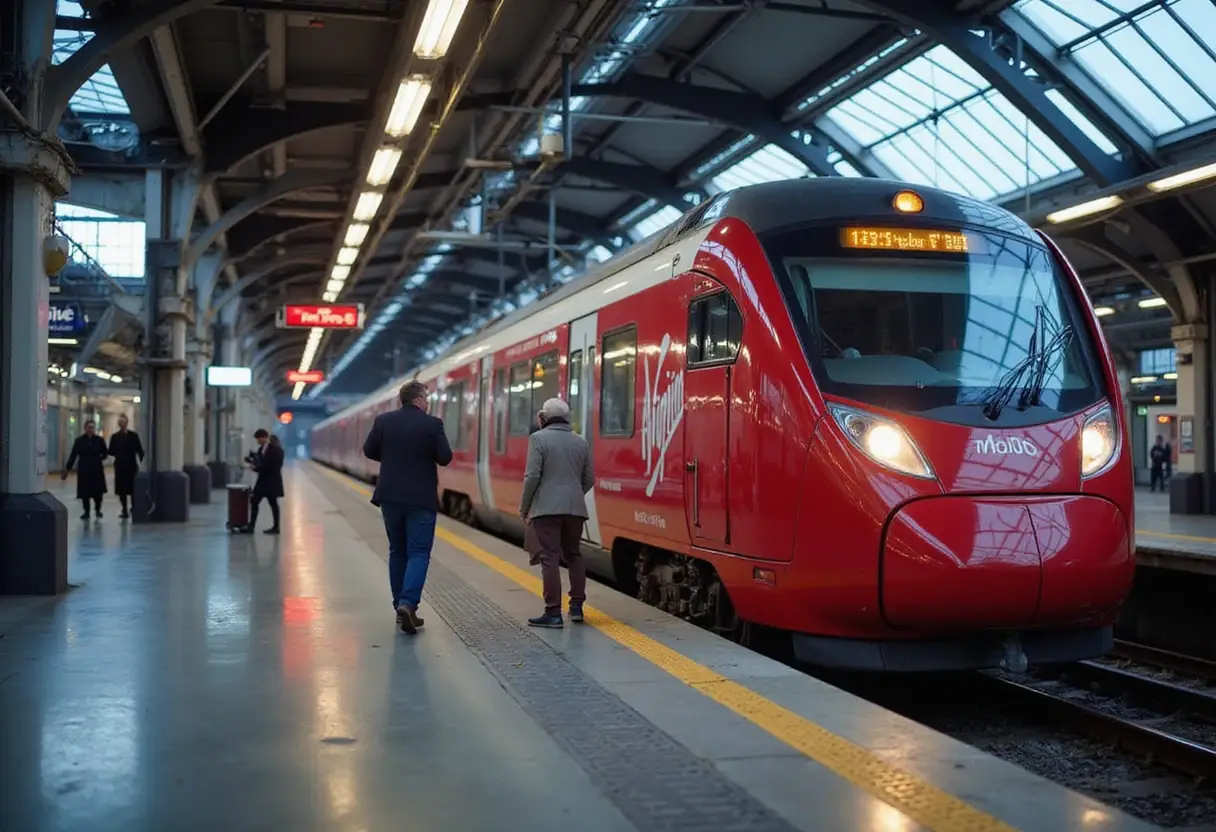
Virgin Group and Alstom have announced a partnership to support growth in cross-Channel high-speed rail. The deal targets the London-Paris and London-Brussels corridors but discloses no fleet size, order, or service date.
· 4 min journey
Calling at
- Virgin Group and Alstom have announced a partnership to support cross-Channel high-speed rail growth, as reported by Rail Business Daily
- The Channel Tunnel between Folkestone and Coquelles is 50.5 km long and is operated by Getlink
- Eurostar carried roughly 11 million passengers in 2023, recovering from but not yet matching its 2019 peak of about 22 million
- Alstom completed its acquisition of Bombardier Transportation in 2021, giving it control of the Zefiro and Avelia high-speed platforms
- Virgin Trains operated UK passenger services from 1997 until the franchise transferred to Avanti West Coast in 2019
Virgin Group and Alstom have announced a partnership aimed at supporting the growth of cross-Channel high-speed rail services, according to a report carried by Rail Business Daily. The cooperation links a recognisable British transport brand with the manufacturer that supplies much of Europe's existing high-speed fleet, and it points squarely at the London-Paris and London-Brussels corridors served through the 50.5 km Channel Tunnel.
What does the partnership actually cover?
The announcement does not specify the commercial form of the deal. It does not state whether the agreement covers a rolling stock order, a marketing arrangement, a joint bid for tunnel access, or a wider industrial package. It also gives no fleet size, no delivery date, and no service launch timetable. Until those figures appear, the statement is a declaration of intent rather than a capacity event on the timetable.
Key points from the available information:
- The two parties are Virgin Group and Alstom.
- The stated objective is to support growth in cross-Channel high-speed rail.
- The geography at stake is the London-Paris and London-Brussels market via the Channel Tunnel.
- No order book, fleet number, or service date has been disclosed.
Why is the cross-Channel market commercially difficult?
Three structural factors shape the route. First, Eurostar currently operates the only passenger services through the tunnel, running Alstom-built e320 trains and the older e300 fleet, and sets the benchmark for frequency, fare, and brand recognition. Second, Getlink, the tunnel operator, charges access tariffs that vary by service type, time of day, and market segment, and any new operator must secure path allocations alongside existing traffic. Third, border and security arrangements on both sides of the English Channel impose fixed costs per train that a new entrant must absorb from day one.
The result is a market where unit revenue is high but unit cost is higher, and where load factor determines whether a service makes money. Eurostar carried roughly 11 million passengers in 2023, a recovery towards but not yet matching its 2019 peak of around 22 million. The headroom exists. Filling it requires either a new operator with a different cost base or an expansion of the existing one.
What does this change for passengers and operators?
In the short term, nothing operational. Timetables, fares, and train frequencies on Eurostar services remain unchanged. The announcement is a commercial signal between a potential operator and a potential supplier, not a service that passengers can book.
In the medium term, the practical question is whether the partnership converts into one of three measurable outcomes:
- A firm rolling stock order for new Alstom trains sized for cross-Channel operation.
- A track-access or open-access application by a Virgin-branded entity to a regulator in the UK, France, or Belgium.
- A bilateral agreement with Getlink for tunnel paths and depot capacity.
Any one of these would represent a concrete step. Without one, the announcement sits in the same category as several previous cross-Channel proposals that did not progress beyond the press release stage.
Who are the parties and what is their position?
Alstom is the largest rail equipment supplier in Europe, headquartered in France, and completed the acquisition of Bombardier Transportation in 2021. Its high-speed portfolio includes the Avelia platform, from which the Eurostar e320 is derived, and the Zefiro trains used by Virgin Trains on the UK West Coast Main Line until 2019.
Virgin Group operated passenger rail services in the UK through Virgin Trains from 1997 until the franchise transferred to Avanti West Coast in 2019. The brand has since appeared in discussions about open-access high-speed operations in the UK and about potential new international services. A partnership with Alstom gives that brand access to a manufacturer with proven cross-Channel gauge-changing capability and a European after-sales network.
What to watch next
The next verifiable milestone will be a filing with the Office of Rail and Road in the UK, with ARAF in France, or with the European Union Agency for Railways, or a published order placed with Alstom. Until one of those appears, the partnership is a positioning statement. The cross-Channel market has absorbed several such statements over the past decade without producing a second operator, and the gap between intent and operation remains the practical measure of progress.
via Google News: Rolling stock (Source)
More from Priya Raman
Show full bio
Staff writer covering companies, deals and strategy in Rail industry news and analysis at Mainline Report.
346 articles
Connecting services · Related articles
- 24:59
Virgin and Alstom align on cross-Channel high-speed rail growth
- 09:40
Virgin and Alstom partner on cross-Channel high-speed rail
- 24:59
Virgin, Alstom Unveil First Glimpse of High-Speed Cross-Channel Fleet
- 04:35
Virgin targets cross-Channel high speed rail services from 2030
- 24:59
Virgin Group orders cross-Channel high-speed fleet, opens air-rail study