24:54ROPlt 8635 words
Siemens Positions Airo Trainsets as the Next Generation of US Passenger Rail
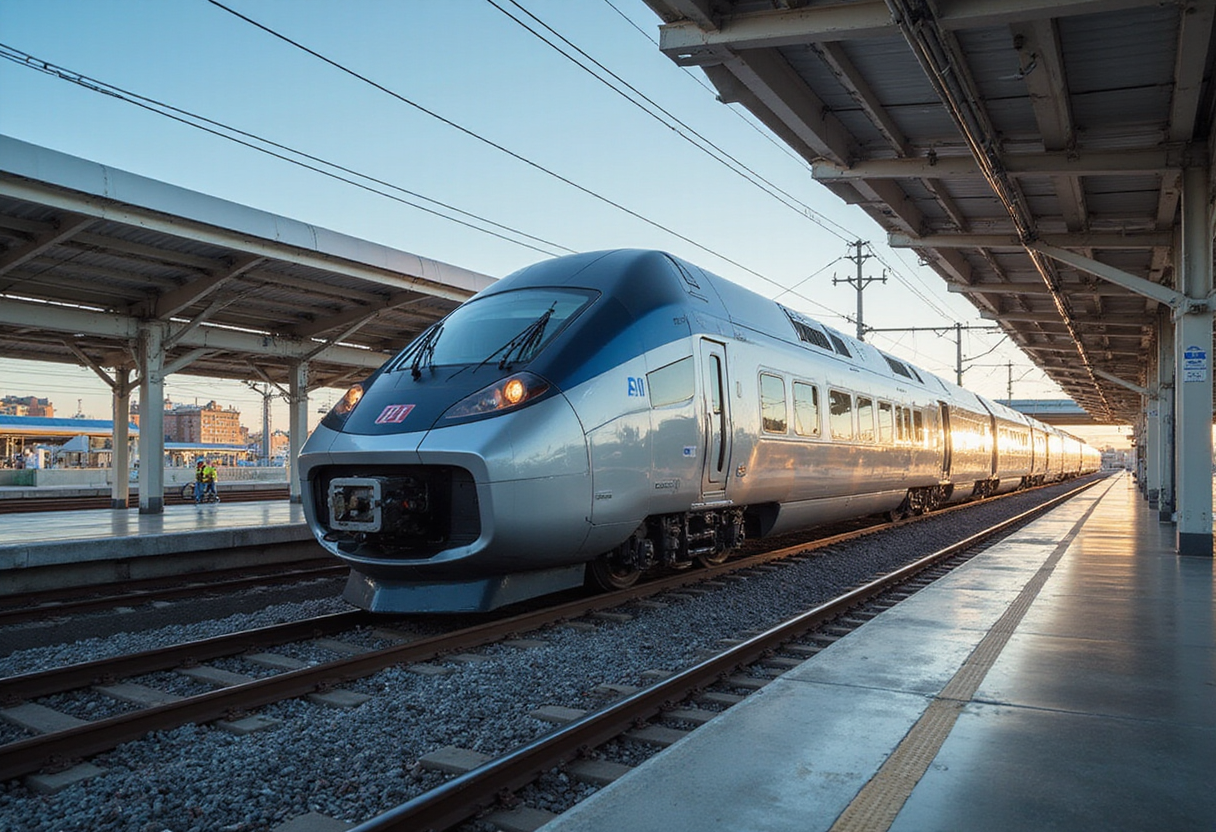
Siemens Mobility has branded its Airo trainset family as the future of American passenger rail, pitching a standardized platform at Amtrak and state corridor fleets.
· 3 min journey
Calling at
- Siemens Mobility has publicly positioned its Airo trainset family as the future of American passenger rail.
- Airo is a fixed-formation trainset platform designed for diesel, electric, battery and hydrogen traction configurations.
- Siemens builds its US passenger rolling stock at its Sacramento, California, manufacturing base.
- The platform targets Amtrak and state-supported corridor operators replacing fleets built in the 1970s and 1980s.
- First service introductions and subsequent orders will test the supplier's claims against actual fleet plans.
Siemens Mobility has labelled its Airo trainset family as the future of American passenger rail, staking a supplier's claim on the largest fleet-replacement cycle the US intercity and regional market has seen in decades.
The announcement, carried on the supplier's global news channel, puts Siemens at the centre of a procurement wave driven by ageing diesel fleets at Amtrak and state-supported corridor operators. The company presents Airo as a standardized, modular platform rather than a bespoke design — an approach intended to cut unit costs and delivery times across multiple orders.
What is Siemens claiming?
The core claim is architectural. Airo is a fixed-formation trainset — not a locomotive-hauled consist — that Siemens says can be configured for diesel, electric, battery or hydrogen traction within the same bodyshell and interior layout. For US operators, that flexibility matters: state corridor services, Amtrak's long-distance network and commuter agencies face different electrification realities, and a common platform could consolidate spare parts, training and maintenance regimes.
Siemens already supplies the backbone of the American passenger fleet. Its Charger diesel locomotives and Venture coaches serve Amtrak's state-corridor services and commuter operators across multiple states, which gives the company an installed manufacturing base in Sacramento, California, and an existing supply chain. Airo would extend that position from locomotives and coaches into complete trainsets — a shift that moves more of the value of each order inside Siemens' own factories.
Why does this matter for operators?
The operators at stake are Amtrak and the state-supported corridor programmes in the Midwest, California and the Southeast, where fleets built in the 1970s and 1980s are reaching the end of their service lives. Replacement cycles at that scale typically run to hundreds of vehicles and billions of dollars, and delivery schedules now stretch well into the 2030s because global passenger-rolling-stock production slots are scarce.
A standardized trainset platform, if it works as claimed, addresses three operator pain points at once:
- Cost — shared components across orders should lower lifetime maintenance spend compared with maintaining several bespoke fleets.
- Capacity — fixed trainsets can pack more seats into a given train length than locomotive-hauled consists.
- Delivery risk — a single production line serving multiple customers spreads industrial risk that would otherwise fall on each operator individually.
Those outcomes remain projections until Airo sets enter scheduled service at volume. Supplier announcements of this kind are positioning statements; fleet plans from Amtrak and the states, and the first delivered units, will be the measurable test.
How does Airo fit the US fleet picture?
Siemens' framing lands at a moment when US passenger procurement is consolidating around fewer, larger platforms. The precedent is the Charger locomotive programme, where one base design won orders from Amtrak and several state DOTs, standardizing a category that had previously been fragmented by operator. Airo applies the same logic one level up — to the complete train rather than the power car.
The regulatory context is also shifting. Federal funding programmes have expanded the pool of money available for corridor expansion and fleet renewal, and agencies that once bought small bespoke batches now face pressure to buy standardized products that can be delivered on federal timelines.
Against that backdrop, Siemens' message is straightforward: the future of American passenger rail will be built around trainsets, and Airo intends to be the default option.
What happens next?
The claim will be checked against deliveries, not statements. Watch for first Airo units entering passenger service on a US corridor, subsequent orders from additional operators beyond the existing customer base, and published reliability data once the trainsets accumulate mileage in scheduled operation. Siemens has committed the platform to the American market; the operators' fleet plans and the first service introduction will determine whether Airo becomes the standard it is being positioned to be.
via Google News: Passenger and commuter rail (Source)
More from Olivia Hart
Show full bio
Market editor covering industry trends and analytics at Mainline Report.
292 articles
Connecting services · Related articles
- 24:54
Siemens Airo Trainsets Start Passenger Service on Amtrak Cascades
- 12:50
Amtrak Sets September 30 Service Date for Cascades Airo Fleet
- 02:59
Amtrak Starts Airo Trainset Rollout, Replacing 1970s Amfleet I Coaches
- 24:54
Airo Trainsets Enter Service on Amtrak Cascades Route
- 13:05
Siemens Mobility opens Lexington passenger rolling stock factory