24:59ROPlt 10562 words
NJT Multilevel III railcar debuts at Light & Heavy Rail 2026
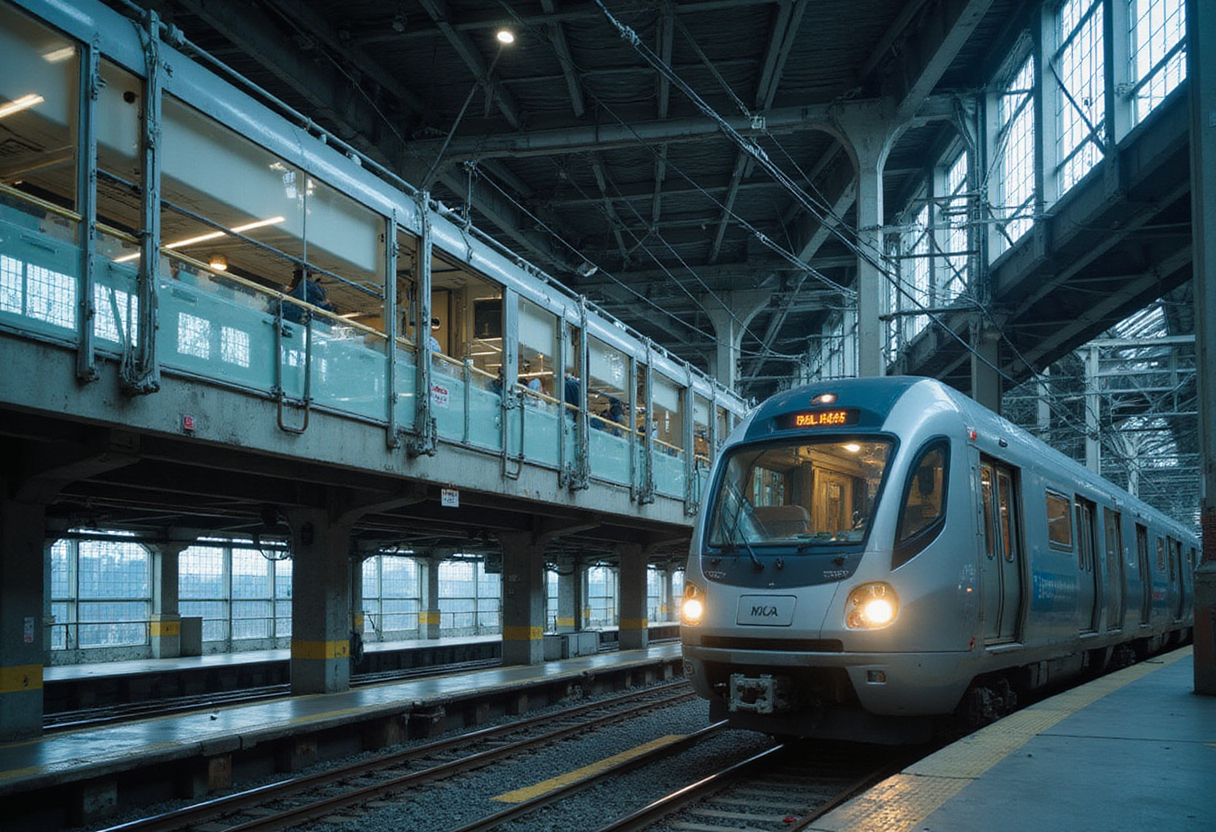
New Jersey Transit put its Multilevel III commuter railcar on display at the Light & Heavy Passenger Rail 2026 conference — the third-generation bilevel platform's first trade-show appearance.
· 3 min journey
Calling at
- NJ Transit displayed the Multilevel III railcar at the Light & Heavy Passenger Rail 2026 conference, per Railway Track and Structures.
- Multilevel III is the third generation of NJT's in-house bilevel platform, following the original 1970s Multilevel and the 2010s Multilevel II.
- Bilevel platforms typically carry 15-25% more seated passengers per train than single-level commuter coaches.
- NJ Transit has not disclosed order quantity, builder selection, per-car cost, delivery schedule or funding source for the Multilevel III programme.
- NJT peak-hour operations on the Northeast Corridor, Morristown, Montclair-Boonton and North Jersey Coast lines routinely reach crush-load conditions.
New Jersey Transit displayed its Multilevel III commuter railcar at the Light & Heavy Passenger Rail 2026 industry conference, marking the public trade-show debut of the third-generation bilevel platform. The showing was reported by Railway Track and Structures this week.
NJT is the only commuter railroad in North America operating a fleet built around an in-house bilevel platform. The original Multilevel cars entered service in the 1970s, followed by the Multilevel II in the early 2010s. Multilevel III is the carrier's stated next step in fleet renewal and the first new NJT rail equipment to reach a public industry showcase in several years. The platform's longevity — now spanning half a century of NJT operation — is unusual in North American commuter rail, where fleets more typically track to a single builder's standard design.
What does the showpiece tell the supply market?
Featuring a new equipment platform at a Light & Heavy Passenger Rail conference places NJT's procurement programme in front of the Tier-1 carbuilders, components suppliers, signalling contractors and engineering consultants that compete for Northeast Corridor commuter work. Trade-conference debuts typically precede formal board approvals and notice-to-proceed by several months. Agencies use these events to gather supplier feedback, refine specifications and signal timing before issuing requests for proposal. The conference circuit remains the standard venue for US transit operators to size up the supplier base before launching a formal solicitation.
How Multilevel III fits the regulatory picture
The Multilevel III is expected to inherit the core dimensions of its predecessors and meet the crash-energy-management standards introduced after the 2008 Chatsworth collision rulemaking. Compliance removes a long-standing regulatory friction that has limited where older NJT stock can operate in shared corridors and on Amtrak-owned infrastructure. The Multilevel II fleet, now in its second decade of service, has faced rising maintenance costs as components reach mid-life and car bodies approach their first heavy-overhaul interval.
Why capacity is the binding constraint
Bilevel platforms typically carry 15-25% more seated passengers than single-level commuter coaches on the same train length. NJT's peak-hour loads on the Northeast Corridor, Morristown, Montclair-Boonton and North Jersey Coast lines routinely reach crush-load conditions during the morning and evening commutes. Fleet renewal on the bilevel platform is the most direct route to higher train capacity without lengthening station platforms or pushing consists beyond signal-block limits.
What the source confirms — and what it does not
The Railway Track and Structures headline names NJT, the Multilevel III platform and the Light & Heavy Passenger Rail 2026 conference. It does not specify order quantity, builder selection, per-car cost, delivery milestones or funding source. Mainline Report treats operator and supplier announcements about fleet plans as claims that require verification against published board resolutions, FTA grant records and Federal Register notices before they enter the news file as confirmed data.
What to watch next
A formal Multilevel III order — likely to follow a builder selection and a board resolution in Trenton — will set the cadence of NJT's peak-hour capacity growth through the early 2030s. The Light & Heavy Passenger Rail 2026 showing is the first public signal that the procurement timeline is moving. The next milestones are likely a builder announcement and a contract award, both of which Mainline Report will track against published procurement records.
via Google News: Passenger and commuter rail (Source)
More from Amara Osei
Connecting services · Related articles
- 08:20
New Jersey DOT Opens Freight-Rail Grant Application Window
- 24:44
New Jersey DOT funds 11 freight-rail projects
- 24:49
Metro-North's Vonashek Joins Light & Heavy Passenger Rail 2026 Programme
- 07:25
New Jersey Opens Applications for $25M in Rail Freight Assistance Grants
- 12:45
NJ Transit warns commuters at risk in proposed freight rail merger