06:48TEPlt 3441 words
Satellite Data and Weather Forecasts Combine to Predict Rail Infrastructure Risks
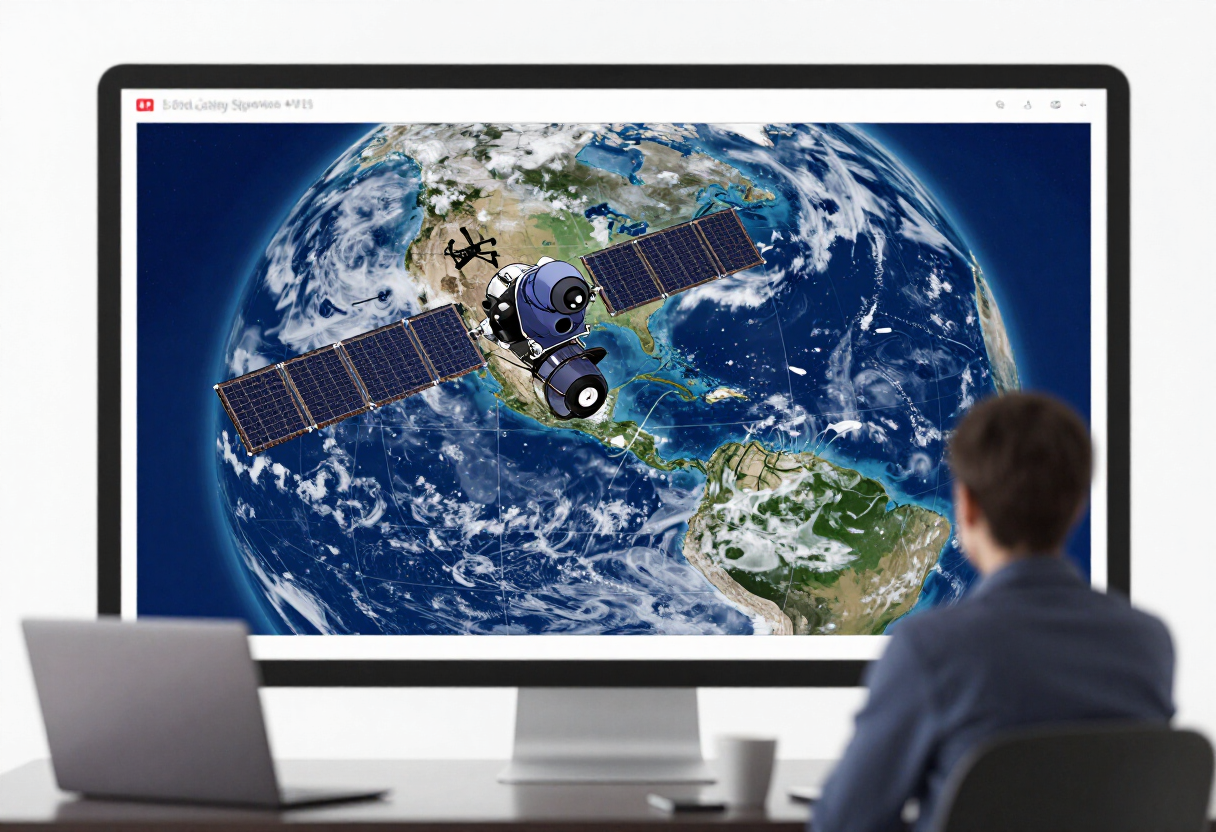
Satellite observation combined with weather forecasting is being used to predict rail infrastructure risks, shifting earthworks and drainage management from cyclic inspection toward targeted early intervention.
· 2 min journey
Calling at
- Satellite data and weather forecasts are being combined to predict risks to rail infrastructure, railbusinessuk.com reports.
- The method targets geotechnical and drainage threats such as ground movement and slope instability across widely distributed assets.
- No operators, suppliers, datasets or measured detection performance are named in the report, leaving adoption scope to be confirmed.
Satellite observation data combined with weather forecasting is being applied to predict risks to rail infrastructure before faults develop, according to a report from railbusinessuk.com.
The approach pairs two data streams that rail infrastructure managers have historically used separately. Satellite imagery, captured repeatedly over the same corridor, reveals ground movement, vegetation change, drainage patterns and embankment condition across wide areas. Weather forecasts add the trigger variable: rainfall intensity, freeze-thaw cycles and prolonged saturation events that push marginal earthworks toward failure.
The engineering logic is straightforward. A large proportion of delay-attributable incidents on legacy networks trace back to earthworks, flooding and drainage assets distributed across thousands of route-kilometres, most of which no inspector can watch continuously. Remote sensing offers a way to triage that asset base — flagging sites where measured ground movement coincides with forecast wet weather, so that examination and maintenance resources go where the combined risk signal is highest rather than where the calendar dictates.
That marks a shift from reactive to predictive intervention. Under conventional regimes, a cutting may be inspected on a fixed cyclic schedule, with defects found only once they have progressed far enough to see at track level. Continuous satellite monitoring can, in principle, detect millimetre-scale subsidence or slope creep months earlier, while forecast integration tells the operator which detected anomalies face a short-term loading threat.
Railbusinessuk.com reports the technique as a combined predictive tool rather than either input alone. The claim invites scrutiny against what infrastructure managers already publish about their earthworks failure rates and weather-related delay minutes. Predictive models earn their place only if the flags they raise convert into interventions that would not otherwise have happened, at sites that would otherwise have failed in service. Network data on precursor detections versus in-service failures is the metric that will settle whether the combination delivers a cost and reliability advantage or an additional monitoring overhead.
For operators, the operational prize is fewer speed restrictions and emergency possessions: capacity protection, not just asset knowledge. For suppliers of remote sensing analytics, the rail market represents a sector where climate-driven loading on Victorian-era earthworks keeps raising the value of early warning.
The report does not specify which network operators have adopted the combined method, which satellite datasets feed the models, or what detection performance has been measured to date. Those details will determine whether the technique moves from analytical pilot to standard practice across national networks facing wetter winters and older slopes.
Further deployments and published performance data from early adopters will show whether satellite-plus-forecast risk prediction becomes a routine layer in infrastructure asset management.
via Google News: Rail infrastructure and investment (Source)
More from Amara Osei
Connecting services · Related articles
- 17:53
Rural Rail Safety a Year-Round Priority in Southeast Saskatchewan
- 16:35
Portable monitoring targets rail signalling power systems
- 15:05
BVLOS drone trial set for rail infrastructure monitoring in east London
- 06:48
Exodigo Brings AI Subsurface Mapping to Rail Infrastructure Work
- 21:03
MBTA's new fare gates at South Station falter in rain