10:54ROPlt 9587 words
RSSB Publishes Standards Framework for UK Battery Train Fleet Rollout
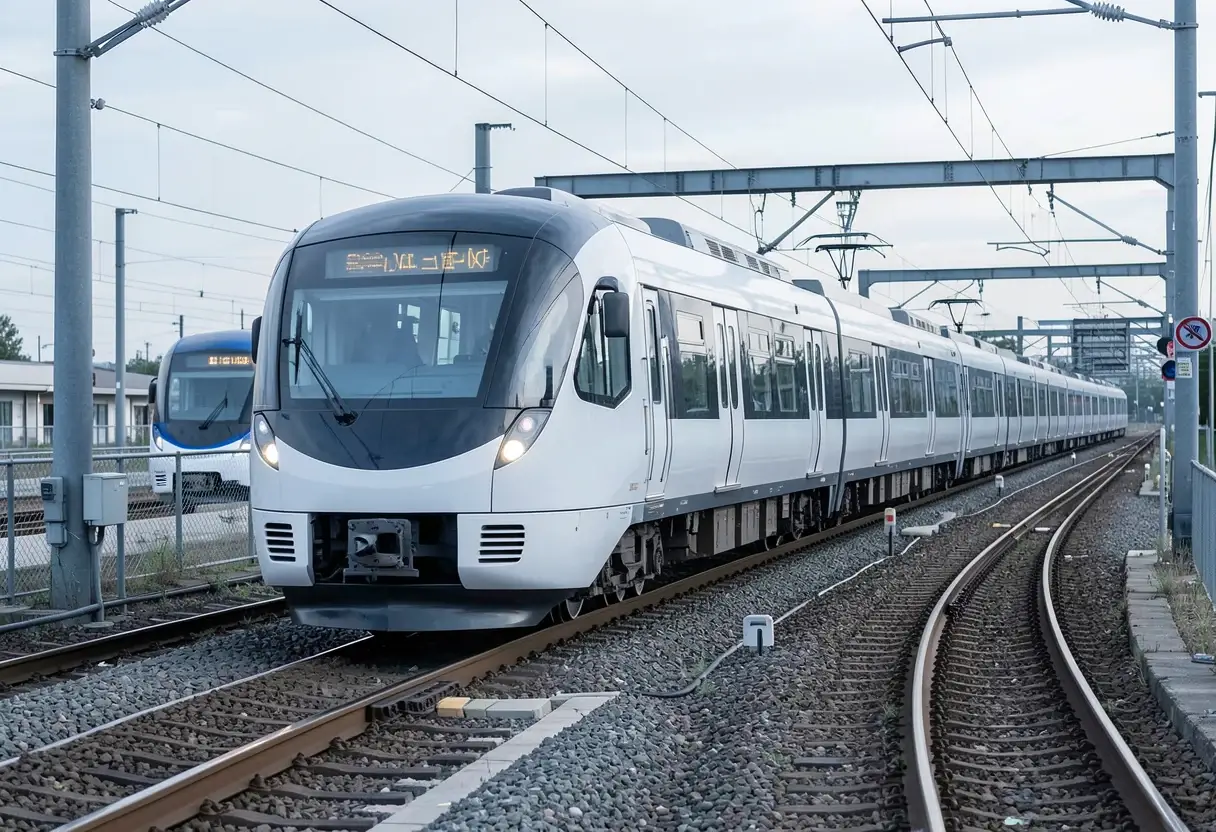
RSSB has published a Railway Industry Standard for traction-battery design, charging and operation, as TransPennine Express prepares to deploy 29 battery-electric trains.
· 3 min journey
Calling at
- RSSB has published a new Railway Industry Standard for traction-battery systems and their charging systems
- TransPennine Express plans to introduce 29 battery-electric trains on routes across northern England
- The standard covers battery design, charging, storage and maintenance requirements
- RSSB research is underway on battery traction safety risks and electricity network interaction
Britain's Rail Safety and Standards Board has published a new Railway Industry Standard covering the design, charging, storage and maintenance of traction-battery systems for rail vehicles, giving manufacturers and operators a single set of requirements as battery trains move from trials toward large fleet deployments.
The standard, titled Design of Traction-Battery Systems for Rail Vehicles and their Charging Systems, addresses a structural problem in the emerging sector. Until now, each manufacturer and operator introducing battery trains has developed its own approach, because no common framework existed. RSSB says the new requirements will reduce the need for bespoke specifications for individual fleets, limiting both the cost and the complexity of rollout.
The framework matters because battery traction occupies a specific gap in Britain's decarbonisation programme. Battery trains offer an alternative to diesel on routes where continuous overhead electrification may not be practical or cost-effective — a category covering significant parts of the regional network where full wiring is unlikely to be justified.
What does the new package include?
RSSB has published two connected documents:
- A Railway Industry Standard setting out requirements for battery design, charging, storage and maintenance across rail vehicles.
- Accompanying operational guidance for operators running battery trains in passenger service.
The operator guidance covers a key operational risk: managing transitions between electrified and non-electrified sections of track. RSSB says this advice will help reduce the risk of trains becoming stranded and causing passenger disruption — a failure mode unique to traction that depends on managing stored energy across gaps in the wired network.
Why now?
The timing reflects the shift from trial fleets to volume orders. TransPennine Express recently announced plans to introduce 29 battery-electric trains on routes across northern England — a deployment-scale commitment that dwarfs earlier demonstration programmes and makes fleet-by-fleet bespoke engineering expensive.
RSSB Chief Executive Mark Phillips framed the standards as consolidation of accumulated experience rather than new invention. "Battery trains are going to have a key role to play as the railway modernises and moves away from diesel, particularly on routes where full electrification may not be the best solution," he said.
"These new standards give the railway a common framework for introducing them safely and reliably, while avoiding unnecessary cost and duplication," Phillips added. "They will allow the industry to build on the experience gained from the first battery trains rather than starting again as each new fleet is introduced."
What comes next?
The standards are not the end of RSSB's work on battery traction. Further research is underway on two fronts.
The first examines safety risks associated with battery traction — an area where operational experience at fleet scale is still limited relative to diesel or straight electric multiple units.
The second investigates how trains can interact more efficiently with the electricity network. This includes whether changes to train design and software could improve the use of available power, and ways to address electricity network constraints without requiring major infrastructure upgrades.
That second question has direct cost implications. Grid connection capacity has emerged as a constraint on charging-heavy rail deployments, and design or software solutions that ease those constraints would avoid spending on substations and network reinforcement.
For manufacturers, the immediate effect is a defined requirements baseline. For operators, it is the operational guidance on section transitions. Both documents aim to ensure that the next tranche of battery train orders — on the scale of TransPennine Express's 29 units — enters service against a common framework rather than a fresh engineering conversation.
via railway-news.com (Source)
More from Rebecca Stone
Show full bio
Senior reporter covering money, funding and market shifts around Rail industry news and analysis at Mainline Report.
384 articles
Connecting services · Related articles
- 05:14
Battery power for commuter rail: the question Renewable Energy World puts to the industry
- 24:49
E-RailOpt: Nature paper models battery-freight charging placement
- 02:50
Škoda Unveils Second-Generation Battery Electric Train at InnoTrans 2026
- 06:25
GBR strategy links rolling stock to electrification and access
- 16:19
Railway Age Publishes 'Mainstreaming HFC Passenger Rail' Feature