05:14ROPlt 9538 words
Battery power for commuter rail: the question Renewable Energy World puts to the industry
Renewable Energy World asks whether commuter rail's future is battery powered, framing stored-energy traction as the option for lines that cannot justify full electrification.
· 3 min journey
Calling at
- Renewable Energy World's 'This Week in Cleantech' roundup asks directly whether the future of commuter rail is battery powered
- The article frames battery traction as an alternative for commuter lines where full overhead electrification is not economically justified
- The publication positions rail batteries within the wider cleantech agenda of grid storage and fleet electrification
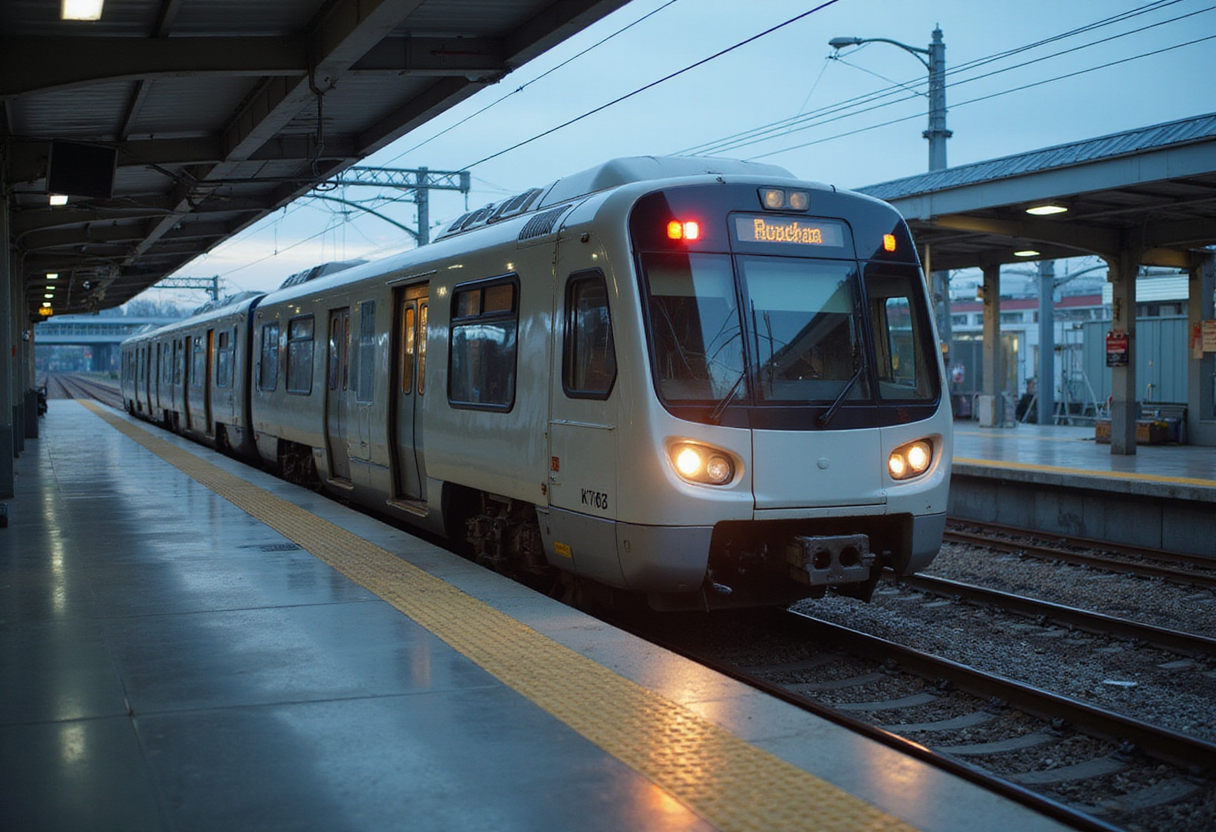
Renewable Energy World has put a direct question to the North American rail sector in its latest 'This Week in Cleantech' roundup: is the future of commuter rail battery powered? The item, published under that headline, frames battery-electric multiple units and battery tenders as a live option for regional and commuter operators facing decarbonisation mandates without the capital cost of full overhead electrification.
The headline itself signals how far the debate has moved. Five years ago, battery traction on passenger railways sat at the margins of industry discussion. Today, suppliers pitch it as a mainstream alternative for routes where catenary construction is too expensive or too slow to justify, and the question posed by the publication is no longer whether the technology works, but whether it will define the next generation of commuter fleets.
Why the question matters now
Commuter rail occupies an awkward position in transport decarbonisation. Dense urban core routes justify electrification on traffic volume alone, but outer branches and regional lines often run under diesel traction because wiring them would cost more than the traffic they carry can support. That leaves operators with ageing diesel fleets, tightening emissions rules and no cheap path to compliance.
Battery traction attacks that gap directly. Trains charge from overhead lines where they exist, then run on stored energy across the un wired segments. The operator keeps electric performance on the electrified core and avoids the largest single cost of extending catenary to every branch.
What the cleantech press is watching
Renewable Energy World's framing places rail batteries within the broader cleantech agenda the outlet covers each week: grid storage, charging infrastructure and fleet electrification. The inclusion of commuter rail in that roundup reflects a shift in how energy trade press treats the sector — no longer a diesel holdout, but a candidate for the same battery economics reshaping buses and trucks.
For railway operators, the practical questions remain the ones suppliers must answer with fleet data rather than projections:
- How far can a loaded commuter train run on a charge under winter conditions?
- What charging dwell times fit existing timetables?
- Do battery replacements over a 30-year asset life erode the savings against partial electrification?
- Which regulators will certify the fire-safety case for large onboard packs in tunnels?
Each answer determines whether battery traction scales beyond demonstration routes or remains a niche for short non-electrified gaps.
Claims against fleet plans
As with any supplier-led technology narrative, the headline question should be tested against what operators actually order. The signal to watch is not concept trains at trade shows but firm build contracts: multiple units specified with traction batteries from day one, tenders that list range and recharge requirements, and delivery dates written into fleet renewal programmes.
Where those orders appear, they will name the geography at stake — the branch lines, the corridors, the operators — and they will carry the tonnage and traffic figures that justify the choice. Until then, the question in the headline is exactly that: a question, put to an industry that has not yet answered it at fleet scale.
Renewable Energy World's roundup suggests the answer is coming, and that the energy sector now expects rail to be part of it.
via Google News: Passenger and commuter rail (Source)
More from Olivia Hart
Show full bio
Market editor covering industry trends and analytics at Mainline Report.
292 articles
Connecting services · Related articles
- 12:30
$1.1 Trillion Rail Electrification Study Drew The Wrong Question
- 24:10
Metra's Battery-Electric Train Trial Aims at Diesel-Free Commuter Service
- 14:15
MBTA commuter rail electrification splits opinion
- 24:54
Hydrogen rail freight fails the cost test, decarbonisation expert says
- 24:49
E-RailOpt: Nature paper models battery-freight charging placement