13:58Passenger Services621 words
Liverpool Street Logs 102.7 Million Passengers, First UK Station Over 100 Million
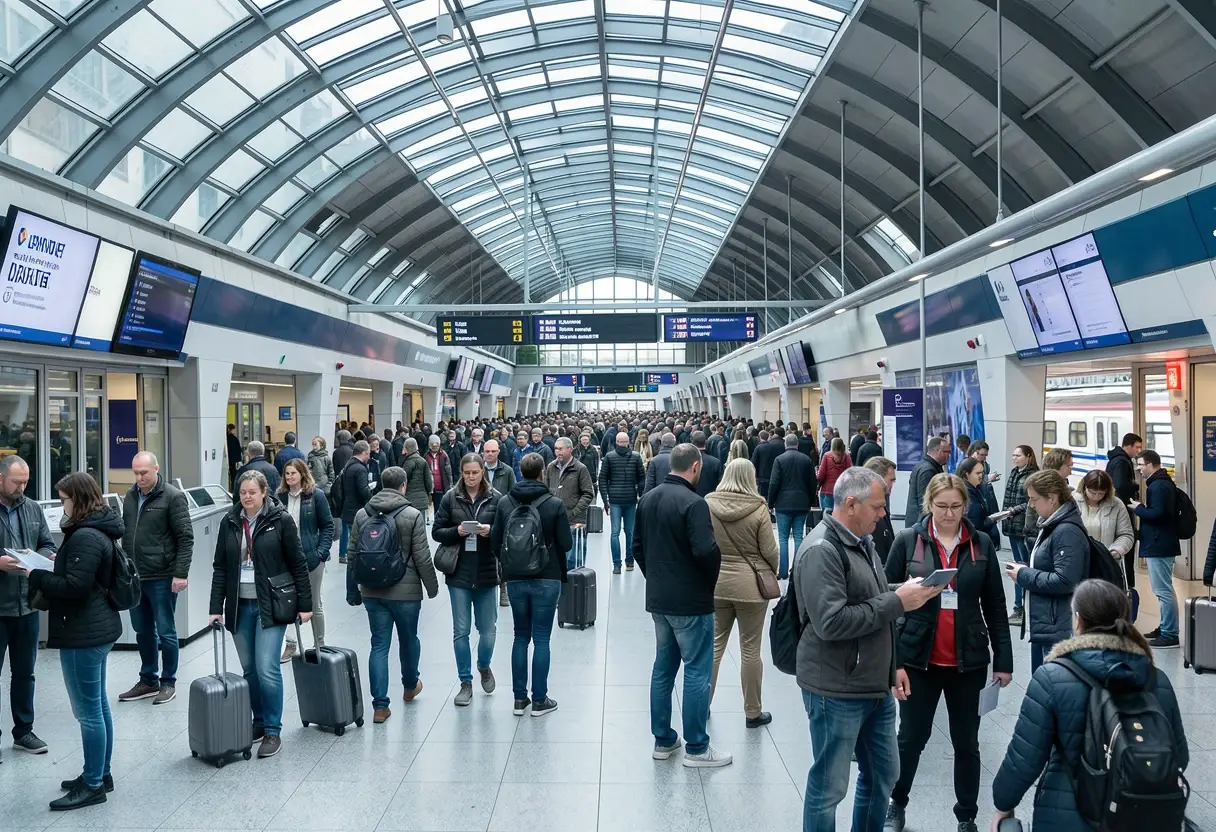
London Liverpool Street became the first British station to exceed 100 million annual entries and exits, logging 102.7 million as Elizabeth line corridors dominated the ORR's busiest-route rankings.
· 3 min journey
Calling at
- Liverpool Street recorded 102.7 million entries and exits in April 2025–March 2026, up from 98.0 million.
- Six of the 10 busiest station-to-station journeys involved Elizabeth line-only stations.
- Birmingham New Street led outside London with 38.8 million; Leeds overtook Manchester Piccadilly at 28.0 million.
- Reddish South was Britain's least-used station with 94 entries and exits all year.
- National rail journeys rose 6% year on year, per ORR passenger usage statistics.
London Liverpool Street recorded an estimated 102.7 million entries and exits between April 2025 and March 2026, becoming the first station in Great Britain to pass the 100 million mark in a single year. The figure comes from the Office of Rail and Road's (ORR) latest station usage estimates, which are derived mainly from LENNON, the rail industry's ticketing and revenue system, alongside local ticketing data. The counts measure station entries and exits, not individual passengers.
The total represents growth from 98.0 million in the previous 12-month period, and it confirms Liverpool Street as Britain's busiest station for the fourth consecutive year. The margin over its rivals is wide. London Paddington ranked second with 72.9 million, followed by London Waterloo at 71.6 million. Tottenham Court Road took fourth place with 67.2 million, and London Bridge completed the top five at 57.0 million.
What does the ranking reveal about demand?
Four of the five busiest stations sit on or connect to the Elizabeth line (the cross-London railway opened in full in 2022), and the route data sharpens that picture. The busiest station-to-station journey in the country ran between Liverpool Street and Tottenham Court Road, with an estimated 8.2 million journeys. Six of the 10 busiest journeys involved stations served exclusively by the Elizabeth line. Liverpool Street's dominance is not an accident of geography alone; it reflects where the new east-west corridor carries the heaviest flows.
Outside London, Birmingham New Street held its place as the busiest station with 38.8 million entries and exits. Leeds moved into second place nationally outside the capital at 28.0 million, overtaking Manchester Piccadilly, which recorded 26.6 million. In Scotland, Glasgow Central led with 25.1 million and Edinburgh Waverley followed at 23.9 million. Cardiff Central remained Wales's busiest station with 12.9 million.
The route rankings outside London tell a regional story of their own:
- Birmingham New Street to Coventry was the busiest non-London journey, with 2.5 million trips.
- Edinburgh Waverley to Glasgow Queen Street ranked second, with 2.3 million.
Where is demand thinnest?
The estimates also identify the least-used stations in Great Britain. Reddish South in Greater Manchester recorded just 94 entries and exits across the entire year. Denton, also in Greater Manchester, counted 100. Elton and Orston in Nottinghamshire recorded 102. The gap between the busiest and quietest ends of the network now spans six orders of magnitude, a disparity that any debate over station funding or closure has to confront.
Graham Richards, ORR director of planning and performance, said: "Liverpool Street becoming the first station to exceed 100 million entries and exits in a single year is a significant milestone for Britain's railway. Our latest station usage estimates also show increases at major stations outside London, including Birmingham New Street, Glasgow Queen Street and Cardiff Central."
He linked the figures to the regulator's wider dataset: "This follows our recent passenger rail usage statistics, which showed a 6% increase in journeys across Great Britain in the year April 2025 to March 2026." Richards added that the statistics "provide a valuable picture of passenger travel across the country, helping the rail industry understand changing demand and make informed decisions about services and future investment."
The growth is measured, not projected: it has already happened within the reported period. What follows from it is a planning question. With Liverpool Street operating at record volumes and Elizabeth line stations capturing most of the country's densest flows, capacity decisions at those interchanges, and at underused stations like Reddish South, will shape how the industry allocates investment in the coming control periods.
via railway-news.com (Source)
More from Priya Raman
Show full bio
Staff writer covering companies, deals and strategy in Rail industry news and analysis at Mainline Report.
405 articles
Connecting services · Related articles
- 20:40
Liverpool Street becomes first UK station to pass 100 million passengers
- 03:50
UK government targets 40% growth in rail freight by 2040
- 02:54
New Piccadilly Line train debuts at InnoTrans in Berlin
- 23:09
Grand Central seeks ORR approval for Manchester–St Pancras open access service
- 24:44
Scarborough Station Gateway scheme puts £1m rail funding at risk