02:54ROPlt 7632 words
New Piccadilly Line train debuts at InnoTrans in Berlin
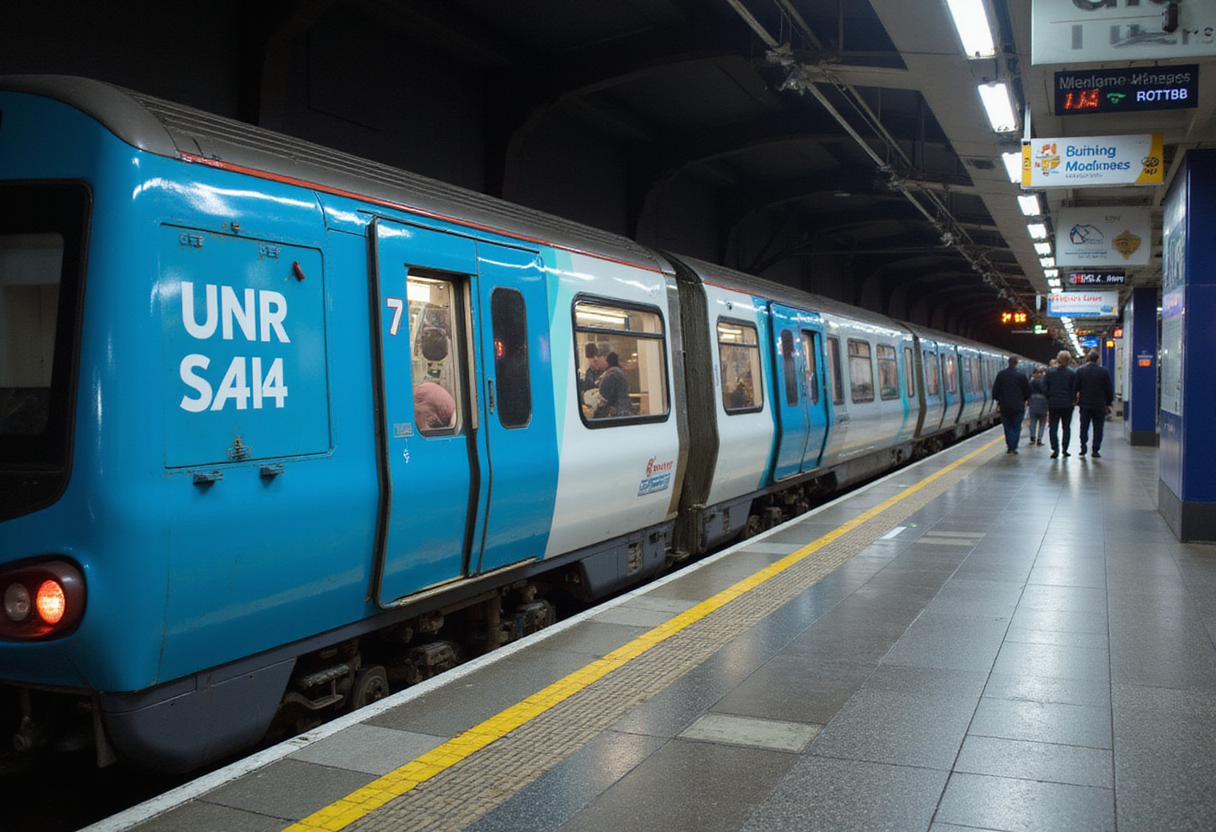
A new-build Piccadilly Line train is on public display at InnoTrans in Berlin. The unit marks the rolling stock's first showing outside the UK since procurement entered its industrial phase.
· 3 min journey
Calling at
- A new-build Piccadilly Line train is on public display at InnoTrans in Berlin, RailAdvent has reported
- InnoTrans gathers manufacturers, operators and infrastructure managers from more than 60 countries at Messe Berlin
- The Piccadilly Line serves 53 stations between Heathrow Airport and Cockfosters, the busiest deep-level tube route in London
- The existing 1973-stock fleet remains the oldest in regular Underground operation despite successive refurbishments
- The Piccadilly Line operates with longer train sets than most other Underground routes
A new-build Piccadilly Line train is on public display at InnoTrans in Berlin, RailAdvent has reported. The unit marks the rolling stock's first showing outside the United Kingdom since the procurement programme entered its industrial phase.
InnoTrans brings together rolling stock manufacturers, operators and infrastructure managers from more than 60 countries. The fair occupies the Messe Berlin exhibition grounds across halls dedicated to railway technology, infrastructure, public transport, tunnel construction and vehicle interiors. Visitors typically include technical press, procurement teams and regulators reviewing the latest generation of equipment.
Where does the Piccadilly Line sit in the London network?
The Piccadilly Line runs from Heathrow Airport in the west to Cockfosters in the north, passing through central stations including King's Cross St Pancras, Piccadilly Circus, Leicester Square and Green Park. Transport for London (TfL) oversees the route alongside ten other Underground lines.
The Piccadilly Line opened in stages between 1906 and 1933, with the Heathrow branch extended to Terminal 5 in 2008. Across 53 stations, it carries the heaviest passenger volumes of any deep-level "tube" route.
Much of that traffic funnels through the Heathrow branch, a key artery for airport staff and international travellers. The combination of airport demand, commuter flows and central London interchange traffic has shaped successive investment decisions on rolling stock and signalling.
Why does the fleet's age drive replacement?
The line's existing 1973-stock trains entered passenger service in the mid-1970s. They have undergone successive refurbishment programmes but remain the oldest units in regular operation on the Underground. Replacement has featured in TfL's published business plans for several years.
Operating long-tenured stock carries rising maintenance cost, energy inefficiency and accessibility constraints. Newer trains typically offer wider doors, walk-through saloons, improved climate control and better provisions for passengers with reduced mobility, factors that shape dwell times at busy central stations.
What does the InnoTrans unveiling demonstrate?
Display of a full-size unit, rather than a scale model or computer rendering, indicates procurement has reached the demonstrator phase. Buyers at this stage evaluate passenger accommodation, door positioning, cab ergonomics and accessibility provision against operational requirements, often before contract signature or series-build approval.
The Piccadilly Line operates with longer trains than most other Underground routes, a configuration that has shaped supplier approaches to capacity, dwell time and platform interface. Static display at InnoTrans offers TfL and other visiting operators the chance to assess proposed solutions against those constraints without the cost and complexity of bringing the unit to London.
Why display the unit in Berlin rather than the UK?
InnoTrans gathers European and overseas buyers under one roof. For metro authorities outside the European mainstream, the show offers a rare opportunity to inspect new-build equipment at full scale alongside competing designs.
TfL has used the InnoTrans platform before to engage with rolling stock suppliers, given the limited domestic rolling stock manufacturing base in the United Kingdom. The biennial cycle also aligns with TfL's medium-term procurement review timetable, allowing the authority to refresh shortlists and benchmark options against peer operators.
TfL delegations have attended past editions alongside operators from Asia, the Middle East and the Americas. Procurement teams typically use the show to compare saloon layouts, energy consumption, signalling integration and maintenance access before returning home to refine specifications or advance contract negotiations.
What comes next?
A static display typically precedes dynamic testing on a manufacturer's own test track. The unit would then undergo on-network trials and certification against TfL's safety case before any introduction to passenger service. Until those steps complete, the train's entry into revenue operation remains provisional.
InnoTrans coverage will continue across the show's four days. Further supplier presentations and contract announcements are expected before delegates return to their respective networks.
via Google News: Rolling stock (Source)
More from Rebecca Stone
Show full bio
Senior reporter covering business strategy at Mainline Report.
261 articles
Connecting services · Related articles
- 13:00
Siemens Unveils New Piccadilly Line Train for London Underground
- 24:49
Alstom unveils Cologne and Düsseldorf EMU mock-up at InnoTrans
- 16:19
First passenger train runs under digital signalling on East Coast Main Line
- 24:49
InnoTrans 2026 to Showcase New Rolling Stock from Major Manufacturers
- 13:25
First passenger train runs under digital signalling on East Coast Main Line