12:18SAPlt 2657 words
Indiana Rail Safety Week: Vanderburgh County shifts from warnings to tickets at crossings
Vanderburgh County deputies will ticket drivers at railroad crossings during Indiana Rail Safety Week, replacing warnings with citations to cut crossing violations and collisions.
· 3 min journey
Calling at
- Vanderburgh County deputies will issue tickets instead of warnings to drivers violating railroad crossing rules during Indiana Rail Safety Week.
- The enforcement campaign targets driver behaviour at highway-rail grade crossings, the leading cause of rail collision deaths and injuries.
- The announcement does not state whether the ticketing posture will continue after the safety week concludes.
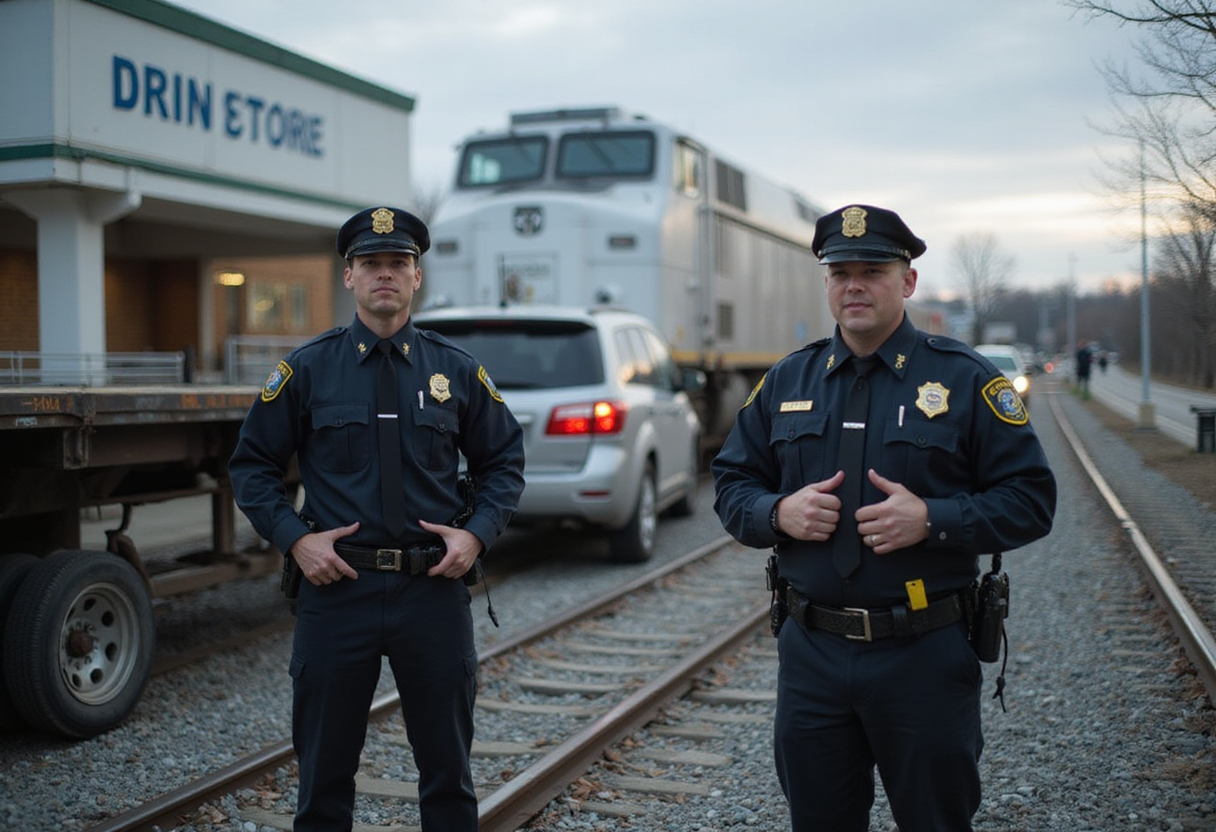
Vanderburgh County sheriff's deputies will issue tickets rather than warnings to drivers who violate railroad crossing rules during Indiana Rail Safety Week, a shift the county says is designed to change driver behaviour rather than simply flag it.
The announcement zeroes in on the most persistent safety problem on the US rail network: the highway-rail grade crossing. Year after year, crossing collisions account for the large majority of rail-related deaths and injuries involving trains, and in almost all of those events the root cause is a road vehicle — a car, a truck, a delivery van — on the tracks when it should not have been. Enforcement aimed at drivers, rather than at rail operations, is the standard response, and Vanderburgh County has now taken that step explicitly.
What changes on the ground
Under the new approach, a deputy who observes a driver going around lowered gates, ignoring flashing lights and bells, or stopping on the tracks will write a citation. In many jurisdictions, safety-week enforcement campaigns begin with a warning period, during which officers stop violators, explain the risk, and send them on their way. Vanderburgh County has cut out that step for the duration of the campaign.
The operational logic is straightforward. Warnings carry no cost to the driver, and the behaviour they are meant to correct — racing a train, weaving around gates, queuing across the tracks — is precisely the behaviour most likely to produce a fatal outcome. A ticket imposes a fine, points on a licence, and an insurance consequence. The county's position is that the severity of the potential collision justifies skipping the educational phase.
Why crossings, and why now
Indiana Rail Safety Week places the state's law enforcement agencies, rail operators, and safety regulators behind a coordinated message at the same time. Vanderburgh County, home to Evansville in the state's southwest corner, sits on a rail corridor mix that includes freight lines serving regional industry. Freight traffic there, as across the Midwest, means long, heavy trains moving through crossings at all hours — trains that cannot stop quickly and cannot swerve.
The physics is unforgiving and well documented in rail industry safety campaigns: a freight train travelling at mainline speed can need a mile or more to come to a halt once emergency brakes are applied. By the time a locomotive engineer sees a vehicle on the crossing, there is no evasive option. That asymmetry — a driver's split-second decision against a train that cannot respond — is the entire rationale for strict crossing enforcement.
Enforcement as a capacity and cost measure
Crossing incidents are not only a safety statistic for railroads and communities. Each collision triggers an investigation, service disruption, potential hazmat risk depending on the cargo, track and equipment damage, and hours of delay for other traffic on the line. For short lines and Class I operators alike, a single crossing strike can shut a corridor for a day or more. Enforcement that prevents the collision protects the network's throughput as much as its people.
For the motoring public, the immediate effect of the campaign is financial and administrative: violations that might previously have drawn a roadside conversation will now draw a citation. For rail operators and safety regulators in Indiana, the effect they will be watching for is a measurable one — fewer vehicles on the tracks, and fewer crossing collisions in the county's incident data.
What to watch
The county's announcement covers the safety-week campaign period, and it does not specify whether the ticketing posture will continue once the week ends. That is the open question for residents and for anyone tracking whether short, sharp enforcement bursts produce lasting behaviour change at crossings, or whether the effect fades when the campaign signs come down.
Vanderburgh County drivers who cross rail lines on their daily routes should treat the change literally: during Indiana Rail Safety Week, deputies will write tickets, not warnings.
via Google News: Rail safety (Source)
More from Priya Raman
Show full bio
Staff writer covering consumer brands and retail at Mainline Report.
127 articles
Connecting services · Related articles
- 02:13
Vanderburgh County deputies to ticket drivers at rail crossings
- 15:05
Vanderburgh County Deputies to Ticket Drivers at Rail Crossings
- 03:48
Indiana Rail Safety Week: Vanderburgh deputies to ticket crossing violators
- 15:55
Vanderburgh County Deputies to Ticket Drivers at Rail Crossings
- 22:58
Vanderburgh County Deputies to Ticket Drivers at Rail Crossings