22:58SAPlt 11686 words
Vanderburgh County Deputies to Ticket Drivers at Rail Crossings
Deputies in Vanderburgh County, Indiana will issue citations instead of warnings to drivers violating railroad crossing rules during Indiana Rail Safety Week.
· 3 min journey
Calling at
- Vanderburgh County deputies will issue tickets, not warnings, to drivers violating railroad crossing rules during Indiana Rail Safety Week.
- The enforcement campaign covers grade crossings in Vanderburgh County, Indiana, anchored by the city of Evansville.
- Success will be measured through crossing violation and collision data in the county.
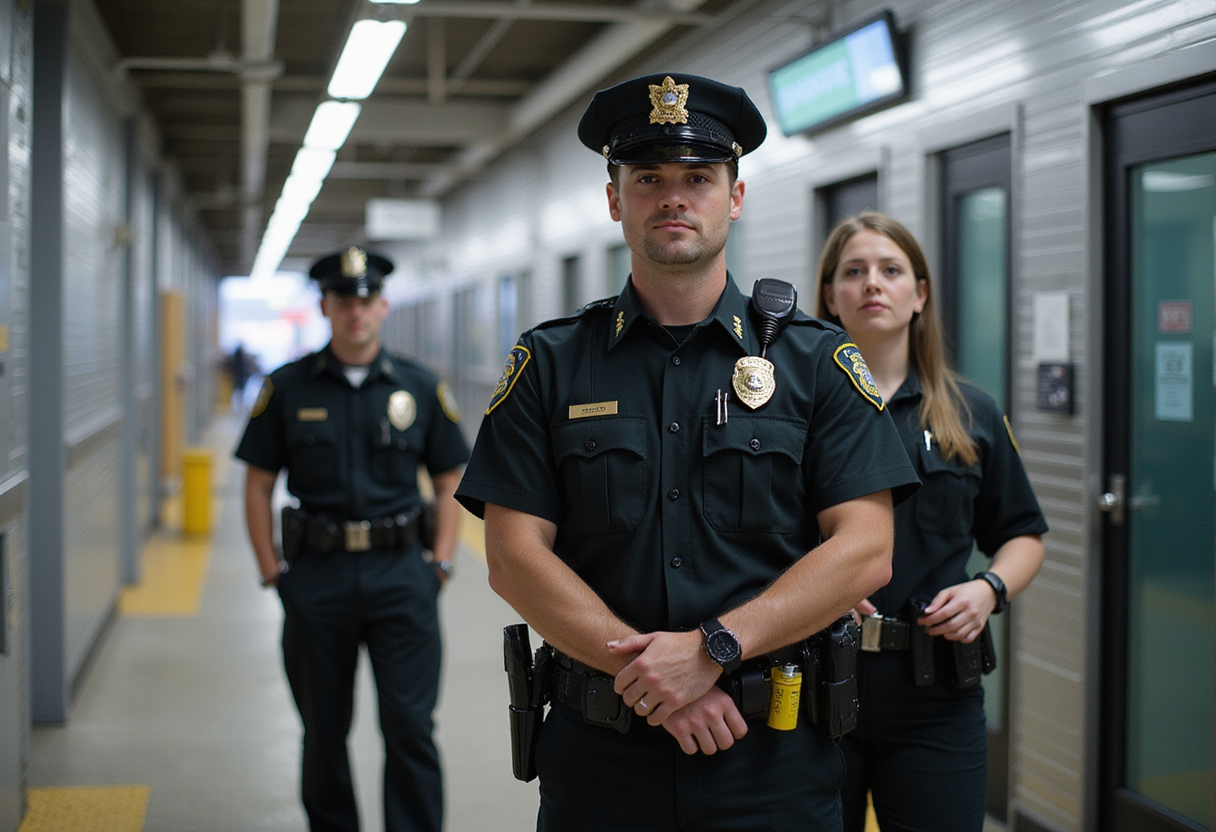
Deputies in Vanderburgh County, Indiana, will issue tickets rather than warnings to drivers who violate railroad crossing rules during Indiana Rail Safety Week, marking a shift from education-focused outreach to direct enforcement in the southwestern corner of the state.
The announcement, reported by Valley News Live, positions the county sheriff's office as the enforcing authority at grade crossings in and around Evansville, the county seat and the region's largest city. The campaign runs under the banner of Indiana Rail Safety Week, a statewide initiative that concentrates law enforcement attention on crossing violations during a defined period.
The enforcement change is straightforward in its mechanics. Drivers who cross tracks against active warning signals, drive around lowered gates, or stop on the tracks will receive citations instead of the warnings that often accompany first-time contact during safety campaigns. For motorists, that converts a routine traffic stop into a fine, points on a license, and the cost consequences that follow.
The reasoning behind the stricter approach rests on the physics of train-versus-vehicle collisions. A freight train weighing thousands of tons cannot stop in the distance a car can, and crossing violations remain among the most lethal categories of highway crashes. Enforcement campaigns of this type treat the citation as a deterrent tool: the goal is to change driver behavior before a collision occurs, not to punish after one does.
Vanderburgh County sits on the Ohio River across from Kentucky, and its rail lines carry freight traffic through a network of urban and rural grade crossings. That mix matters for enforcement. Urban crossings near Evansville see high vehicle volumes at relatively low speeds, while rural crossings can carry higher-speed traffic with sightlines that depend on driver attention to passive or active warning devices.
Indiana Rail Safety Week follows a model used in other states, where law enforcement agencies coordinate with rail operators and safety organizations during a designated week. Campaigns typically pair visible enforcement at crossings with public messaging about the risks of violating warning devices. The Vanderburgh announcement indicates the enforcement component will carry real financial consequences this year for drivers in the county.
The sheriff's office decision to ticket rather than warn represents a deliberate escalation. Warning-only campaigns rely on the assumption that drivers are unaware of the rules or the risk; citation-based enforcement assumes drivers know and calculate. Safety regulators and enforcement agencies have debated that balance for years, and the trend in recent campaigns has leaned toward citations as data on violation recurrence has accumulated.
For the county's drivers, the practical outcome is a change in cost. A citation carries a fine set by Indiana statute, court costs, and potential insurance consequences, where a warning carries none. The deterrent effect depends on visibility: enforcement weeks work when drivers see deputies positioned at crossings during high-traffic periods.
The campaign also serves an operational purpose for the railroads. Crossing incidents shut down lines, delay trains, and trigger investigation protocols that can hold traffic for hours. Fewer violations mean fewer collisions, and fewer collisions mean more predictable service on the lines crossing Vanderburgh County.
Indiana's rail safety initiatives operate within a broader regulatory framework that assigns enforcement jurisdiction to local law enforcement at public crossings, with the Indiana Department of Transportation and the federal Federal Railroad Administration tracking incident data. Crossing collision statistics inform where enforcement and infrastructure investment — gates, lights, grade separation — get directed.
The Vanderburgh County campaign's timing within the statewide safety week gives it a fixed window. Deputies will concentrate on crossings during that period, though the sheriff's office has not indicated whether the ticket-first approach will continue after the week concludes. Enforcement campaigns often end when the designated period ends, leaving the longer-term effect dependent on whether driver behavior holds.
The measure of success will be visible in the county's crossing incident data. If ticket-based enforcement during the safety week reduces violations and collisions at Vanderburgh County crossings, the sheriff's office will have a data point supporting continued citation-based enforcement beyond the campaign window.
via Google News: Rail safety (Source)
More from Amara Osei
Connecting services · Related articles
- 15:05
Vanderburgh County Deputies to Ticket Drivers at Rail Crossings
- 15:15
Indiana Rail Safety Week: Vanderburgh deputies to ticket crossing violators
- 15:40
Indiana Rail Safety Week: Vanderburgh deputies to ticket crossing violators
- 02:13
Vanderburgh County deputies to ticket drivers at rail crossings
- 22:35
Vanderburgh County Deputies to Ticket Drivers at Rail Crossings