24:59ROPlt 12512 words
Indian Railways commissions first LNG-plus-diesel train
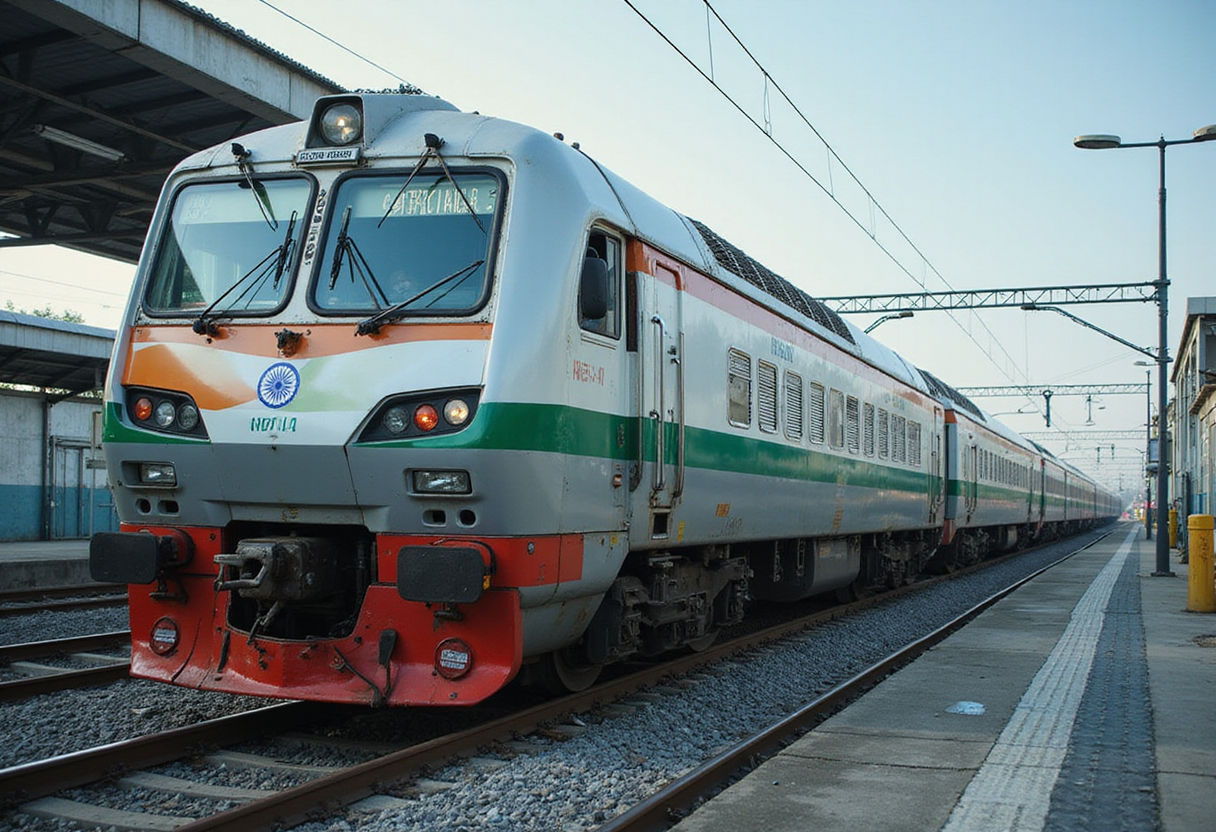
Indian Railways has flagged off its first LNG-plus-diesel train, putting Asia's largest operator into a motive-power category that so far has taken root only on North American freight corridors and a handful of European pilots.
· 3 min journey
Calling at
- Indian Railways has commissioned its first LNG-plus-diesel train, reported by trade publication Rolling Stock World.
- Route, locomotive class, fuel-system supplier and timetable were not disclosed in the available reporting.
- Indian Railways operates more than 68,000 km of route and runs more than 13,000 trains daily, the world's fourth-largest national rail network.
- LNG produces roughly 25% less CO₂ per unit of energy than diesel and almost no particulate matter.
- Existing LNG-rail deployments are concentrated with North American Class I freight railroads and a small number of European pilots.
Indian Railways has put its first LNG-plus-diesel train into revenue service, marking Asia's largest rail operator's entry into a motive-power category previously confined to North American freight corridors and a handful of European pilots.
The dual-fuel train was flagged off in India, trade publication Rolling Stock World reported. Available reporting does not identify the locomotive class, the fuel-system supplier, the route or the timetable, leaving most operational questions open.
What the Indian base looks like
Indian Railways runs the fourth-largest national rail network in the world, with route length above 68,000 km and a daily train count above 13,000. Its traction portfolio runs electric or conventional diesel; LNG, CNG, biodiesel and hydrogen have circulated in ministry documents and pilot proposals, but none had reached the mainline network in revenue form until this launch.
The fuel-economics case rests on displacement of imported diesel with LNG, which in India arrives at terminals at Kochi, Dahej and Hazira. LNG produces roughly 25% less CO₂ per unit of energy than diesel and almost no particulate matter. In a country that imports the bulk of its crude, even partial displacement alters the import bill.
What the global LNG-rail base looks like
Dual-fuel LNG-plus-diesel locomotives have moved through several narrow commercial windows. The largest active deployment sits with a North American Class I freight railroad running converted EMD or GE units on corridors where LNG refuelling infrastructure already exists. Smaller pilots have run in Europe on regional passenger services, and on isolated industrial lines.
None of these deployments have crossed into regular intercity or high-traffic passenger service at scale. Indian Railways' pilot, if successful, would push the technology into one of the heaviest passenger-and-freight operating environments in the world.
Why scaling depends on four operational answers
Fuel-system integration comes first: a converted diesel engine burning LNG alongside a small diesel pilot charge, or a spark-ignition gas engine with diesel as a range extender. The maintenance and emissions profiles differ significantly between the two.
Second, fuelling logistics. LNG must be kept at cryogenic temperatures, roughly -162°C. Road and terminal delivery of cryogenic fuel into a working rail depot is a known engineering challenge, with boil-off gas management the recurring pain point.
Third, climate tolerance. Indian summer temperatures above 45°C and monsoon humidity push LNG tank pressure-management hardware well beyond anything tested in the North American deployments.
Fourth, scale economics. Unit conversion cost for a dual-fuel heavy-haul locomotive typically runs several million dollars above an equivalent diesel. Procurement models — direct purchase, leasing, fuel-supplier concession — will shape whether Indian Railways can justify more than one or two units.
What to watch
The Indian Ministry of Railways has not, in the available reporting, indicated whether additional units will follow. Watch for a follow-up commissioning announcement, a fuel-supplier partnership disclosure and the first published performance numbers, which together will reveal whether the launch was a ceremonial demonstration or the start of a fleet programme.
via Google News: Rolling stock (Source)
More from Rebecca Stone
Show full bio
Senior reporter covering business strategy at Mainline Report.
261 articles
Connecting services · Related articles
- 12:40
US freight rail now emits more soot-linked pollution than coal plants
- 15:05
Oriental Rail Infrastructure Posts 107.5 Million Rupee Q1 Profit
- 16:15
Oriental Rail Infrastructure shares rise on Rs 3.64 crore order win
- 14:13
Oriental Rail Infrastructure Wins 16.5 Million Rupee Order From Modern Coach Factory
- 12:25
GBR rolling stock strategy to settle electrification question