12:48INPlt 2564 words
China Puts Four New High-Speed Lines Into Service
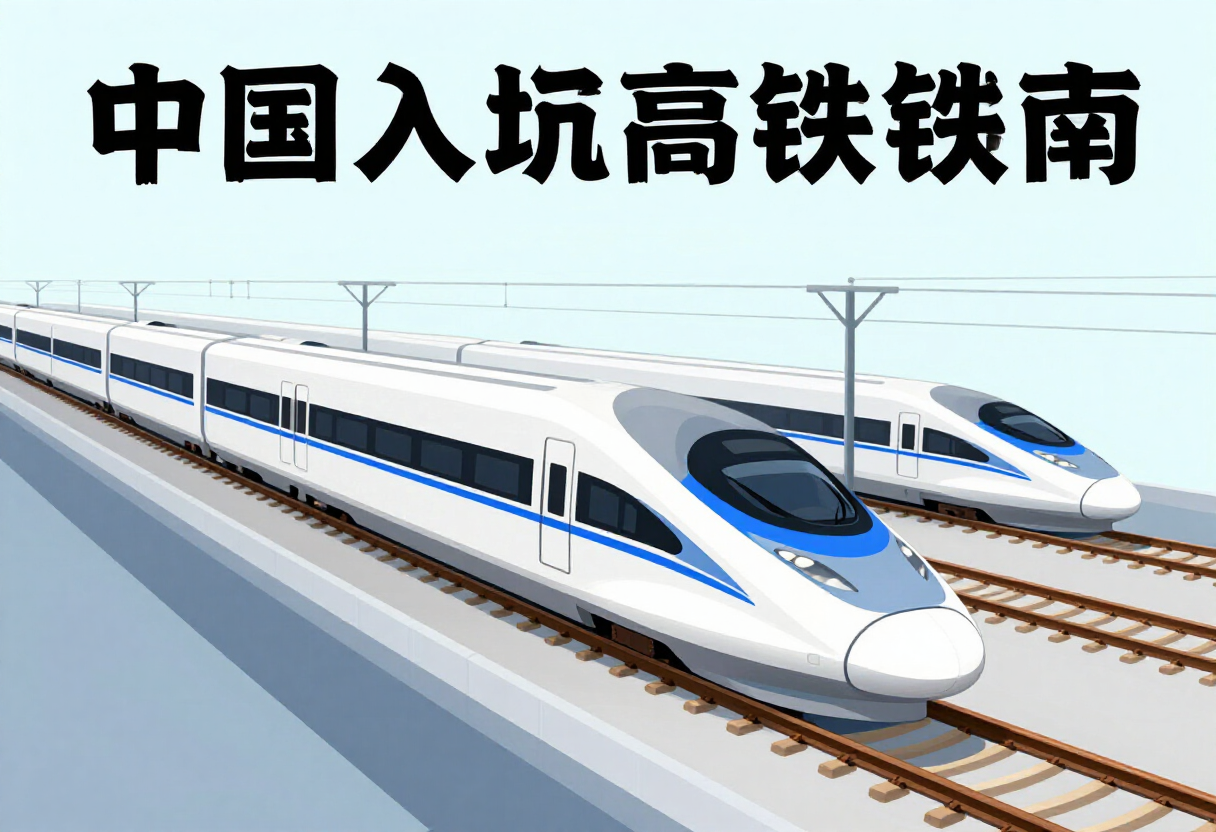
China has commissioned four new high-speed lines, extending the world's largest network and shifting more passenger traffic off conventional corridors for freight capacity.
· 3 min journey
Calling at
- China opened four new high-speed railway lines, expanding the world's largest high-speed network.
- The source report did not specify route lengths, design speeds or the provinces served by the new lines.
- China's high-speed network exceeds the combined high-speed mileage of the EU and Japan.
China has opened four new high-speed railway lines, adding capacity to what is already the world's largest high-speed network and continuing a build-out programme that has no parallel in any other national rail market.
The announcement, reported by bastillepost.com, confirms the commissioning of four routes but does not specify their combined length, design speeds, or the provinces they serve. Those parameters matter for assessing the operational impact. On recent Chinese openings, new lines have typically run at design speeds of 250 to 350 km/h, connect provincial capitals or major regional cities, and are built to relieve congestion on conventional corridors that mixed passenger and freight traffic already saturates.
The service consequences are direct. Each new high-speed line shifts long-distance passenger flows off older, slower infrastructure, freeing paths for freight on conventional routes and cutting point-to-point journey times on the affected corridors. Where Chinese cities have gained high-speed links since the network's first lines opened in 2008, rail has consistently taken market share from domestic aviation on city pairs under 1,200 km — an outcome airlines in China have publicly acknowledged by cutting parallel short-haul services.
The four openings also fit the pattern of China's current investment cycle. State planners have moved beyond the dense trunk routes linking the largest eastern cities and now target second-tier cities, western provinces and regional connectors. These lines carry lower traffic densities than the Beijing–Shanghai corridor but serve Beijing's stated policy goals: binding regional economies together, raising rail's share of intercity travel, and supporting development in interior provinces.
For suppliers, the commissioning of new lines sustains demand for rolling stock, signalling and electrical infrastructure at a scale unmatched elsewhere. CRRC, the state rolling stock group and the world's largest train builder, supplies the fleets; its fuxing-series EMUs operate across the network at speeds up to 350 km/h, the fastest scheduled commercial service in the world. Each line opening triggers follow-on orders for trainsets, maintenance capacity and depot facilities, with contract sizes tied to planned service frequencies.
The operator side of the equation is equally concentrated. China State Railway Group, the national operator, runs the network and sets timetables, fares and service patterns. New lines enter its national dispatching system, which coordinates more than 3,000 high-speed train movements daily across the network — a figure that itself reflects the scale at which China now operates scheduled high-speed service.
As with any infrastructure announcement of this kind, the openings should be read against actual traffic outcomes rather than construction milestones alone. Ridership, revenue per kilometre and load factors on individual lines vary widely across the Chinese network; profitable trunk corridors coexist with newer regional lines that take years to reach forecast demand. The operating figures for these four routes, once published, will show whether they follow the trajectory of the heavily used eastern lines or the slower ramp-up seen on some western extensions.
What is not in dispute is the direction of travel. With these four routes in commercial service, China has widened a gap that already separated its high-speed network from every other in the world — a network larger than the combined high-speed mileage of the European Union and Japan — and further openings are already scheduled in the current five-year construction plan.
via Google News: High-speed rail (Source)
More from Rebecca Stone
Show full bio
Senior reporter covering business strategy at Mainline Report.
120 articles