06:13GLPlt 2418 words
China Opens Four High-Speed Lines, Extending National Network
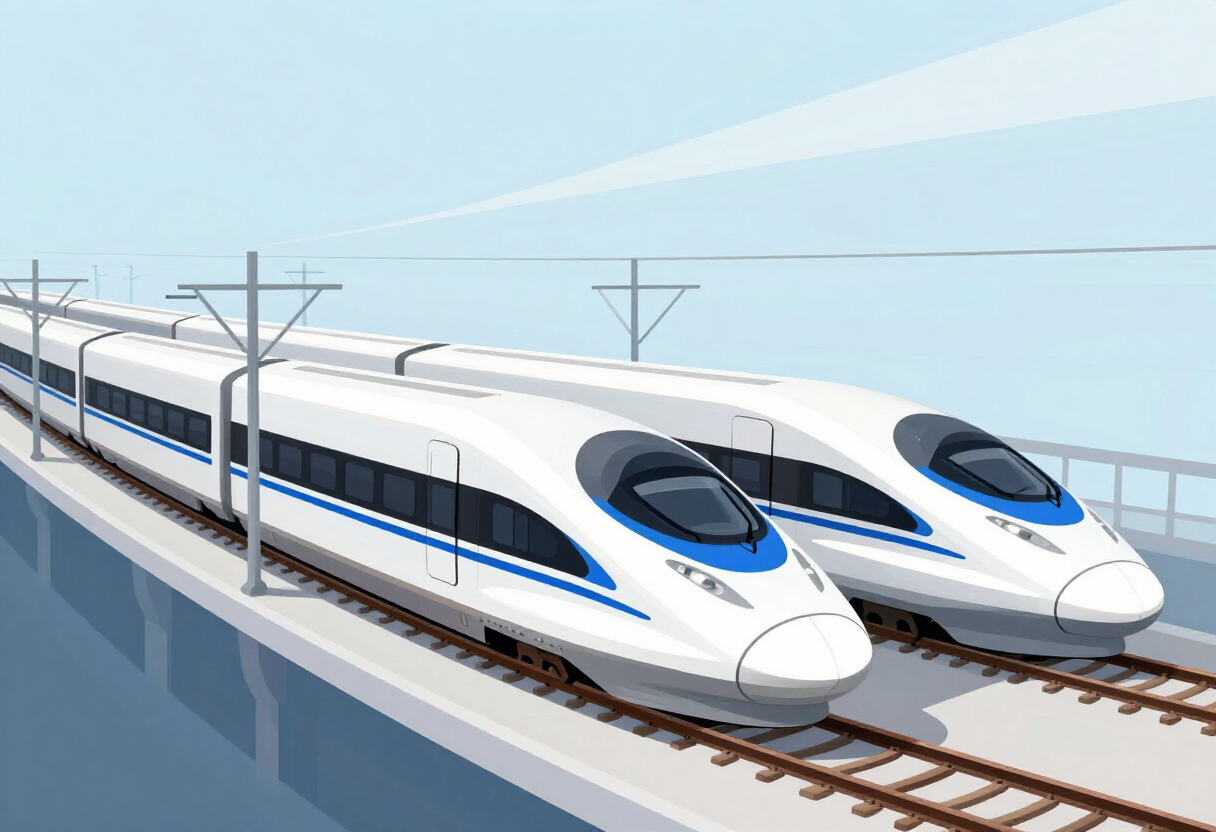
China has commissioned four new high-speed rail lines in a single round of openings, extending the world's largest fast-rail network and cutting journey times on the affected corridors.
· 2 min journey
Calling at
- China opened four new high-speed rail lines, expanding the world's largest fast-rail network.
- The openings cut journey times and relieve capacity on older conventional routes.
- Additional high-speed lines remain under construction, with commissioning dates spread over coming years.
China has opened four new high-speed rail lines, extending a national network that already ranks as the largest in the world.
The simultaneous commissioning of four routes marks another stage in the country's continuing programme of expanding fast rail capacity. Each opening adds point-to-point connections that cut journey times between regional centres and feeds additional passenger demand into trunk corridors.
China State Railway Group, the national operator, has pursued a build-out strategy that prioritises linking provincial capitals and major economic zones with trains running at 250 km/h and above. The four new lines follow that pattern: they shorten travel times on the corridors they serve and relieve capacity constraints on older conventional routes, freeing those lines for freight.
The scale of the national programme remains unmatched. China's high-speed network passed 45,000 route-km years ahead of the targets set in successive five-year plans, and the recent openings push the total higher. Planners have coupled line construction with fleet orders and depot investment, allowing new services to launch at frequencies that match projected demand from the first day of operation.
For passengers, the practical outcome of each opening is measured in reduced journey times and added daily services between city pairs that previously relied on slower conventional trains or aviation. For the operator, the new lines redistribute traffic across the network, easing congestion on the busiest trunk routes between Beijing, Shanghai, Guangzhou and regional hubs.
The economics of the expansion continue to draw scrutiny. Several early high-speed lines carry heavy debt loads, and China State Railway Group has restructured financing on some corridors to manage the cost of construction. The newest openings will face the same test: ridership on each route will determine whether the investment performs against the traffic projections used to justify it.
Regional development remains the stated policy rationale. Fast rail links reshape commuting ranges around major cities, extend labour markets, and support the government's goal of tying inland provinces more closely to coastal economic centres. The four lines opened this week serve that broader objective of narrowing travel-time gaps across the country.
The construction pipeline stays full. Additional lines remain under construction across the network, with commissioning dates spread through the coming years. If the current opening pace holds, China will extend its lead as the operator of the world's largest high-speed network, and the next round of route inaugurations will continue to recalculate journey times on the national map.
via Google News: High-speed rail (Source)
More from Rebecca Stone
Show full bio
Senior reporter covering business strategy at Mainline Report.
120 articles