05:22SAPlt 6534 words
US Citizens Among 69 Dead in Spain High-Speed Train Crash
Spanish authorities confirmed four US citizens and five other foreigners among 69 dead in the October 28 high-speed crash near Urda, with three victims still unidentified.
· 3 min journey
Calling at
- 69 people died in the October 28 high-speed train collision near Urda, about 130 km south of Madrid
- Four US citizens plus one each from Canada, Japan, Argentina, Mexico, Tunisia and the Czech Republic were among the dead
- All but three victims identified; missing-person reports remain active for two Australians and one Japanese citizen
- A Renfe train hit a stationary Iryo train after a control centre authorised resumption following a safety system failure on a 63 km stretch
- It was Spain's second high-speed crash of 2026, after a January crash in Andalusia killed 46
Four US citizens and one citizen each from Canada, Japan, Argentina, Mexico, Tunisia and the Czech Republic were among the 69 people killed in Spain's October 28 high-speed train collision, Spanish authorities confirmed on November 1.
The announcement names ten additional foreign victims, adding to previously confirmed deaths of 54 Spaniards, one French citizen and one Portuguese citizen. The casualty total of 69 makes the disaster near Urda — roughly 130 km south of Madrid — one of Europe's deadliest rail accidents this century.
Who are the victims?
A legal body composed of police and forensics experts, established to handle identification of the dead, released the nationalities in a statement late on November 1. Forensics teams have identified all but three of the 69 victims, working in some cases from individual body parts — a process that has forced relatives into what authorities described as an agonising wait.
Three missing-person reports remain active: two concern Australian citizens and one a Japanese citizen. The identification body said it is coordinating with families who plan to travel to Spain.
"As the contacted families have expressed their wish to travel to Spain to carry out in-person identification, we are awaiting their arrival in the country," the statement said.
What caused the collision?
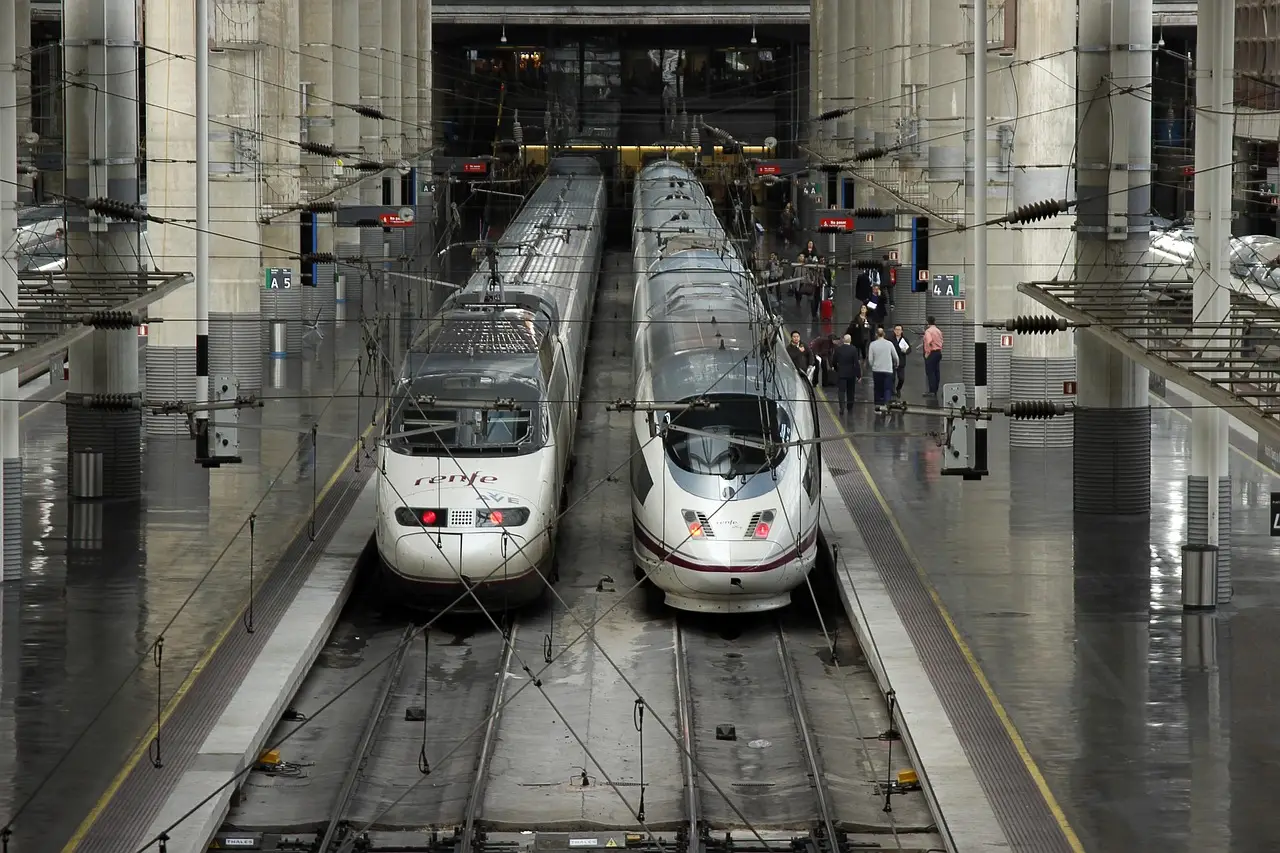
The crash occurred when a Renfe service — Renfe is Spain's state rail operator — ran into the rear of a stationary train operated by private Spanish company Iryo outside the village of Urda. The two-train configuration put the death toll at 69, with multiple nationalities aboard.
A failure of an automatic safety system had halted all trains on a 63 km stretch of track. Despite the stationary Iryo train still occupying the line, a control centre authorised the Renfe service to resume its journey. That authorisation preceded the collision.
The operational sequence — system failure, blanket halt, then a resumption order issued while another train remained on the track — is now the focal point for the safety questions the disaster has raised about Spain's high-speed network.
Is this Spain's second such crash?
Yes, within the same year. The October 28 disaster was Spain's second high-speed train collision of 2026, according to the source report. A January crash in the southern region of Andalusia killed 46 people.
Taken together, the two accidents have killed 115 people in Spain in under a year, intensifying scrutiny of rail safety standards across the national network. Both incidents preceded the country's November 29 general election, in which Socialist leader Pedro Sánchez will seek to extend his eight-year premiership despite unfavourable polls.
What happens next?
Identification work continues for the remaining three victims, pending the arrival in Spain of the families connected to the active missing-person reports. The confirmation of foreign victims from at least eight countries — the United States, Canada, Japan, Argentina, Mexico, Tunisia, the Czech Republic, France and Portugal, alongside 54 Spaniards — underscores the international dimension of the passenger manifest on the Madrid-corridor high-speed service.
With the general election one month after the crash, the safety-system failure and the control centre's resumption authorisation are likely to remain under political and public examination as investigations proceed.
via Google News: Rail safety (Source)
More from Rebecca Stone
Show full bio
Senior reporter covering money, funding and market shifts around Rail industry news and analysis at Mainline Report.
374 articles
Connecting services · Related articles
- 12:02
At Least 69 Dead in Spain High-Speed Train Collision Near Toledo
- 15:07
Toledo high-speed collision kills 68, triggering Spain-wide rail audit
- 13:46
Spain's high-speed rail under scrutiny after 69-death Toledo collision
- 13:01
At Least 30 Dead as Two High-Speed Trains Collide Near Toledo, Spain
- 12:24
Spain train collision kills 68; safety-system failure cited