06:48PAPlt 6573 words
Taiwan High Speed Rail clarifies standing-ticket rules for holidays
Taiwan High Speed Rail has spelled out its holiday standing rules: standing passengers must yield reserved seats to ticketholders, with crew instructions governing onboard crowding.
· 3 min journey
Calling at
- Taiwan High Speed Rail has issued a clarification of its standing-ticket rules for holiday travel periods.
- Standing passengers must vacate reserved seats when the ticketholder arrives and follow crew instructions on onboard positioning.
- The clarification applies to the Taipei–Zuoying corridor during peak demand windows such as Lunar New Year and the October holidays.
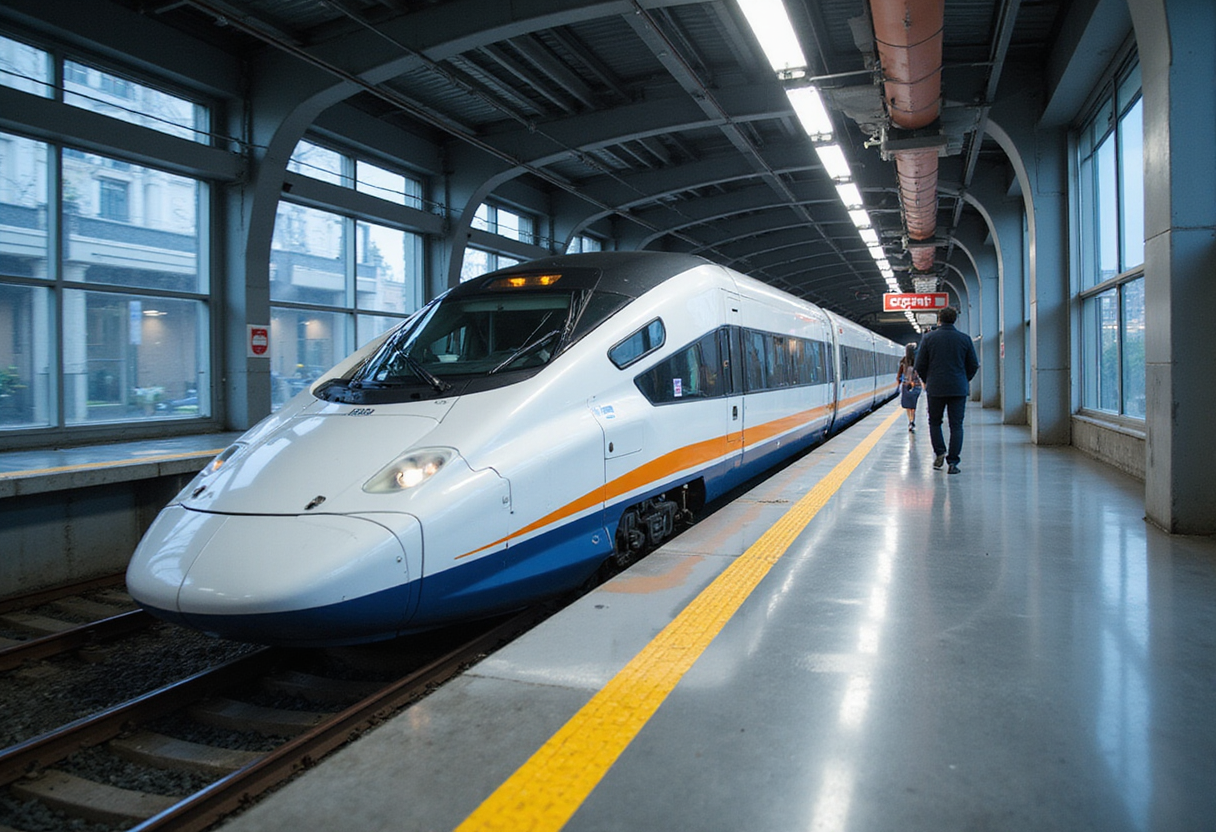
Taiwan High Speed Rail has moved to clarify its rules on standing travel during holiday periods, addressing a recurring point of confusion among passengers who find themselves on trains without reserved seats at the busiest times of the year.
The clarification concerns the operator's practice on its 350 km/h line connecting Taipei in the north with Zuoying in the south. Holiday periods on the island — among them Lunar New Year, Tomb-Sweeping Festival, the Dragon Boat Festival, Mid-Autumn Festival and the consecutive October holidays — routinely push demand on the corridor to its annual peaks, and the question of how standing passengers are handled has surfaced repeatedly during these windows.
The operator's statement addresses the circumstances under which passengers may occupy standing space, how they should respond when ticketed passengers claim their seats, and what conduct the operator expects from travellers who end up without a seat for part or all of the journey. According to the clarification, passengers holding standing tickets or boarding without a confirmed seat assignment should yield reserved seats to ticketholders when asked to do so, and should not treat unoccupied reserved seats as available for the duration of the trip.
This is an operational question with direct service consequences. Taiwan High Speed Rail runs a reserved-seat system as its core sales model, with trains on the Taipei–Zuoying corridor operating at high frequency through the day. When holiday demand exceeds the seat inventory available on a given departure, the operator has in certain periods made allowance for passengers to travel without a seat rather than leave them unable to reach their destination. That allowance in turn creates the ambiguity the operator is now addressing: which spaces standing passengers may occupy, and what happens when a seat's legitimate occupant boards at a later station.
The clarification also has implications for onboard circulation and safety. Standing passengers congregate in vestibules and at car ends, which affects movement through the train for other travellers and for crew. By stating the rules explicitly, the operator gives train staff a clear basis for managing crowding and gives passengers a defined expectation before they board, rather than leaving arrangements to be negotiated carriage by carriage.
For passengers, the practical effect is straightforward. Anyone travelling without a seat confirmation during a holiday period now has an explicit statement of their position: they may complete their journey standing, they must vacate reserved seats when the seat holder arrives, and they should follow crew instructions on where to stand. For the operator, the statement reduces the volume of disputes that crew must resolve at the point of conflict, at precisely the times when trains are at their fullest.
The clarification does not in itself add capacity. It applies to the existing fleet and timetable, and it functions as a demand-management measure layered on top of the scheduling arrangements the operator deploys each holiday season, which typically include additional departures on the busiest days. Travellers planning holiday trips on the line will still face the underlying constraint: seats sell out on peak dates, and the options after that point are a different departure, a conventional-rail service, or standing on the high speed train under the rules now set out.
Taiwan High Speed Rail's clarification takes effect for upcoming holiday travel periods, and passengers planning journeys during those windows should check the operator's booking channels for seat availability before travel.
via Google News: High-speed rail (Source)
More from Olivia Hart
Show full bio
Market editor covering industry trends and analytics at Mainline Report.
149 articles
Connecting services · Related articles
- 07:18
Taiwan High Speed Rail clarifies standing rules for holiday travel
- 12:48
Taiwan High-Speed Rail Adds Extra Northbound Trains for Holiday Rush
- 24:05
Taiwan High Speed Rail carries record 356,000 passengers in single day
- 10:20
First of 12 new N700ST trains enters testing on Taiwan HSR
- 04:15
China's high-speed network adds 1,142 km before National Day rush