20:23GLPlt 3749 words
Spain’s AVE trust falls after 69 deaths in Toledo collision
Sixty-nine people died near Urda on October 28, and a YouGov poll of 1,069 adults found 73% think less of train safety after Spain’s second deadly high-speed crash in under a year.
· 4 min journey
Calling at
- 69 people died on October 28 near Urda in Toledo province.
- A Renfe AVE struck a stopped Iryo train on the Madrid-Andalucia line.
- The collision was the high-speed network’s second deadly crash in less than a year.
- YouGov surveyed 1,069 adults; 73% thought less of train safety and 2% said their view improved.
- 41% blamed the government and Transport Ministry; 5% blamed operators or an unforeseeable technical fault.
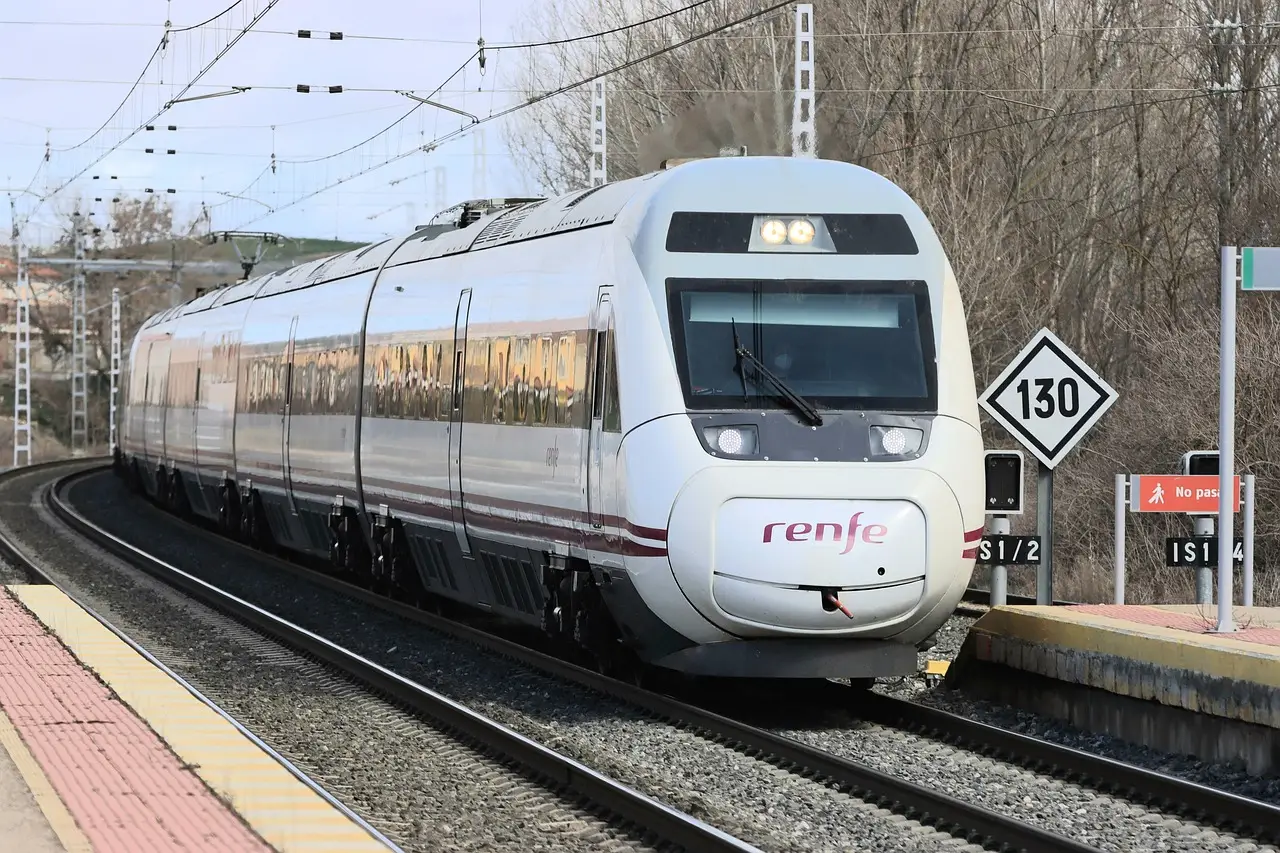
Sixty-nine people died on October 28 when a Renfe AVE ran into an Iryo train that had stopped on the Madrid-Andalucia line near Urda, in Toledo province, Spain.
The crash was the high-speed network’s second deadly collision in less than a year. A new YouGov poll found that almost 60% of Spaniards no longer trust AVE.
YouGov surveyed 1,069 adults online from October 30 through November 2, beginning two days after the collision. The four-day fieldwork window records attitudes shortly after the collision rather than a long-term view. The report provides no age, regional, travel-frequency or margin-of-error breakdown for the sample.
How much confidence was lost?
The poll’s headline result was that almost 60% no longer trusted Spain’s AVE network after the two fatal crashes this year. The source calls the figure “almost 60%,” not an exact percentage, so a more precise value would overstate the data.
On the crash itself, YouGov found that “73% said the crash had made them think less of the safety of the country’s trains.” Only 2% said their view had improved, a 71-percentage-point difference between respondents reporting a worse and a better view.
The two figures measure different concepts. The near-60% result concerns trust in the network after two fatal crashes; the 73% result concerns whether the October collision changed perceptions of safety. The report supplies neither raw counts nor a trend series from earlier polling.
Can the two crashes be compared?
The October 28 event was the second fatal collision on the network in less than a year. The report gives no date, location, death toll, cause or service response for the earlier crash.
It does not say whether that event involved the same operator, rolling stock, route or cause. Any comparison of the two events would therefore go beyond the source.
Who do respondents blame?
Asked who might be responsible for the crash, YouGov recorded:
- 41% “pointed the finger at the government and the Transport Ministry.”
- Only 5% blamed “the train operators, Renfe and Iryo, or an unforeseeable technical fault.”
The 41% result placed the government and ministry ahead of Adif, the rail infrastructure manager, and human error. The report gives no separate percentages for either, and it does not state whether respondents could select more than one answer.
The source names the government, Transport Ministry, Adif, Renfe and Iryo, but no separate rail-safety regulator or accident-investigation body. It also names no supplier and reports no procurement or funding decision.
The low operator figure cannot establish cause, exonerate Renfe or Iryo, or prove human error. Likewise, the 41% response does not establish government or ministry responsibility. Those findings would require technical and investigative evidence, which the report does not provide.
What do the collision facts establish?
The report’s operational account is limited but clear: a Renfe AVE ran into a stopped Iryo train on the Madrid-Andalucia line near Urda, Toledo. It does not state the speed of either train, why Iryo stopped, signalling conditions, equipment condition or what an official investigation concluded.
It establishes who was involved and where the collision occurred, not the causal allocation suggested by poll responses. The geography remains specific: near Urda in Toledo province, on the Madrid-Andalucia line.
What operational and market effects can be measured?
The report announces no service withdrawal, timetable adjustment, fleet modification, safety investment, ridership change or cost estimate. It consequently cannot quantify any change in capacity on the Madrid-Andalucia line or costs for Renfe, Iryo or Adif.
No timetable data show whether service returned to normal, and no figures quantify passenger compensation, lost bookings or remediation spending. Renfe and Iryo appear as train operators; Adif manages the infrastructure. No supplier, funding amount or investment programme appears in the report.
The poll measures confidence, not bookings, passenger numbers, revenue or demand forecasts; any traffic or financial effect remains unquantified. The measured public reaction should not be presented as evidence of a realised operating or market change.
What comes next?
The measured results are 69 deaths and lower public confidence. No cause finding, operating response or ridership forecast appears in the source. The next test will be official findings on why the Iryo train stopped, followed by evidence on service performance and whether the 73% safety concern eases.
Any claim that trust or ridership will recover before those findings and operating data emerge would remain a projection, not a reported result.
via Google News: High-speed rail (Source)
More from Rebecca Stone
Show full bio
Senior reporter covering money, funding and market shifts around Rail industry news and analysis at Mainline Report.
351 articles
Connecting services · Related articles
- 12:02
At Least 69 Dead in Spain High-Speed Train Collision Near Toledo
- 13:01
At Least 30 Dead as Two High-Speed Trains Collide Near Toledo, Spain
- 13:46
Spain's high-speed rail under scrutiny after 69-death Toledo collision
- 10:57
Spain transport minister resigns after 69 deaths on Madrid-Seville line
- 08:57
115 dead in two Spanish high-speed crashes: the safety system questions