14:05SIPlt 5428 words
Signalling failure between Ore and Eastbourne disrupts Southern services
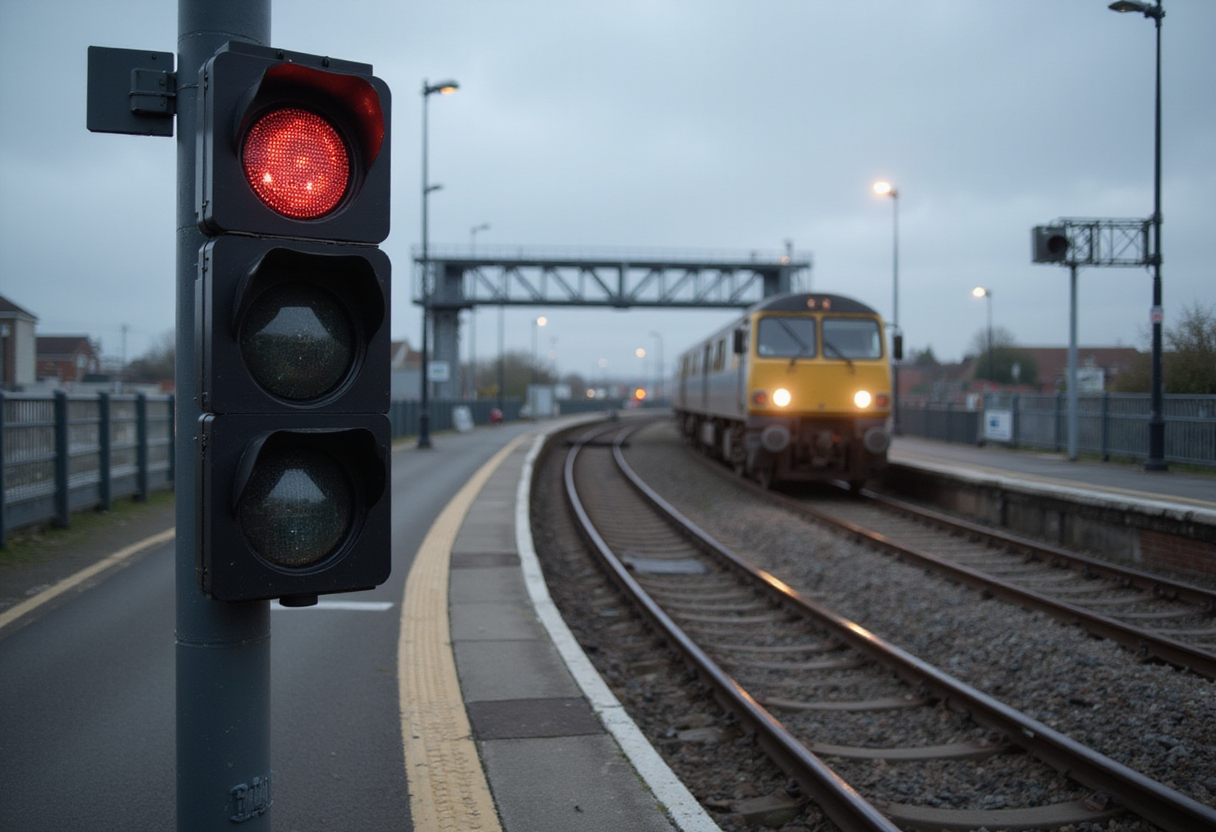
A signalling fault between Ore and Eastbourne has stopped Southern trains on the Sussex coast, pushing delays and cancellations across East Sussex while engineers work to restore the line.
· 2 min journey
Calling at
- A signalling fault between Ore and Eastbourne caused delays to Southern services across East Sussex.
- Southern advised passengers to check before travelling as disruption spread along the coastal route.
- Engineers were sent to repair the equipment, with normal service expected once testing is complete.
A signalling fault between Ore and Eastbourne has halted and delayed Southern rail services across East Sussex, cutting capacity on one of the coastal route's busiest stretches and leaving passengers facing extended journey times.
The failure affects the seven-kilometre section of line that connects the Hastings area to Eastbourne, a corridor used by Southern's stopping services along the Sussex coast and by trains continuing towards Brighton and London Victoria. Signalling faults on this section prevent the normal operation of the block system, which means trains cannot run at line speed — or in some cases at all — until engineers restore the equipment.
Southern responded by alerting passengers to delays and cancellations rippling out across its East Sussex network. Disruption of this kind typically spreads well beyond the failed section itself: trains and crews displaced from the Ore–Eastbourne corridor arrive late for subsequent duties, and services on connecting routes through Polegate, Hampden Park and Bexhill lose their booked pathings.
The operator advised passengers to check journey planners before travelling and to allow extra time. Where the fault prevents through running, passengers normally face diversion via alternative routes or replacement road transport, both of which add significant time to journeys between Hastings, Eastbourne and stations beyond.
Network Rail's signalling infrastructure on this stretch of the Sussex coast dates in part from earlier generations of equipment, and the Ore–Eastbourne corridor has seen repeated investment under the region's control-period renewal programmes. Signalling failures remain one of the most common causes of significant delay minutes on the route, because a single failed track-circuit, point machine or signal box function can remove capacity from an entire section while faulting teams attend.
For commuters and coastal travellers, the immediate cost is measured in delay minutes and cancelled trains. For the operator, each hour of signalling failure on a double-track coastal line removes multiple train paths from the timetable, and recovery typically extends beyond the repair itself as the service settles back into its scheduled pattern.
Engineers were deployed to diagnose and repair the fault, with Southern issuing updated travel information through its website and social media channels as the situation developed. Passengers whose journeys were delayed may be entitled to compensation under the operator's Delay Repay scheme, which applies from 15 minutes of delay against the advertised timetable.
Normal service is expected to resume once the faulty signalling equipment has been repaired and tested, with Southern continuing to monitor the line and advise passengers of any residual disruption as trains return to the published timetable.
via Google News: Rail signalling (Source)
More from Rebecca Stone
Show full bio
Senior reporter covering business strategy at Mainline Report.
120 articles
Connecting services · Related articles
- 13:30
Signalling fault halts Southern services between Lewes and Eastbourne
- 13:45
Signalling fault disrupts Southern services in East Sussex
- 13:30
Signal failure causes renewed disruption for rail passengers
- 13:35
Power failure hits Manchester, cancelling trains across north England
- 07:08
£7M Rail Investment Between Newcastle and Scotland Underway