17:48ROPlt 7701 words
Progress Rail to Supply 33 EMD Locomotives to Saudi Arabia Railways
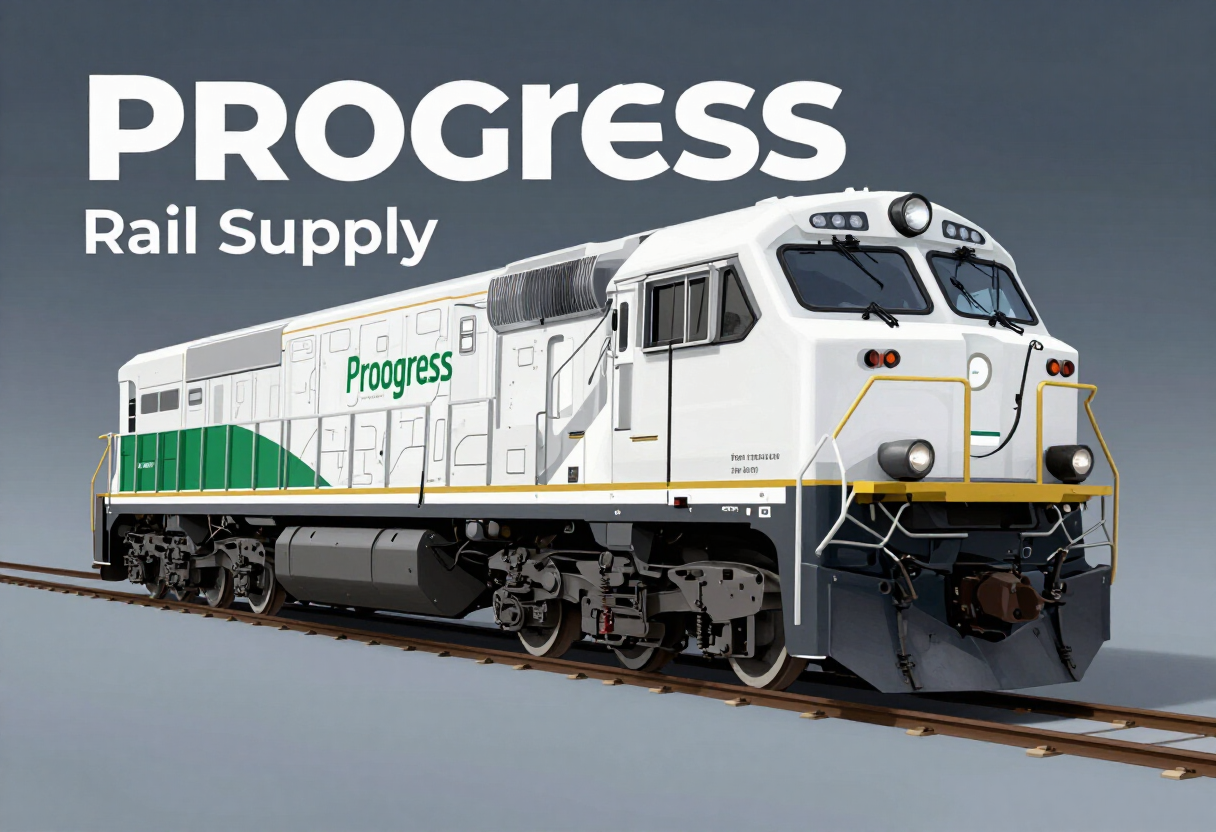
Progress Rail will supply 33 EMD locomotives to Saudi Arabia Railways, extending EMD's presence on one of the Middle East's longest heavy-haul freight networks.
· 4 min journey
Calling at
- Progress Rail will supply 33 EMD locomotives to Saudi Arabia Railways
- The order value, delivery schedule and specific locomotive model were not disclosed
- SAR operates the roughly 1,400 km North-South heavy-haul freight corridor carrying mineral traffic
Progress Rail will supply 33 EMD locomotives to Saudi Arabia Railways (SAR), according to an announcement reported by Railway-News. The order adds a substantial block of mainline diesel power to the operator's fleet and extends a supplier relationship that has already put EMD traction at work across the Saudi network.
For SAR, the 33-locomotive order is a capacity decision. The national operator runs one of the Middle East's longest heavy-haul freight corridors, linking the phosphate and bauxite mining regions of the north with processing and export facilities on the Gulf coast, alongside growing passenger services between Riyadh and the north. Additional locomotives translate directly into more train paths, heavier tonnage moved per day, and greater resilience against maintenance outages in an existing fleet.
Progress Rail, the Caterpillar subsidiary that owns the Electro-Motive Diesel brand, has positioned EMD products for exactly this duty. Its heavy freight locomotives are engineered for high-horsepower haulage in extreme heat and dusty conditions, and the Gulf environment — where summer temperatures routinely exceed the ratings assumptions of many temperate-climate designs — is a demanding proving ground. SAR's route network includes long desert stretches where reliability per locomotive matters more than headline tractive effort, because a failure far from a depot is measured in hours of lost path availability.
The order sits within a broader Saudi rail expansion. The kingdom has made freight modal shift a stated policy objective, aiming to move cargo from road to rail as part of its wider economic diversification programme. SAR itself operates the North-South Railway, at roughly 1,400 km one of the longest freight lines commissioned anywhere in recent decades, and it carries minerals traffic at tonnages that compare with heavy-haul railways in North America and Australia. More locomotives on that infrastructure are the standard response when mineral output rises and train lengths or frequencies must follow.
Railway-News did not report the contract value, a delivery schedule, or the specific EMD model selected. Those details matter for anyone tracking the order's significance. A model designation would indicate whether SAR is buying proven heavy-haul variants already deployed in the region or a newer platform still accumulating service history. A delivery timeline would show whether the locomotives support near-term traffic growth or longer-range fleet planning. Until Progress Rail or SAR publishes those specifics, the 33-unit figure stands as the confirmed core of the announcement.
The supplier relationship itself carries weight. Operators placing repeat orders with an incumbent manufacturer generally do so on the strength of fleet availability data, spare-parts performance, and depot support experience — metrics that never appear in press releases but decide procurement outcomes. SAR's continued use of EMD traction suggests the existing units have met availability targets under Saudi operating conditions. That operational record, not the order count, is the underlying signal for other Gulf and heavy-haul operators weighing comparable investments.
For Progress Rail, the Saudi order reinforces its international heavy-haul franchise at a moment when several mining railways in the Middle East, Africa and Australia are renewing or expanding diesel fleets. Electrification dominates long-term network planning in many markets, but battery-electric and overhead-wire alternatives remain unproven at the tonnages desert mineral lines demand. Diesel mainline power retains a clear case on exactly the corridors SAR operates.
The announcement also reflects a competitive positioning reality. SAR has previously diversified its supplier base across major builders, as large operators typically do to avoid single-fleet dependency and to keep tender pressure on pricing. Each incremental order in that environment represents a competitive win as much as a fleet decision, and suppliers compete on lifecycle cost — fuel efficiency, overhaul intervals, and availability guarantees — rather than unit price alone.
What follows the order is execution. Delivery dates, commissioning at Saudi depots, crew training, and entry into revenue service will determine when the 33 locomotives begin adding capacity rather than sitting as contracted capacity. Operators' published fleet plans will show the integration. Until then, the order confirms demand: Saudi Arabia Railways expects its traffic to grow, and it is buying traction to meet that growth on a timeline it has not yet disclosed.
via Google News: Rolling stock (Source)
More from Priya Raman
Show full bio
Staff writer covering consumer brands and retail at Mainline Report.
127 articles
Connecting services · Related articles
- 22:23
SAR orders 33 EMD SD70ACS locomotives at InnoTrans 2026
- 12:55
Alstom and Saudi Railway expand freight cooperation
- 13:10
Alstom and Saudi Arabia Railways expand freight partnership
- 12:40
Alstom and Saudi Arabia Railways expand freight partnership
- 16:20
Alstom to Support Freight Operations on Saudi Arabian North-South Corridor