22:23ROPlt 6509 words
ÖBB and Siemens unveil Railjet M multiple-unit for Alpine routes
ÖBB and Siemens Mobility showed the Railjet M Mireo EMU at InnoTrans 2026. The 160 km/h, 257-seat train enters service from 2028 on five Alpine inter-regional routes.
· 3 min journey
Calling at
- Siemens Mobility is supplying 100 Mireo EMUs to ÖBB under a 2023 framework contract, including 31 Railjet M units
- The four-car Railjet M is 106 m long, seats 257 passengers and reaches 160 km/h, with up to three units operating in multiple
- Entry into service on five inter-regional routes, including Graz – Maribor, is planned from 2028
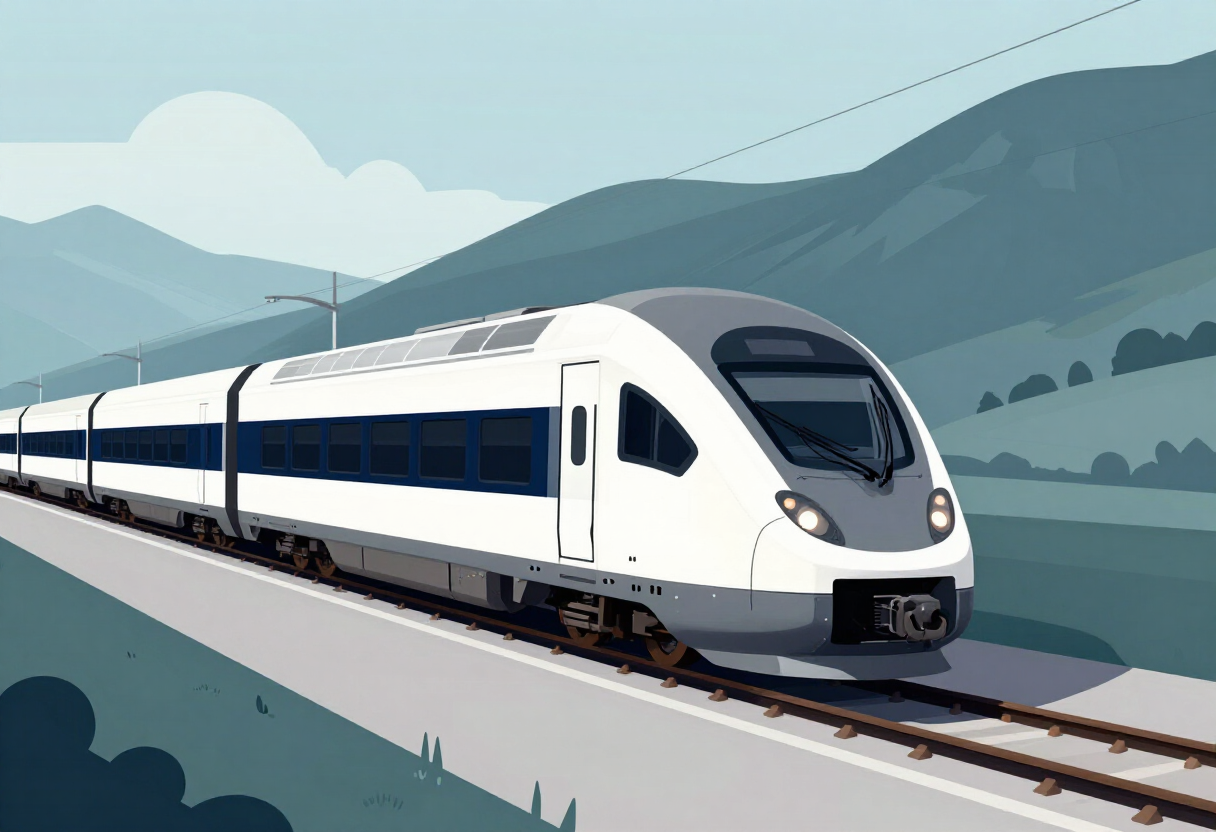
Austrian Federal Railays operator ÖBB and Siemens Mobility unveiled the Railjet M, a Mireo-based electric multiple-unit configured for inter-regional Alpine routes, at InnoTrans 2026 in Berlin.
The train forms part of a 2023 framework contract under which Siemens Mobility is supplying a total of 100 Mireo EMUs to ÖBB, including 31 Railjet M units.
Siemens Mobility CEO Michael Peter said Railjet M 'combines high capacity, exceptional travel comfort and state-of-the-art digital technologies that ensure maximum availability and reliability throughout its entire lifecycle. Together with ÖBB, we are creating a train that is perfectly tailored to the demands of inner-Alpine travel.'
Technical specification
The four-car EMU is 106 m long, reaches a top speed of 160 km/h and can operate in units of up to three coupled sets. Siemens developed the vehicles as a single-car concept on the Mireo platform rather than as an articulated design. The manufacturer says weight- and space-optimised inside-framed SF7500 bogies, developed at its Competence Centre for Bogies & Pantographs in Graz, create additional interior space for passenger comfort.
The EMU seats 257 passengers: 27 in first class, 188 in second class and 42 folding seats. Low-floor entry and sliding steps bridge gaps at platforms. Each section has large luggage racks, and the train carries 14 bicycle spaces plus holders for up to 54 pairs of skis or snowboards — equipment sized for Alpine leisure traffic.
Onboard features include a catering zone with vending machines for snacks and drinks and a family zone with a children's cinema and play area. Mobile-signal-permeable windows and a high-performance wi-fi system with access to the Railnet portal are intended to provide a stable internet connection in mountainous terrain.
The train carries ETCS onboard equipment conforming to Baseline 4.0.
Alpine testing completed
A Railjet M has already undergone testing at the Rail Tec Arsenal climate wind tunnel in Wien, where it faced simulated Alpine conditions including temperatures from -25°C to +45°C, snow, strong winds, high humidity and freezing rain.
ÖBB plans gradual introduction of the fleet from 2028 on five inter-regional routes:
- Graz – Bischofshofen – Innsbruck;
- Graz – Leoben – Klagenfurt;
- Graz – Selzthal – Linz;
- Salzburg – Schwarzach-St. Veit – Wörgl;
- Graz – Maribor.
The inclusion of the Graz – Maribor corridor extends the deployment across the border into Slovenia.
Capacity investment
'Demand for rail travel is steadily increasing. That is why we are consistently investing in modern vehicles with additional capacity', said ÖBB-Holding CEO Andreas Matthä. 'The Railjet M is a key component of this new fleet: it was specially developed for inner-Alpine routes and offers our passengers more capacity, higher quality and greater comfort. Together with strong industrial partners, we are setting the course for the next generation of trains in Austria.'
With the 160 km/h Railjet M units committed and climate wind tunnel testing complete, ÖBB's deployment from 2028 will indicate whether the Mireo platform's single-car concept delivers the capacity gains the operator expects on its inner-Alpine network.
via Railway Gazette International (Source)
More from Rebecca Stone
Show full bio
Senior reporter covering business strategy at Mainline Report.
120 articles