10:08INPlt 4671 words
New crane cuts wagon handling to 15 minutes at Brčko port
A €14.4m EBRD-backed modernisation at Bosnia's Sava river port has cut wagon handling from two hours to 15 minutes and lifted revenue expectations by over 40%.
· 3 min journey
Calling at
- Port of Brčko expects revenue to grow from KM2.13m (€1.09m) to KM3m (€1.53m), an increase of over 40%, following the investments
- Wagon positioning and handling times have fallen from almost two hours to approximately 15 minutes after construction of a new railway spur
- The €14.4m programme, completed in 2026, was funded with support from the EBRD, WBIF and Brčko District authorities; the €2.7m crane is rated at 16–27.5 tonnes with handling rates of 150–200 tonnes/h
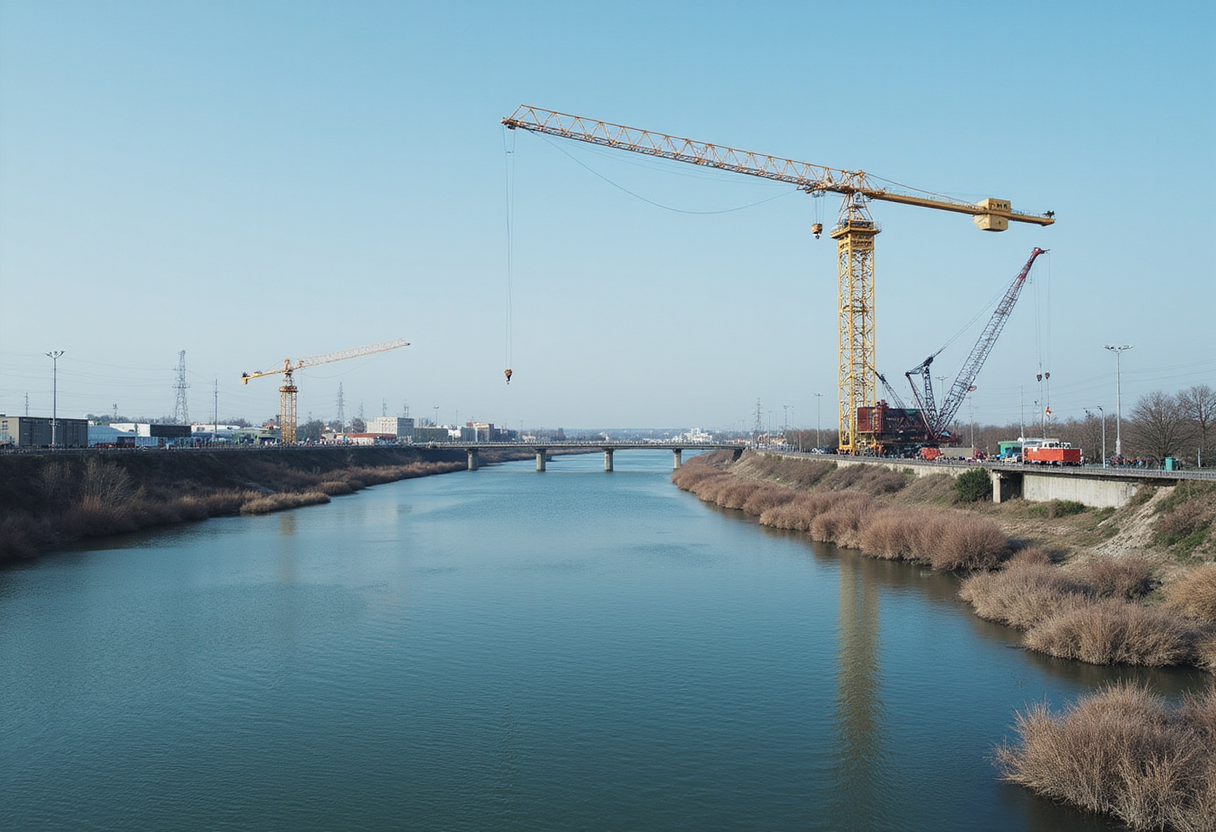
Railway investment at Bosnia-Herzegovina's only river port is paying off in hard numbers: Luka Brčko expects revenue to rise from KM2.13 million (€1.09m) to KM3 million (€1.53m), an increase of more than 40%, on the back of a new crane, a new rail spur and an expanded cargo-handling area.
The port, which sits on the Sava river on the border with Croatia, reported in September that the investments had lifted operating volumes during the first half of 2026. The new crane is now the single largest contributor to port revenue, according to director Perica Josić.
The effect is most visible in rail-connected traffic. Two weeks ago, the port "handled the transshipment of a thousand tons of coal that arrived by rail, and the entire process was completed in just a few hours," Josić said. A consignment of that size moving from wagons to vessel in a single working window illustrates the throughput change the equipment has produced.
The operational gain is equally stark in wagon handling. An operation that previously took almost two hours can now be completed in approximately 15 minutes, following construction of the new railway spur, Josić said. That reduction — from 120 minutes to 15 — translates directly into faster terminal turnarounds and lower dwell time for rolling stock on the port's internal network.
A €14.4m programme
The improvements form part of a €14.4 million modernisation programme completed in 2026 with support from the European Bank for Reconstruction and Development (EBRD), the Western Balkans Investment Framework (WBIF) and the Brčko District authorities.
Rail access was a specific focus. A 263-metre extension of the port's internal railway now reaches the quay and the new crane, allowing wagons to be handled directly alongside the water. The project also reconstructed the railway connection between the port and Brčko Novo station, strengthening the link with the wider network and the adjacent industrial area.
The EBRD had previously identified inadequate railway access as one of the constraints limiting the port's capacity. The upgraded layout is designed to reduce wagon shunting and handling movements and to improve the transfer of bulk and other cargo between rail, river and road modes.
The new portal crane has a rated capacity of 16 tonnes, rising to 27.5 tonnes in certain configurations. The €2.7 million installation is specified to achieve handling rates of 150–200 tonnes/h. The programme also delivered a 4,500 square metre asphalt operational area, drainage improvements and reconstruction of the road linking the port with Bijeljinska Cesta.
Constraints remain
Located on the Sava, Brčko has the geographic potential to serve as a multimodal gateway for freight flows between Bosnia-Herzegovina, Croatia and Serbia. The upgraded rail connection matters because it gives the port's waterborne facilities a direct interface with the regional railway network, offering shippers an alternative to road transport for cargo moving to and from the terminal.
The rail improvements, however, stop at the port boundary. They include no electrification and no comprehensive modernisation of the wider Bosnian railway network, which continues to lag behind regional standards. At the project's completion ceremony in July, EBRD representatives named railway electrification among the country's remaining infrastructure priorities — a signal that the connecting network, not the terminal, is now the binding constraint on rail freight growth.
Work is also planned on the Sava itself. The EU has allocated an €8 million grant for demining around 40 km of the river's right bank, supplemented by a €30 million World Bank loan. That programme is intended to support further investment in inland-waterway infrastructure and improve freight connectivity between Bosnia-Herzegovina, Croatia and Serbia.
Taken together, the quay-side rail track, faster wagon handling and upgraded cargo-handling equipment give Brčko the physical infrastructure for efficient three-mode operations. Whether that translates into sustained rail freight growth will depend on the capacity and quality of the connecting railway network, as well as navigability and traffic conditions on the Sava.
via Railfreight.com (Source)
More from Rebecca Stone
Show full bio
Senior reporter covering business strategy at Mainline Report.
120 articles
Connecting services · Related articles
- 14:35
Rostock Port moves to expand rail infrastructure at intermodal terminal
- 16:48
Poland creates leasing unit to procure €2.37bn high-speed fleet
- 24:10
METRANS lifts Gądki terminal capacity by 80% to 590,000 TEU
- 13:05
Poland's KDP Establishes Rolling Stock Company
- 09:52
Montenegro's ZICG cuts first-half net loss by 20%