12:25SAPlt 3702 words
Nevada Rail Safety Bills Stall Despite Trump's Backing
A 12,000-foot Union Pacific train derailed near Reno in March. A decade of Nevada rail safety bills has produced vetoes and no Republican votes in favor.
· 4 min journey
Calling at
- A Union Pacific train over 12,000 feet long derailed east of Reno in March 2025, with more than 20 railcars leaving the tracks; no injuries or hazardous materials release occurred.
- Nevada Republican governors vetoed two-person crew legislation in 2017 and Assembly Bill 456 in 2023; Assembly Bill 446 failed to advance in 2025, and no Nevada Republican has recorded a vote for rail safety bills in a decade.
- President Donald Trump urged Congress in May to include the Railway Safety Act in broader transportation legislation, while federal rail safety proposals draw bipartisan support.
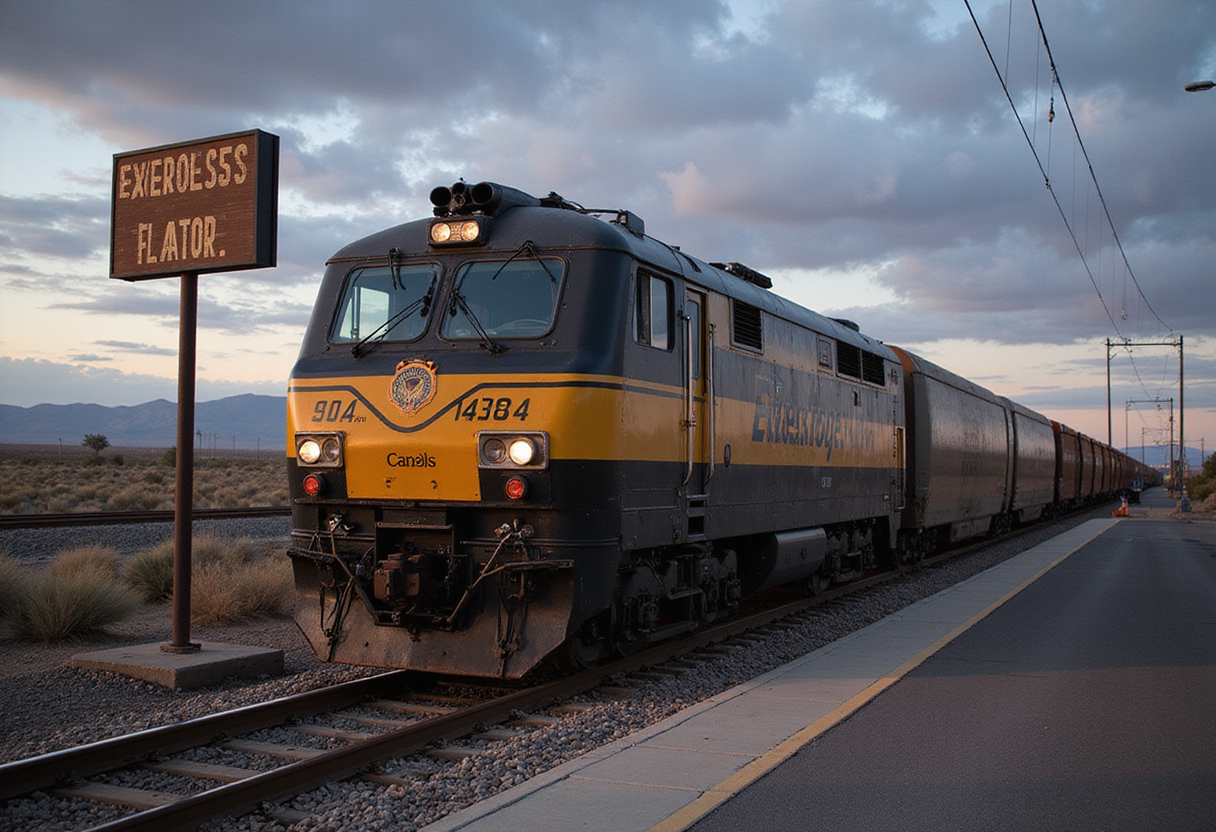
A Union Pacific freight train exceeding 12,000 feet derailed east of Reno near Interstate 80 and USA Parkway in March, pushing more than 20 railcars off the tracks. No one was injured and no hazardous materials were released. The location, near a major interstate corridor and the Truckee River watershed, underscored what safety advocates in Nevada say is a persistent gap between risk and regulation in the state.
The March derailment fits a pattern Nevada has seen before, according to safety advocates, railroad workers and some lawmakers: an incident occurs, attention follows, reform bills are introduced, the railroad industry opposes them, and the proposals die — until the next warning.
For years, freight trains carrying hazardous materials have run through the heart of Las Vegas, across rural Nevada and through residential communities. Some of those trains stretch well over two miles. Proposed safety measures in the state have included standards for wayside defect detectors, limits on train length, requirements to prevent extended crossing blockages, improved rail yard safety and stronger post-incident oversight.
None of these proposals has become law.
A decade of vetoes and stalled bills
The legislative record is stark. In 2017, Republican Governor Brian Sandoval vetoed a bill requiring two-person freight train crews. In 2023, Republican Governor Joe Lombardo vetoed Assembly Bill 456 after it passed the Legislature in the wake of the East Palestine derailment in Ohio. In 2025, Assembly Bill 446 failed to advance.
At the legislative level, the pattern has held for ten years: no Nevada Republican lawmaker has cast a recorded vote in favor of these rail safety bills, according to the Nevada Current, which published the analysis.
That record now sits awkwardly against developments in Washington. Rail safety legislation in Congress has drawn bipartisan support, including proposals to strengthen hazardous materials transportation rules, improve defect detector standards, increase penalties for serious safety violations and preserve two-person freight crews.
In May, President Donald Trump publicly urged Congress to include the Railway Safety Act in broader transportation legislation.
The contrast raises a question the Nevada Current poses directly: if Republicans at the federal level can support rail safety measures, why have Nevada Republicans consistently declined to do the same?
The industry factor
The answer, the analysis suggests, may lie in the railroad industry's lobbying influence in Carson City. For years, industry lobbyists have successfully framed rail safety proposals as anti-business, anti-innovation or unnecessary. Those talking points have often been accepted without serious scrutiny, even as similar ideas receive bipartisan support elsewhere, the report argues.
The industry's position matters in a state where rail freight is integral to the economy. The advocates making the case for reform are, in many cases, railroad workers themselves — the people who move the freight, inspect equipment and maintain infrastructure. Their argument is not anti-railroad; it is that safety improvements are typically opposed until a tragedy makes opposition politically untenable.
The East Palestine benchmark
The 2023 East Palestine derailment in Ohio remains the reference point for what Nevada has so far avoided. The National Transportation Safety Board found that an overheated wheel bearing caused the derailment and that the subsequent vent-and-burn of hazardous materials was unnecessary.
The disaster exposed weaknesses in detector practices, emergency response information and corporate decision-making — precisely the vulnerabilities that safety legislation is designed to address before another community suffers a similar event, according to the analysis.
Reno's March incident, by contrast, involved no injuries and no hazardous materials release. Safety advocates characterize the difference between the two outcomes as timing, location and luck rather than any fundamental distinction in risk.
Looking toward 2027
With the 2027 Nevada legislative session approaching and another election season before it, the pressure on state lawmakers may shift. Voters, the analysis argues, should ask every candidate a direct question about rail safety — and expect a clear answer on whether they would support measures that have already cleared legislatures elsewhere.
The framing Nevada safety advocates offer is forward-looking: the state should not need its own East Palestine to act on proposals that are already drafted, already debated and already supported at the federal level by members of both parties, including the president.
via Google News: Rail safety (Source)
More from Rebecca Stone
Show full bio
Senior reporter covering business strategy at Mainline Report.
120 articles
Connecting services · Related articles
- 14:28
Rail Safety Campaign Urges Caution Around Reno-Sparks Train Tracks
- 18:55
Industries Line Up Against the Railway Safety Act
- 14:50
Billion-Dollar Safety Bet on the Line as Congress Targets Rail Tech
- 12:55
Freight Rail Automation Ignites Labor-Industry Policy Fight
- 11:23
Union Pacific Points to Data-Driven Track Inspections