15:21PAPlt 12687 words
MassDOT and CSX in Talks to Expand Passenger Rail in Massachusetts
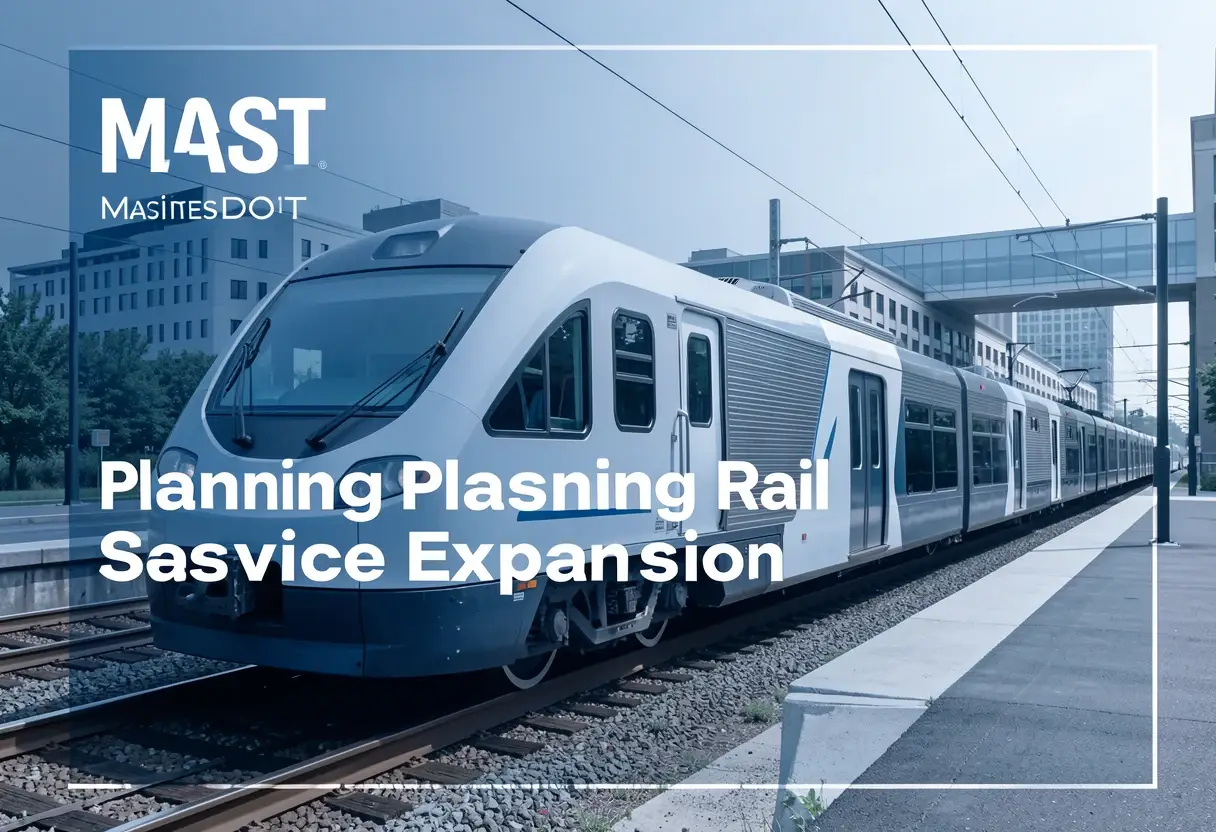
MassDOT and CSX are jointly planning passenger rail service expansion in Massachusetts, opening negotiations over corridors, capacity and access terms.
· 3 min journey
Calling at
- MassDOT and CSX are jointly planning an expansion of passenger rail service in Massachusetts, per the AASHTO Journal.
- No corridors, train frequencies, funding amounts or start dates have been published yet.
- The announcement confirms formal cooperation between the state DOT and the Class I freight operator on passenger growth.
- CSX controls freight trackage in Massachusetts that any new or expanded passenger service would need to accommodate.
MassDOT and CSX are planning an expansion of passenger rail service in Massachusetts, according to a report from the AASHTO Journal. The announcement puts the state transportation agency and the Class I freight operator at the same table over passenger trains — a pairing that, in the northeastern United States, usually means one thing: somebody wants to run more passenger service over freight-owned or freight-controlled track, and the negotiations over capacity, speed and maintenance liability have begun in earnest.
That framing matters for practitioners. When a state DOT and CSX jointly surface a passenger expansion plan, the story isn't the press release — it's the operating agreement underneath it. Those agreements determine how many passenger paths a corridor can absorb, what dispatching priority they carry, and what the state pays to maintain the infrastructure to passenger-capable standards. None of those specifics appear in the initial announcement, and they rarely do at this stage. What we have is a confirmed planning relationship between the two parties, which itself signals that corridor-level discussions have moved past the informal stage.
What does the announcement actually establish?
The AASHTO Journal report establishes that MassDOT and CSX are jointly planning passenger rail service expansion. It names both parties and the intent. It does not yet name:
- which corridors are in scope;
- a target date for new or restored service;
- a funding amount or cost-sharing structure;
- the number of daily trains under consideration;
- which passenger operator — MBTA, Amtrak or a future state-designated carrier — would run the service.
For readers who track Massachusetts rail politics, those blanks are the story from here. Corridor identity is the first domino: it determines whether the plan extends an existing MBTA network, revives a dormant passenger line, or adds intercity frequencies. Each path carries a different capital bill and a different negotiation posture from CSX.
Why CSX's involvement is the operative detail
CSX controls substantial trackage in Massachusetts and across the Northeast, and freight railroads hold the leverage in any passenger expansion over their lines. Recent precedent is instructive. Passenger-rail agreements with Class I carriers typically turn on a handful of concrete variables: the freight railroad's own traffic needs on the segment, the state's willingness to fund track improvements that protect freight capacity, indemnification terms, and dispatching protocols during shared-use windows.
So when MassDOT and CSX confirm they are planning together, the practical reading is that both sides see a workable deal space. Freight operators do not enter public planning processes for passenger service unless the liability and capacity questions have at least a preliminary answer. That doesn't guarantee a signed agreement — several comparable negotiations around the country have taken years — but it moves the conversation from speculative to procedural.
For the practitioners keeping score: watch for the corridor study or service-development plan that follows this announcement. That document, when it lands, will carry the numbers that matter — projected trip times, train frequencies, capital costs and the infrastructure work CSX will require before passenger operations begin.
The state-level context
AASHTO — the American Association of State Highway and Transportation Officials — reported the item through its journal, which tracks state DOT activity nationwide. MassDOT has been the sponsoring agency for the Commonwealth's rail ambitions, and the MBTA's commuter network plus Amtrak's Boston-served routes constitute the existing passenger base against which any expansion would be measured. CSX, for its part, operates the freight network that any new passenger trackage rights would have to accommodate.
The two organizations have cooperated before on rail matters in Massachusetts, and the announcement indicates that cooperation is now pointed specifically at growing the passenger map rather than simply maintaining it.
What comes next
The announcement is a starting gun, not a finish line. Expect the next milestones to be a defined corridor, a service plan with frequencies and travel-time targets, and — the gate that decides everything — a cost-sharing and access agreement between MassDOT and CSX. Until those documents exist, the expansion remains a plan with named parties and no published numbers.
By James Calloway, Mainline Report
via Google News: Passenger and commuter rail (Source)
More from James Calloway
Show full bio
Correspondent covering companies, deals and strategy in Rail industry news and analysis at Mainline Report.
357 articles
Connecting services · Related articles
- 20:39
MassDOT and CSX sign agreement on path to permanent Berkshire Flyer
- 24:59
MassDOT and CSX agree on Berkshire Flyer infrastructure improvements
- 15:24
MassDOT commits $31 million to CSX deal for permanent Berkshire Flyer
- 24:59
Healey Announces Step Toward Permanent Berkshire Flyer Service
- 02:15
Pittsfield Rail Projects Aim to Expand Regional Train Capacity