15:21INPlt 2412 words
Kyushu Shinkansen credited with regional growth and faster links
The Japan Times credits the Kyushu Shinkansen with strengthening the island's economy through faster city links and station-anchored local development.
· 2 min journey
Calling at
- The Japan Times reports the Kyushu Shinkansen supports the regional economy via fast connections and local development
- Japan's first shinkansen corridor opened in 1964, setting the template for rail-linked regional growth
- Kyushu's full Kagoshima route opened in 2011; the Nagasaki extension followed in 2022
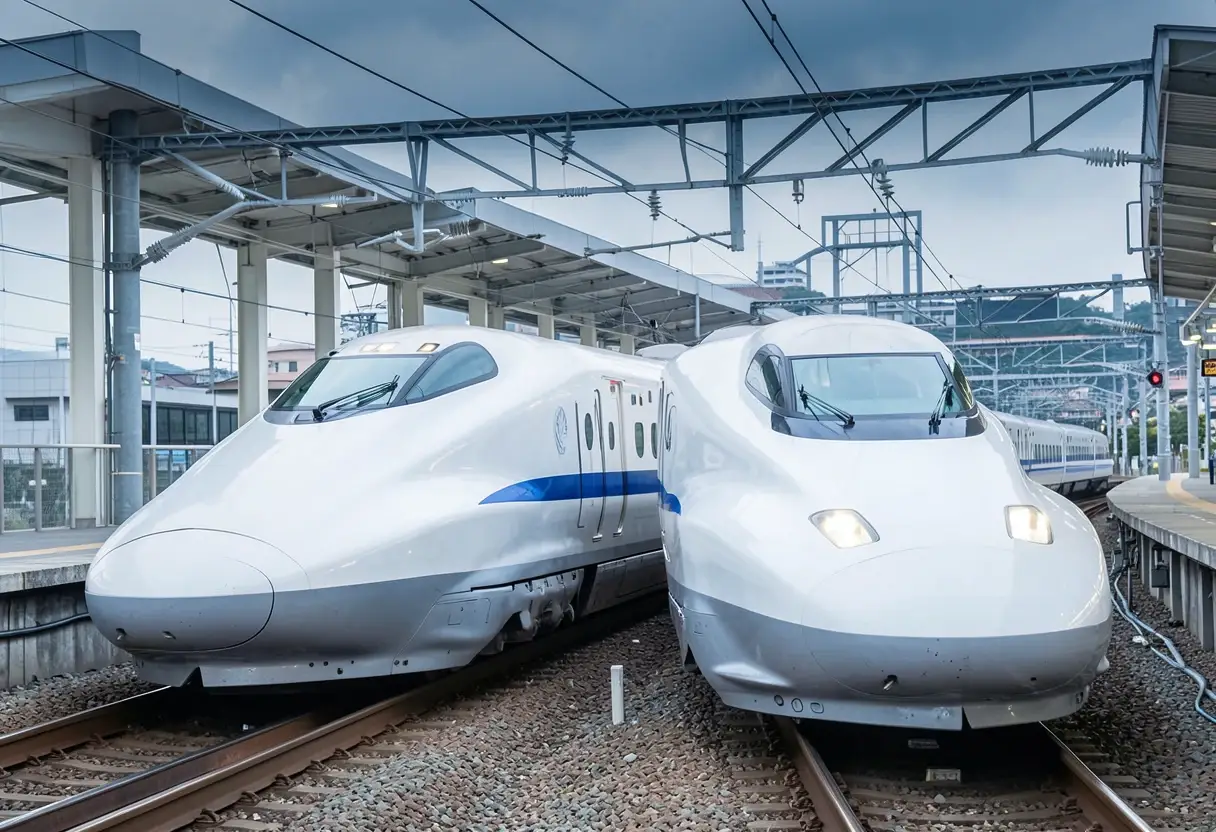
The Kyushu Shinkansen network is helping drive the island's economy by cutting journey times and stimulating local development, according to a report published by The Japan Times.
The report frames the high-speed line as more than a transport asset. Fast connections between Kyushu's principal cities, it argues, have supported business travel, tourism and investment in areas that conventional rail served slowly or not at all.
The Japan Times piece does not break out fresh traffic or revenue figures in its headline framing. Its core claim is qualitative: that shinkansen services deliver measurable economic benefit to Kyushu through speed and through development that follows the tracks.
What is the claim based on?
The report draws on the established pattern of shinkansen economics. Wherever Japan's high-speed network has expanded since the original Tokaido line opened in 1964, corridor cities have recorded gains in visitor numbers, hotel construction and corporate location decisions.
Kyushu's experience follows that template, The Japan Times reports. Stations on the network act as anchors for commercial development, and shortened travel times between regional centers make day-return business trips practical where they previously required overnight stays.
How credible is the economic argument?
Claims of rail-induced growth warrant scrutiny. Counterfactuals are hard to construct, and benefits attributed to a new line can shift activity from one district to another rather than create it.
Still, the Kyushu case rests on observable mechanisms:
- Faster city-to-city journeys raise the effective labour and customer catchment of each station city
- New stations attract hotel, retail and office development
- Tourism flows respond directly to travel-time reductions
The Japan Times report treats these outcomes as established for Kyushu rather than projected.
Why this matters now
High-speed rail's regional economics face renewed scrutiny worldwide, as governments in Europe, North America and Asia weigh multi-billion-dollar line investments against promised agglomeration benefits.
Japan remains the reference case, and Kyushu — served by the network since the Kagoshima route's full opening in 2011 and the Nagasaki route's extension in 2022 — is among the clearest demonstrations that speed and local development can be linked in practice.
The Japan Times report adds a contemporary endorsement to that record. Whether the Kyushu model transfers to lower-density corridors abroad remains the harder question, and one the report does not address.
Future extensions and service upgrades on the network will test whether the growth effect compounds or plateaus as the system matures.
via Google News: High-speed rail (Source)
More from Rebecca Stone
Show full bio
Senior reporter covering money, funding and market shifts around Rail industry news and analysis at Mainline Report.
319 articles
Connecting services · Related articles
- 24:39
Even Japan Can't Deliver a 500 km Shinkansen Line in 10 Years: Rail Body Chief
- 13:30
Japan voices timeline concerns over Mumbai–Ahmedabad bullet train
- 02:05
China's high-speed network grows denser with new lines
- 03:15
China's high-speed rail expansion to deepen cross-city collaboration
- 15:51
Visual Capitalist ranks national high-speed rail networks by scale