08:15FRPlt 12412 words
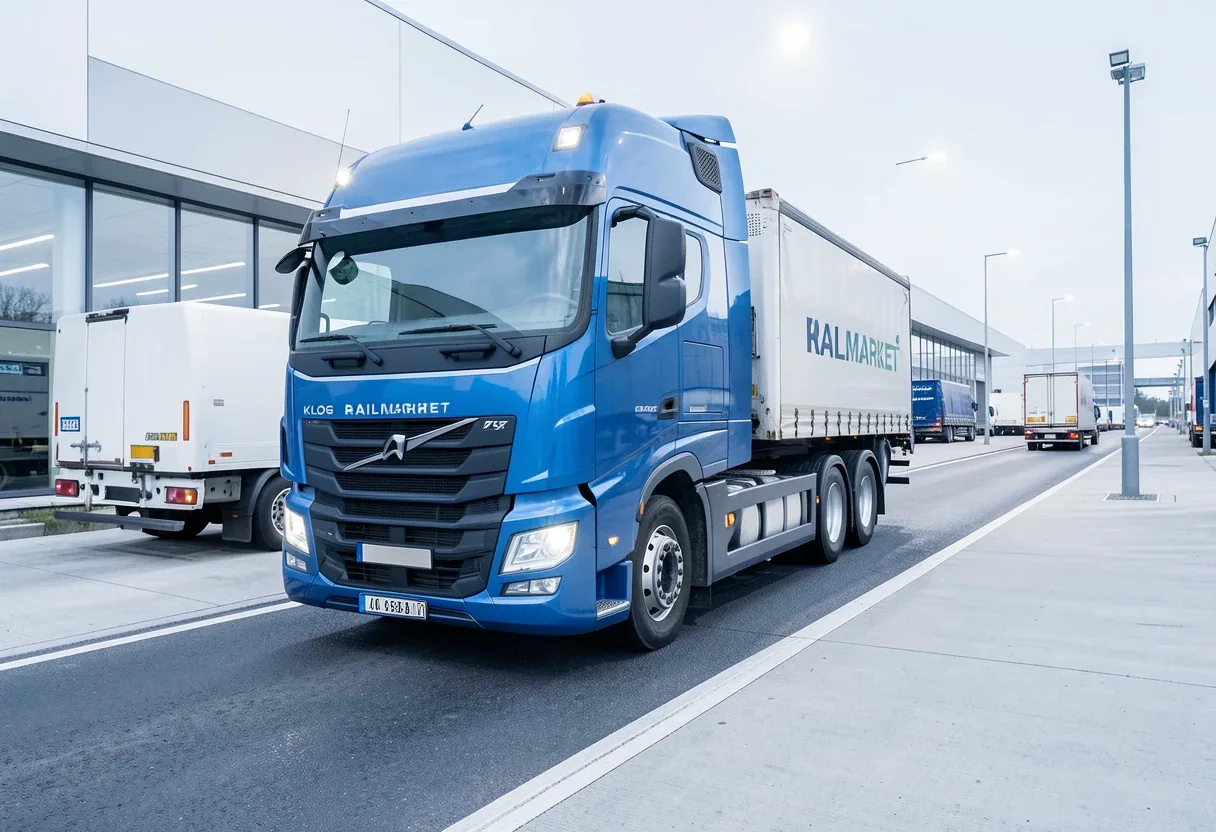
KLOG Expands Intermodal Connections From Portugal
Portuguese operator KLOG says it is expanding its intermodal connections, but the announcement names no routes, frequencies or volumes to verify against.
· 2 min journey
Calling at
- KLOG, a Portuguese logistics and rail freight operator, has announced an expansion of its intermodal connections
- The announcement names no routes, frequencies, dates or volume figures
- Intermodal growth would affect Portugal–Spain and wider European freight corridors
Portuguese logistics operator KLOG is expanding its intermodal rail connections, according to an announcement carried by RAILMARKET.com — one of the few confirmed facts in a notice that discloses little operational detail.
The company, which runs freight and logistics services from Portugal into Spain and the wider European network, has positioned intermodal traffic (the movement of containers and swap bodies across road and rail) as a growth area. No figures accompany the announcement. That absence matters.
What does the expansion actually change?
The honest answer, on the evidence published so far: not much can be verified. The notice names no new terminals, no additional train paths, no frequency targets and no volume projections. Without a route, a timetable or a launch date, the claim sits in the category of strategic signalling rather than measurable service change.
For shippers on the Iberian Atlantic corridor, an expanded KLOG network would in principle mean more path options to the Spanish hinterland and to central Europe, where the operator already competes with established combined-traffic players. In principle. The announcement offers no capacity numbers against which to test that promise.
How to read a claim like this
Trade practice is to treat any operator expansion notice as a claim, then check it against three data points:
- Fleet and traction plans — more services require more locomotives and wagons, either owned or leased;
- Terminal slots — intermodal growth needs handling capacity at both ends of the corridor;
- Path allocation — infrastructure managers must grant the train paths before a timetable exists.
None of these appear in the source material. Until they do, the operational substance of the KLOG expansion remains unquantified.
What is at stake commercially
Portugal's rail freight sector is small by European standards, and every additional intermodal connection shifts freight from road, where most Iberian domestic traffic still moves. Each transferred unit reduces truck mileage on the corridors out of the ports of Lisbon, Leixões and Sines. Intermodal rail typically competes on cost per container over distances beyond roughly 300 km, which makes the Portugal–Spain–France axis the natural market.
An expansion by KLOG, if it materialises as new services, would add competitive pressure on the corridor. It would also signal confidence in demand from Portuguese exporters and from the deep-sea ports feeding Iberian hinterland traffic.
The next verifiable step is concrete: a named route, a published frequency, or a terminal agreement. Until one of those appears, the expansion remains an intention with a headline.
via Google News: Freight rail (Source)
More from Priya Raman
Show full bio
Staff writer covering companies, deals and strategy in Rail industry news and analysis at Mainline Report.
351 articles
Connecting services · Related articles
- 24:54
Rail infrastructure expanding at Gulf Inland
- 11:53
Brazilian Intermodal Operator Secures Rolling Stock Finance
- 24:54
Portugal opens first rail freight growth incentive at €0.01/tkm
- 22:45
RAILMARKET Roundup Puts Four European Freight Carriers Under One Lens
- 24:39
Rolling stock reform could open UK rail freight market