00:04Freight Operations723 words
GB Railfreight restores Nottingham scrap link after four-year hiatus
GB Railfreight resumed scrap-metal rail services from Ward’s Nottingham site in August 2026 after inactivity since April 2022, with each train equivalent to about 72 articulated lorries.
· 4 min journey
Calling at
- Each train carries the equivalent of approximately 72 articulated lorry loads.
- Harrimans Lane services restarted in August 2026 after inactivity since April 2022.
- Ward bought the former Unimetals site in Nottingham in 2026 as one of four acquisitions, taking its UK network to 12 locations.
- GBRf’s separate 7 Steel UK contract runs for 11 years and covers scrap, finished steel and Cardiff shunting.
- Two sets of dedicated scrap wagons are due in 2027.
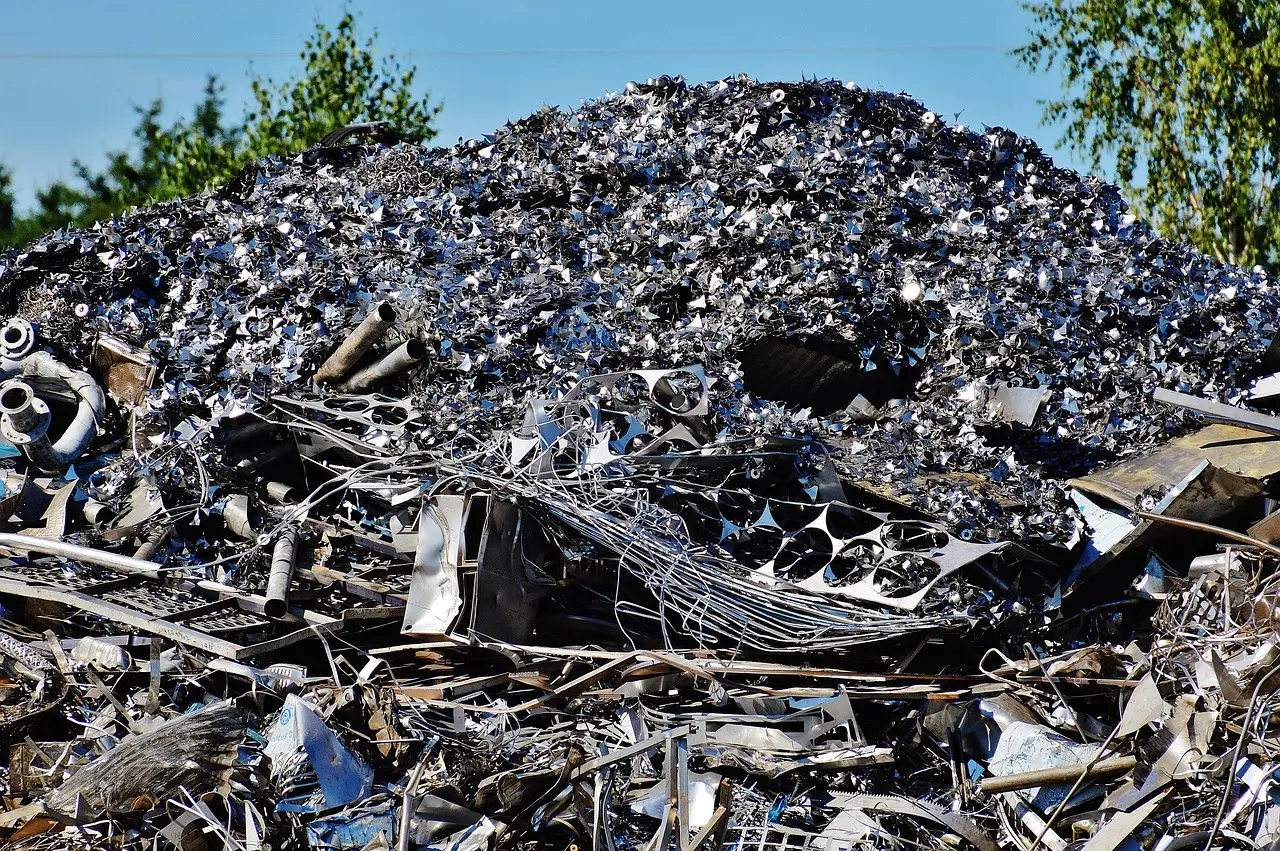
About 72 articulated lorry loads: that is the road-traffic equivalent attached to each train carrying processed ferrous scrap from Ward’s Harrimans Lane facility in Nottingham, where GB Railfreight (GBRf) resumed services in August 2026.
The Harrimans Lane connection had stood inactive since April 2022. The restart followed Ward’s purchase earlier in 2026 of the former Unimetals metal processing site. GBRf has not disclosed train frequency, tonnage, unit cost or annual road-traffic reductions, so the lorry figure indicates scale per train rather than measured output.
What does the Nottingham restart change?
Ward now consolidates at the facility scrap sourced across its network before onward transport by rail. The site therefore provides both a processing base and a rail exit for material collected through a wider UK operation, rather than serving only one processing location.
Mobile cranes and loading shovels handle different grades of processed ferrous scrap. Together, they provide the loading means for the rail service; the announcement does not specify which machine handles each grade or how long loading takes.
For road hauliers, the operational issue is whether regular GBRf trains displace articulated lorry movements over the same distance. On the stated equivalence, each train represents capacity equal to about 72 articulated lorries. No route, frequency or commodity-volume data is supplied, so the annual number of lorries affected cannot be calculated.
That distinction matters because a resumed service establishes a date, not a throughput result. Service frequency, train formation and actual loading weights determine how many lorries the arrangement replaces in practice, and the announcement provides none of those measures.
How does Ward’s network fit?
Nottingham is one of four facilities Ward acquired in 2026, alongside Barnsley, Huddersfield and Castleford. The purchases expanded the company’s UK network to 12 locations. For GBRf, that broader footprint supplies a larger pool of scrap for consolidation at Nottingham; for Ward, the restored connection adds outbound rail capacity to a 12-location processing network.
The claim to test is whether material collected across those 12 locations reaches Harrimans Lane at sufficient volume to sustain frequent trains. The announcement gives no site-level tonnage, inbound road mileage, rail-slot commitments or GBRf locomotive and wagon assignments. Until those figures emerge, the 72-lorry equivalence remains an operator claim about each train, not a measured count of lorries taken off the road.
Does GBRf have a wider steel role?
Yes. GBRf is expanding its work in the British steel supply chain through a separate 11-year logistics contract with 7 Steel UK. The agreement covers three flows: inbound scrap metal, outbound finished steel products and shunting at the Cardiff steelworks.
This second contract broadens GBRf’s role beyond the Nottingham scrap operation. Handling both inbound raw material and outbound finished products puts the operator on both sides of the steel cycle, while the Cardiff shunting work adds a yard function alongside collection and line-haul activity.
Two new sets of dedicated scrap wagons are due in 2027. Their arrival is the clearest future capacity milestone in the announcement, tied directly to the scrap element of the contract. The announcement gives no wagon count, date within 2027, capital value or planned service frequency, so it does not support a quantified claim about added tonnage or cost savings.
What should the industry watch?
The immediate test is actual output at Harrimans Lane: trains per week, tonnes per train, average loading rate and the number of articulated lorry loads displaced. Those measurements would convert the 72-lorry equivalence into a network-wide road and cost comparison.
Then comes the 2027 wagon deployment. Confirmation of delivery, the number of wagons in each set and their allocation to Cardiff or other British steel flows would show whether dedicated assets support a sustained expansion rather than a one-off launch.
Ward’s enlarged 12-site footprint adds the feedstock question. If its Barnsley, Huddersfield and Castleford operations can feed Nottingham reliably, the restored connection could consolidate scrap before it returns to the rail network. If volumes prove uneven, the economics of regular trains would be harder to sustain.
The announcement establishes a completed August 2026 restart and an 11-year Cardiff contract, but leaves service frequency, tonnage and cost outcomes open. Those figures will determine whether the revived connection changes scrap haulage at network scale.
via railmarket.com (Source)
More from James Calloway
Show full bio
Correspondent covering companies, deals and strategy in Rail industry news and analysis at Mainline Report.
415 articles
Connecting services · Related articles
- 00:59
GBRf signs 7 Steel UK contract for scrap and steel flows
- 13:29
Porterbrook orders 56 scrap wagons for GBRf’s Cardiff contract
- 00:49
Holcim shifts nearly 20,000 tonnes to Sunderland rail route
- 09:40
Great British Railways publishes rolling stock and infrastructure strategy
- 00:54
Stephenson Harwood publishes GBR rolling stock and infrastructure analysis