14:45FRPlt 10596 words
Ex-SpaceX Engineers Turn to Driverless Electric Freight Trains
Engineers who left SpaceX say they are building driverless electric freight trains — a claim with no operator, route or delivery date attached yet.
· 3 min journey
Calling at
- Ex-SpaceX engineers are developing driverless electric freight trains, Gadget Review reports.
- The announcement names no launch customer, order size, route or delivery date.
- Autonomous freight operation still requires safety certification and charging infrastructure that do not yet exist at freight scale.
- Prior rail automation programmes have taken years to move from prototype to revenue service.
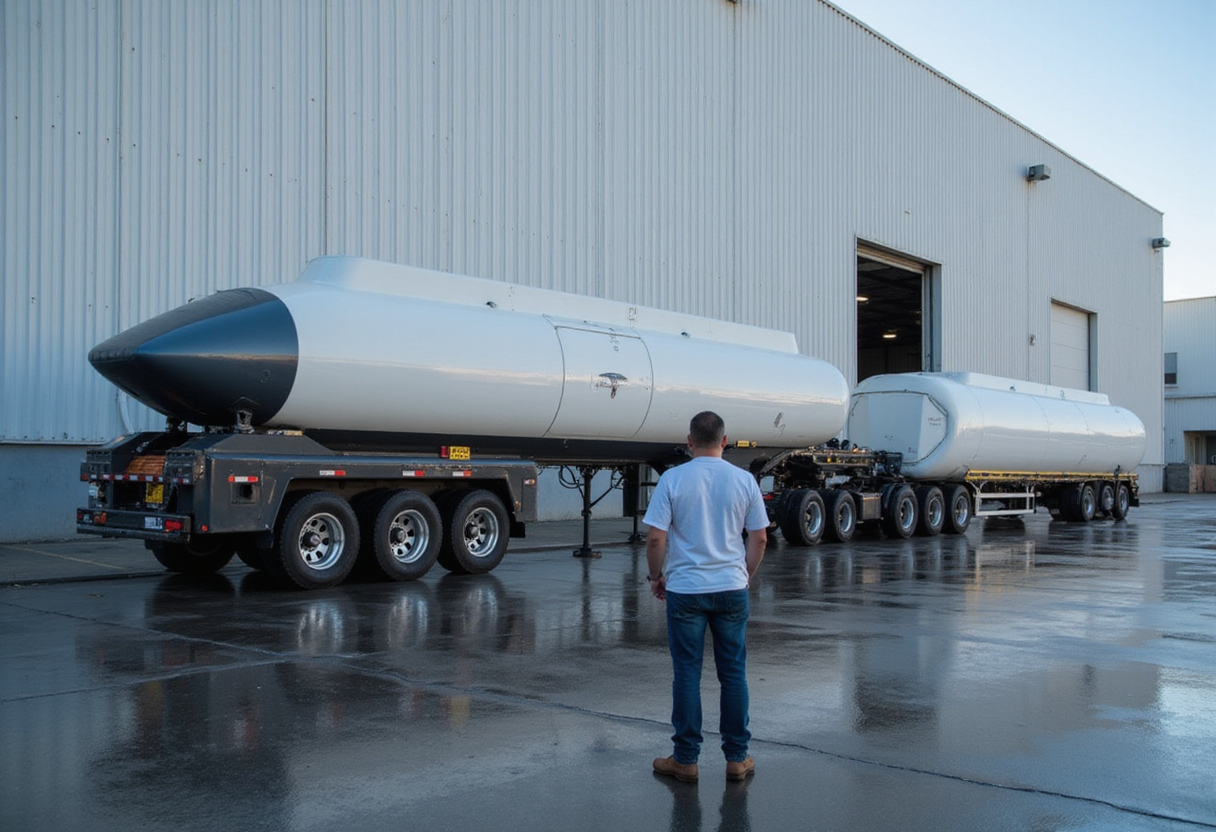
Engineers who previously worked at SpaceX are developing driverless electric freight trains, according to an announcement reported by Gadget Review. The claim marks the entry of aerospace talent into rail freight, a sector where automation and electrification have so far advanced far more slowly than in passenger cars or trucking.
The announcement names no launch customer, no order volume and no delivery date. The company behind the project did not disclose the size of its fleet plans, the routes it intends to serve, or the regulatory approvals it will need before running trains without drivers on any national network. Until those details appear, the statement stands as a venture-stage claim rather than a fleet commitment.
The involvement of former SpaceX engineers is the strongest concrete element of the story. Those staff bring experience in battery systems, autonomous software and rapid hardware iteration — capabilities the rail industry has historically absorbed slowly. Whether that background translates into certified, revenue-earning freight operations is the question regulators and operators will ask first.
What does the announcement actually claim?
The report states three things:
- The founding team previously worked at SpaceX.
- The trains they are building are electric.
- The trains are intended to run without drivers.
Everything beyond those points — capacity, tonnage, range, charging infrastructure, pricing or service territory — remains unspecified in the source material.
Why driverless freight attracts attention now
Rail freight operators in North America and Europe face sustained pressure on two fronts: labour costs, which represent one of the largest operating expenses in the sector, and decarbonisation targets that make diesel traction increasingly difficult to justify. A battery-electric, autonomous train addresses both pressures at once, at least in principle.
That dual promise explains why automation proposals keep reappearing. It also explains the scepticism they meet. Driverless operation on heavy freight requires:
- Certification from national rail safety regulators for autonomous operation on shared networks.
- Battery capacity sufficient for the tonnage and distance profiles of mainline freight.
- Charging or energy infrastructure that does not exist today at freight scale.
- Agreement from Class I operators and freight customers to place volume on unproven equipment.
None of these hurdles is addressed in the announcement.
Supplier claims versus network reality
Trade coverage of new entrants in rail technology has a long record of claims that outran deployment. Automated freight projects in Europe and North America have repeatedly demonstrated prototypes, then spent years — in some cases more than a decade — in certification and pilot phases before carrying paying loads.
The appropriate benchmark for this venture is therefore not the pace of software deployment in aerospace or road vehicles, but the measured progress of prior rail automation programmes. On that basis, an announcement without a pilot route, a partner operator or a stated timeline should be read as an early-stage signal.
What to watch next
The credibility of the project will rest on verifiable milestones rather than engineering pedigree. Indicators that would move the story from claim to programme include a named pilot operator, a test corridor approved by a rail regulator, a published battery-and-traction specification, and a first revenue or trial movement with a date attached to it.
Until then, the ex-SpaceX team's driverless electric freight train remains a stated ambition in a sector where the gap between demonstration and certified daily operation is measured in years.
The company's next disclosures — if they include fleet numbers, route agreements or regulatory filings — will determine whether this project joins the short list of autonomous freight ventures that reached steel, or the longer list that stayed on paper.
via Google News: Freight rail (Source)
More from Amara Osei
Connecting services · Related articles
- 16:19
$100 Million Secured to Take Autonomous Freight Rail to Market
- 06:14
US Autonomous Rail Firm Secures $100 Million to Commercialize Freight Trains
- 14:05
Parallel Systems raises $100M for autonomous short-haul freight trains
- 24:49
Parallel Systems Raises Over $100M to Commercialize Autonomous Rail
- 12:15
Parallel Systems raises $100m Series C for autonomous freight rail