18:04INPlt 8820 words
CTA Awards Blue Line Design and Station Contracts Worth Up to $39.9 Million
CTA board approves AECOM design contract for 13 miles of Forest Park Branch track and a $39.9 million California station accessibility rebuild starting in late 2027.
· 4 min journey
Calling at
- More than 80% of the Forest Park Branch is currently a slow zone.
- AECOM contract covers about 13 miles (70,000 feet) of track design between IMD and the I-290 Bridge.
- California station contract is capped at $39.9 million, with construction starting in Q4 2027.
- First-phase rebuild cost $268 million for three miles of track, completed in 2023.
- 110 of CTA's 146 rail stations (75%) are fully accessible under the ASAP program.
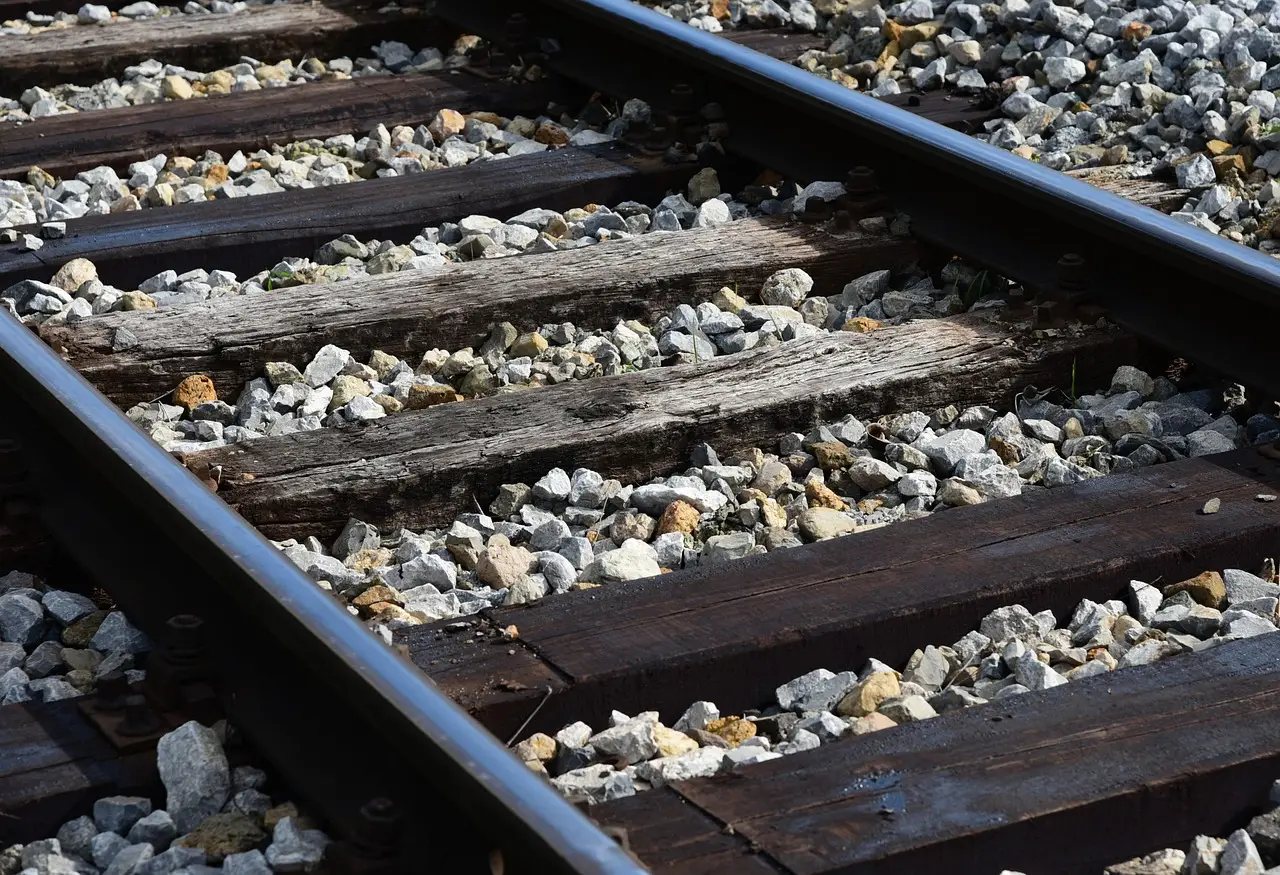
More than 80% of the Chicago Transit Authority's Forest Park Branch of the Blue Line is currently classified as a slow zone, and the agency's board has now approved two contracts intended to change that arithmetic. At its October 27 meeting, the CTA Board awarded a track design contract to AECOM Technical Services covering roughly 70,000 feet — about 13 miles — between the Illinois Medical District (IMD) station and the I-290 Bridge, plus a construction contract capped at $39.9 million for accessibility upgrades at the California station.
The design award marks the start of the next phase of the Forest Park Branch Rebuild Project, a multi-year program to reconstruct the entire branch, which runs between Chicago and its western suburbs, and make it fully accessible to riders using mobility devices. Much of the branch's infrastructure dates to 1958. The CTA states that routine maintenance and modest improvements in recent decades have not prevented most of that infrastructure from running far beyond its useful life.
What does the design contract actually cover?
AECOM's scope includes a field investigation of the full corridor and design for new and upgraded infrastructure: track, signals, traction power (the electrical system supplying trains), drainage, utilities and other facilities within the CTA right-of-way. The contract also requires a review of drainage elements along the I-290 expressway shoulders and their effect on rail service. AECOM partnered with three disadvantaged business enterprise firms — DB Sterling Consultants, Facet Engineering and GSG Consultants — accounting for more than 15% of the contract value.
Funding comes in part from a $15.8 million grant under the Federal Highway Administration's Carbon Reduction Grant Program. The Illinois Department of Transportation (IDOT) applied on the CTA's behalf, and the two agencies signed an intergovernmental agreement in July to transfer the funds.
"I know how much fast, reliable rail service means for the people and communities we serve," said CTA Acting President Nora Leerhsen. "This contract is an investment that will build on the improvements we've already delivered and moves us closer to our goal of a modernized and accessible Blue Line."
The work builds on completed phases. The first phase, finished in 2023, delivered a $268 million rebuild of three miles of track between IMD and LaSalle station downtown. Design work on a two-mile stretch from Kedzie Avenue to Keeler Avenue is already complete; construction there is expected to begin in 2027, supported by federal Reconnecting Communities Program funds.
The corridor carries significant demand. More than four million transit riders travel through it annually, and the I-290 Eisenhower Expressway alongside it ranks among the most congested in the United States. In 2024, CTA, IDOT and the Chicago Metropolitan Agency for Planning (CMAP) established the Connect 290 Blue Program to coordinate funding for rebuilding both the expressway and the Blue Line branch.
"Rebuilding the Forest Park Branch isn't just about upgrading tracks. It's about providing faster, more reliable and accessible service for the people who depend on the Blue Line every day," said CMAP Executive Director Erin Aleman. She noted that the corridor ranks among the priority investments in the region's recently adopted 2026 Regional Transportation Plan.
What happens at the California station?
The second contract covers modernization and accessibility upgrades at the California Blue Line station, with construction set to begin in the fourth quarter of 2027. Following a competitive procurement, F.H. Paschen, S.N. Nielsen & Associates will lead the work. The contract value is not to exceed $39.9 million, funded through a combination of IDOT money and city of Chicago Tax Increment Financing.
The station, originally built in 1895 and last renovated in 2015, recorded more than 1.13 million entries in 2025, making it one of the line's busier stops. The upgrade includes:
- Two new elevators serving inbound and outbound platforms
- New stairs and accessible doors
- Updated signage and wayfinding
- Platform and canopy extensions with adjusted lighting, railings and windbreaks
- Improved sidewalks, ramps, drainage and landscaping
To preserve rail access during construction, crews will build a temporary stationhouse and entrance at St. George's Court while work proceeds on the permanent accessible entrance.
"An accessible CTA gives more people the freedom to travel independently and connects them to everything our region has to offer," Leerhsen said. "This investment will bring that promise to life at the California Blue Line station."
The award advances the CTA's All Stations Accessibility Program (ASAP), its plan to make the entire system accessible to riders with disabilities. The agency already operates a fully accessible bus and rail fleet; 110 of its 146 rail stations — 75% — are fully accessible. California is one of 15 stations that have recently opened or are funded and in various stages of planning, design or construction under ASAP, and the pace of that pipeline will determine how quickly the remaining 36 stations follow.
via connect290blue.com (Original)
More from Priya Raman
Show full bio
Staff writer covering companies, deals and strategy in Rail industry news and analysis at Mainline Report.
391 articles
Connecting services · Related articles
- 15:51
FRA Dedicates $550M to S-Line Passenger-Rail Corridor
- 16:41
Siemens to build California's first high-speed trainsets, arriving by 2030
- 21:08
Michigan Secures $145 Million Federal Award for Passenger Rail
- 12:24
USDOT Funds $35.8 Million for Western North Carolina Rail
- 08:02
Washington State Doubles Down on Cascadia High-Speed Rail Study