14:20PAPlt 11590 words
Colorado's Front Range Rail District to Put Sales Tax Before Voters
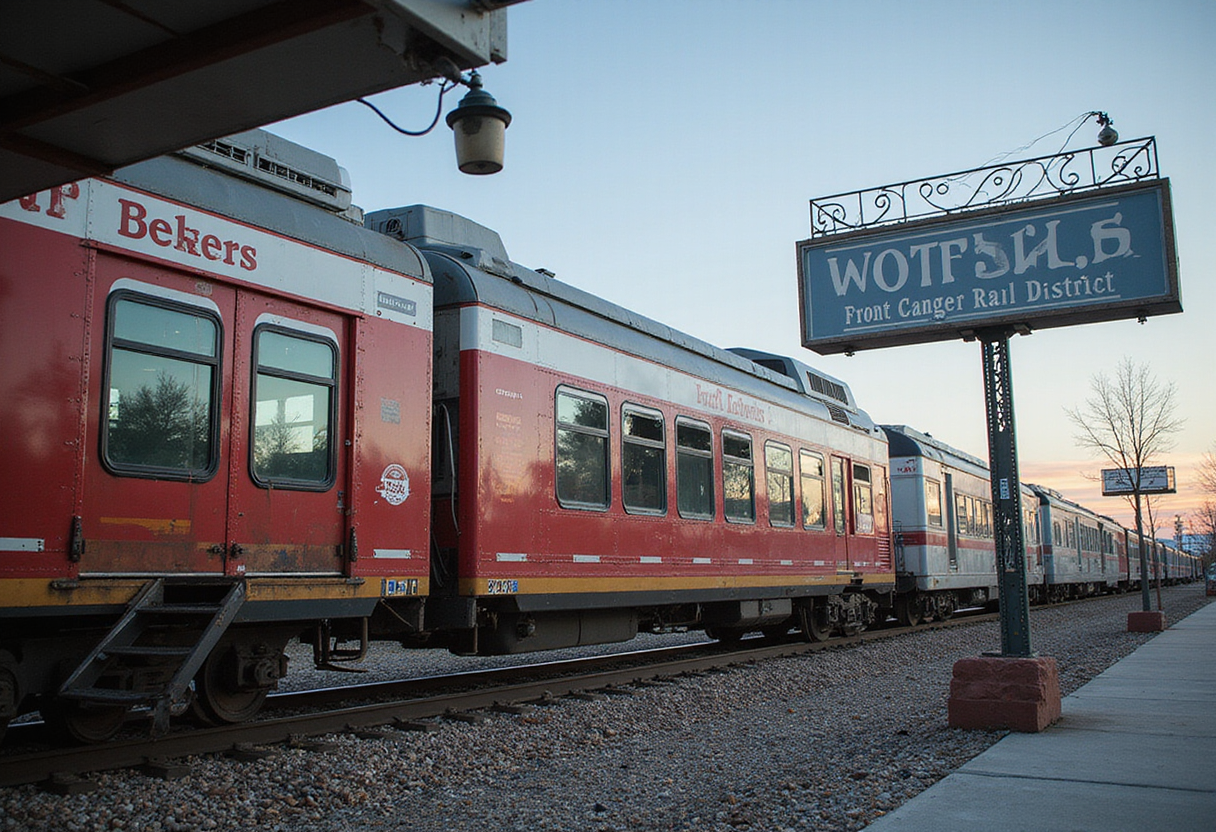
Voters in the Front Range Passenger Rail District will decide a new sales tax to fund the proposed CoCo passenger train, the project's first direct test at the ballot box.
· 3 min journey
Calling at
- Voters in the Front Range Passenger Rail District will consider a new sales tax to fund the CoCo passenger train.
- The ballot question is the district's first direct appeal to voters for a dedicated revenue stream.
- Approval of the tax would position the district to pursue federal matching funds for the project.
Voters within the Front Range Passenger Rail District will decide a new sales tax intended to fund the proposed CoCo passenger train, Colorado Public Radio reports. The ballot question marks the first time the district's financing plan goes directly to the electorate, a decision that will determine whether the project moves from planning into funded development or stalls for lack of a dedicated revenue stream.
The Front Range Passenger Rail District was created by the Colorado legislature to develop intercity passenger rail along the state's populous north–south corridor. Its board has spent the past several years studying alignment options, service levels and governance structures, and it has consistently identified a local funding source — most plausibly a district sales tax — as the prerequisite for building and operating any train. Without voter-approved revenue, the district lacks the borrowing capacity and operating funds that federal grant programs typically require as matching contributions.
The CoCo train named in the ballot question is the district's near-term service concept. Details of the tax rate, the ballot language and the specific service plan it would finance were not contained in the initial report, and those specifics will shape the public debate ahead of the vote. What the measure establishes in principle is a funding link: a tax levied across district territory, with proceeds directed to passenger rail development.
The stakes for Colorado's transport network are considerable. The Front Range corridor concentrates most of the state's population and employment, and its highway corridors — principally Interstate 25 — carry rising volumes of commuter and intercity traffic. Passenger rail along this corridor has been studied repeatedly over the past two decades, with the district representing the most institutionalized attempt to date to turn those studies into a operating service.
For the funding question, timing matters in two directions. A rejection at the ballot box would leave the district without a revenue base and would likely push any Front Range service years further out. Approval, by contrast, would give the district a stream of local money it could use to compete for federal capital grants, which in recent rail programs have required demonstrable state or local commitments before awards are made.
The vote also tests public appetite for rail investment in a state that has debated the mode repeatedly without committing construction funds at corridor scale. Voters in the district will effectively decide whether the CoCo train joins the pipeline of funded American passenger rail projects or remains a planning exercise.
Colorado Public Radio's report signals that the district's board has settled on the ballot route rather than alternative financing mechanisms such as farebox-backed bonding or legislative appropriation. The sales tax approach spreads the cost across district residents and businesses regardless of ridership, a structure designed to support the long capital timeline typical of new passenger rail starts.
What remains to be seen in the coming months is the campaign that precedes the vote: the tax rate the board requests, the service commitments it attaches to that rate, and the timeline it presents for first trains. Those figures, once published, will allow a direct comparison with other recently funded US regional rail programmes and with the district's own earlier cost and ridership estimates.
If voters approve the measure, the Front Range Passenger Rail District will gain its first dedicated funding and the CoCo train will advance into preliminary engineering and federal grant competition. If they decline, the project returns to the shelf alongside decades of prior Front Range rail studies.
via Google News: Passenger and commuter rail (Source)
More from James Calloway
Show full bio
Correspondent covering consumer brands and retail at Mainline Report.
150 articles
Connecting services · Related articles
- 10:20
Colorado Front Range Voters to Decide Sales Tax Hike for Passenger Rail
- 14:45
Colorado Front Range rail plan set to shrink to major cities
- 22:33
Colorado House Passes Bill Updating Front Range Rail District
- 06:40
Colorado Voters Weigh 0.333% Sales Tax to Push Front Range Rail South
- 09:23
Colorado Rail District Advances $4.7B Front Range Rail Plan