16:54FRPlt 4554 words
China-Europe rail freight holds steady through Golden Week
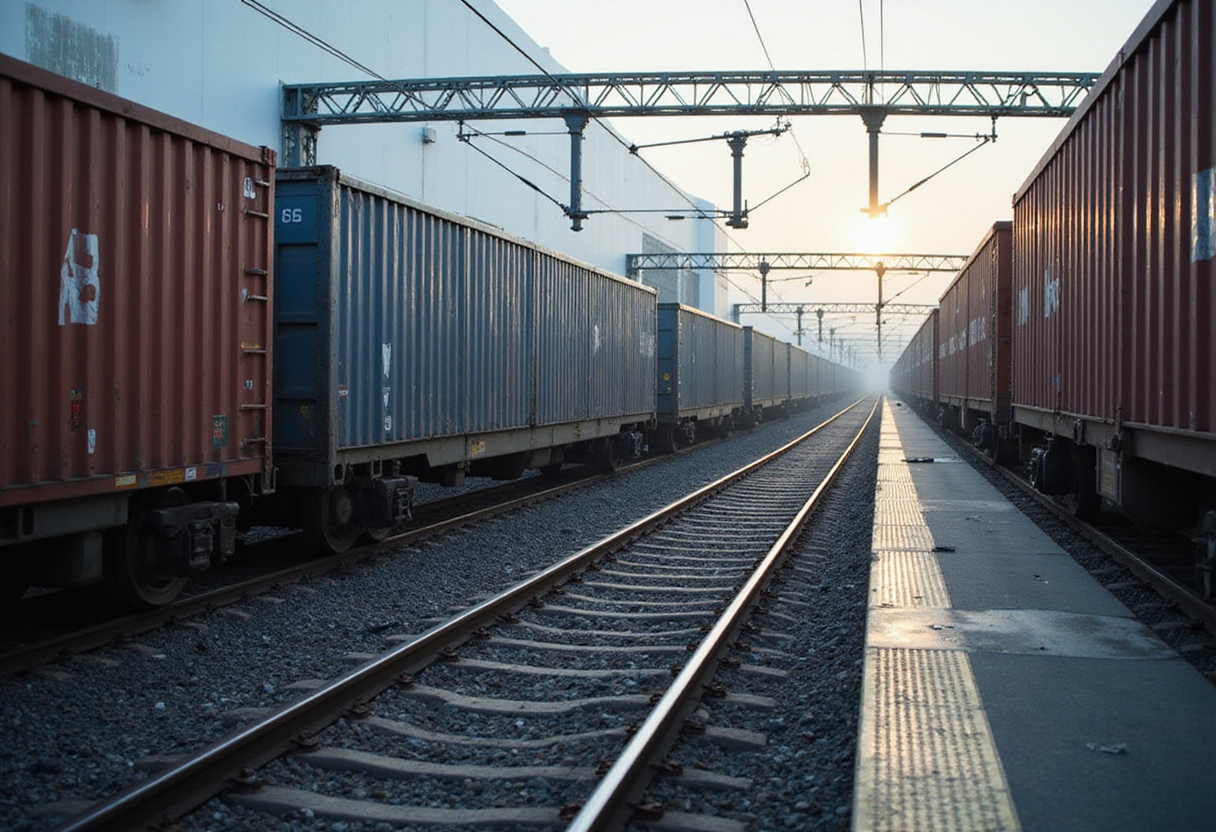
CGTN reported that China-Europe freight rail services kept running through the October 1-7 National Day Golden Week, with the cross-continental corridor maintaining its normal schedule while domestic passenger traffic slowed.
· 3 min journey
Calling at
- China-Europe freight rail services maintained operations during the October 1-7 National Day Golden Week holiday, according to CGTN.
- The China Railway Express corridor links more than 80 Chinese departure cities to roughly 220 European endpoints.
- Three principal corridors handle the bulk of volumes: northern via Russia, western via Kazakhstan, and middle/southern via Central Asia and Turkey.
- European handling hubs include Duisport in Duisburg, PKP Cargo's Małaszewicze terminal, and Port of Hamburg rail facilities.
- CGTN did not publish specific train counts or tonnage figures in its holiday dispatch.
China-Europe rail freight kept moving through China's National Day Golden Week, state broadcaster CGTN reported, with the cross-continental corridor maintaining its normal schedule as domestic passenger traffic slowed across the seven-day holiday.
The October 1-7 holiday traditionally empties Chinese passenger stations as urban workers return to home provinces. Freight corridors treat the window as ordinary working time, running additional paths and recovering from maintenance backlogs while passenger track capacity is freed up.
What does the corridor carry?
The China Railway Express service, branded in Chinese as 中欧班列, links more than 80 Chinese departure cities to roughly 220 European endpoints. Three principal routes handle the bulk of volumes:
- The northern corridor via the Manzhouli or Suifenhe border crossings into Russia and onward to Belarus and the European Union.
- The western corridor through Alashankou or Khorgos into Kazakhstan, then across Russia or Belarus toward Europe.
- The middle/southern corridor through Central Asia, across the Caspian Sea at Aktau or Turkmenbashi, then through Azerbaijan, Georgia and Turkey into Bulgaria and onward to Greece or Romania.
Westbound containers typically carry electronics, machinery, automotive parts, garments and e-commerce parcels. Eastbound loads concentrate on automotive components, machinery, forest products, food and consumer goods.
What did CGTN report?
CGTN's dispatch confirmed continued operations during the holiday but did not publish specific train counts or tonnage figures. The report described activity at handling hubs as "busy" without quantifying throughput.
Why does the holiday matter for European yards?
European terminals handling CRE volumes — Duisport at Duisburg, the PKP Cargo network at Małaszewicze, the Port of Hamburg rail desks, and the intermodal terminals at Łódź and Vienna — schedule crew and yard capacity on the assumption that the Chinese New Year and Golden Week windows produce only a marginal dip in arrivals. A genuine interruption on the Chinese side would show immediately in stockyard dwell times at Duisburg and Małaszewicze, and in onward trucking slot availability across Germany and Poland.
What is the operating context?
The service started as a single Chongqing-to-Duisburg pilot in 2011 and has grown into one of the highest-volume container rail corridors outside the former Soviet Union. Growth accelerated after 2020 as shippers moved away from congested sea routes and constrained air freight. The post-2023 Red Sea security crisis added further momentum: container lines including MSC, Maersk, CMA CGM and Hapag-Lloyd, plus forwarders such as DHL and Kuehne+Nagel, increased rail bookings as Suez routing costs rose.
Rail transit times of 15 to 20 days door-to-door compare with 30 to 40 days for sea via the Suez Canal, although the cost premium versus ocean shipping remains material.
Who runs the European end?
Operators on the European side include DB Cargo in Germany, PKP Cargo in Poland, and a growing roster of private terminal operators and intermodal forwarders. Their principal constraint during Chinese holidays is yard capacity and onward logistics capacity, not train supply.
What to watch next?
Whether the corridor sustains this tempo through the late-October export peak and the winter weather window on the Caspian and Kazakh crossings will set the tone for end-of-year throughput at the major European handling hubs. The CGTN report confirms the basic rhythm: Chinese passenger rail volumes drop sharply during Golden Week, and China-Europe freight keeps moving.
via Google News: Freight rail (Source)
More from Priya Raman
Show full bio
Staff writer covering consumer brands and retail at Mainline Report.
287 articles
Connecting services · Related articles
- 08:13
China-Europe freight rail trips grow 10.8-fold in a decade
- 12:48
China opens four high-speed lines, extending national network
- 11:25
China–Europe Rail Freight Volume Multiplied 10.8-Fold in Ten Years
- 09:13
High-speed line opens across mountainous central China
- 10:18
China Adds Four High-Speed Lines to Expand Regional Travel