24:49ROPlt 6646 words
California High-Speed Rail Authority Issues Rolling Stock RFP
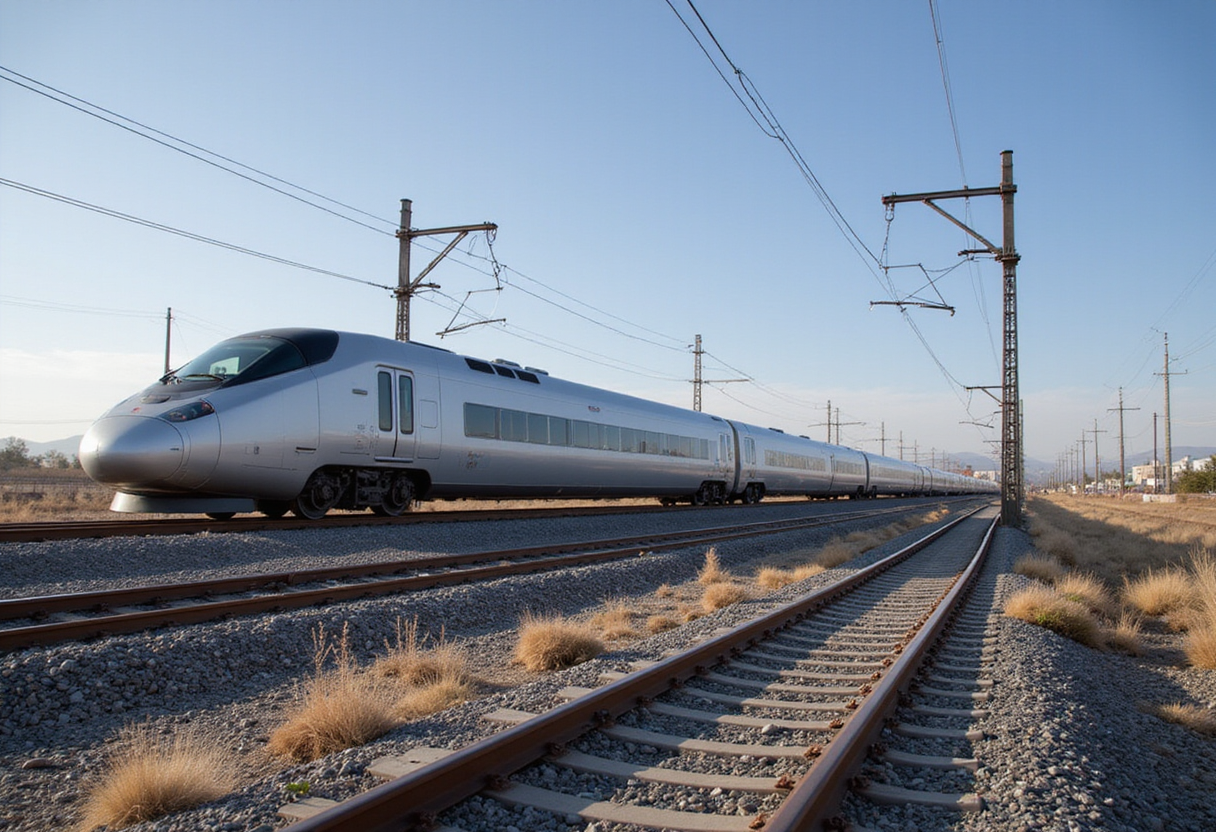
The California High-Speed Rail Authority has issued a Request for Proposals for the trainsets that will operate its planned San Francisco–Anaheim service. Specific fleet size, contract value, and delivery milestones were not disclosed in materials available at writing.
· 3 min journey
Calling at
- California High-Speed Rail Authority issued a Request for Proposals for high-speed trainsets for the planned San Francisco–Anaheim service
- Specific fleet size, contract value, and delivery milestones were not disclosed in materials available at writing
- Central Valley segment remains the focus of construction, with environmental clearance extending across the full system footprint
- A 2024 Authority business plan flagged that additional state appropriations would be needed to complete guideway work and trainset procurement simultaneously
The California High-Speed Rail Authority (CHSRA) has issued a Request for Proposals (RFP) for the trainsets that will operate its planned San Francisco–Anaheim service. The release opens a formal bidding phase for one of the largest pending passenger-rail fleets in North America.
The solicitation moves procurement into a formal stage. Specific fleet size, contract value, and delivery milestones were not included in the materials available at writing.
What the package covers
The RFP covers the powered cars and trailers that will carry passengers on the system once revenue service begins. Locking in a trainset's dimensions, traction package, axle load, and signalling interface sets the boundaries for platform lengths, maintenance facility layouts, and timetable planning. Until a builder is selected, the Authority cannot finalize those downstream design elements.
The Authority's earlier rolling stock activity involved a procurement it paused amid contract disputes; the new solicitation restarts that process under the program's current governance and funding picture.
Where the program stands
CHSRA, created by the state Legislature in 1996, is responsible for delivering a high-speed backbone serving the San Francisco Bay Area, the Sacramento–San Joaquin Valley corridor, and the Los Angeles–Anaheim region. Construction has concentrated on the Central Valley segment, where guideway and structure work has progressed under successive baseline agreements. Environmental clearance extends across the full system footprint from San Francisco to Anaheim.
The fleet decision is gating for the project. The Authority cannot finalize timetables, dwell times at intermediate stations, or platform lengths without first choosing a trainset's footprint and traction package.
What bidders typically watch
Major trainset builders active in the high-speed market include Alstom, Siemens Mobility, and Hitachi Rail. Talgo, a Spanish manufacturer with prior California involvement, had an earlier CHSRA contract that the Authority terminated amid litigation; subsequent industry engagement also explored a turnkey concession model in which a private consortium would finance, build, and operate the line for a defined period. The structure of the current RFP will clarify whether any non-traditional delivery model applies this round.
Cost and schedule context
The California program has faced repeated cost escalations and schedule revisions since the first environmental review documents were filed in the mid-2000s. A 2023 Authority project update reset cost and timing for a Central Valley "early operating segment," and subsequent funding negotiations with the federal government, plus reallocations from the state's general fund, have defined the program's financial profile into 2026. A 2024 Authority business plan extended the projected opening date for the initial operating segment and flagged that additional state appropriations would be needed to complete guideway work and trainset procurement simultaneously.
Rolling stock pricing feeds directly into the Authority's lifecycle cost model. Per-seat cost, energy consumption per seat-mile, and maintenance intervals all shape the operating subsidy the state will be asked to cover once service begins.
A typical procurement arc
Standard high-speed rail procurements in North America follow a common sequence:
- Industry Day and bidder Q&A window: 2–6 weeks after release
- Initial proposal due date: 60–120 days after RFP release
- Best-and-final offers: 30–90 days after initial bids
- Board award and notice-to-proceed: 3–9 months after RFP release
- First trainset delivery: 24–36 months from contract execution
These ranges reflect industry practice rather than Authority-published commitments; the actual schedule will depend on the technical complexity the package imposes on bidders.
What to watch next
The full RFP text, expected to post on the Authority's procurement portal in the coming days, will determine whether the package fits within existing Central Valley operating assumptions or signals a different delivery approach. The Authority will publish answers to industry questions on the portal, and bidder feedback filed during the Q&A window will indicate where the technical specification may yet shift before proposals are due.
via Google News: Rolling stock (Source)
More from Amara Osei
Connecting services · Related articles
- 15:07
California gives high-speed rail authority permit power over right-of-way
- 24:10
California high-speed rail meets one of multiple 2026 legislative goals
- 24:54
California governor signs CHSRA encroachment-permit bill
- 24:44
California HSR board curbs CEO expenses after nightclub, gym charges
- 14:58
California Clears Contract to Start Laying High-Speed Rail Track