08:25ROPlt 3574 words
Bulgaria to gain new freight wagon manufacturing plant
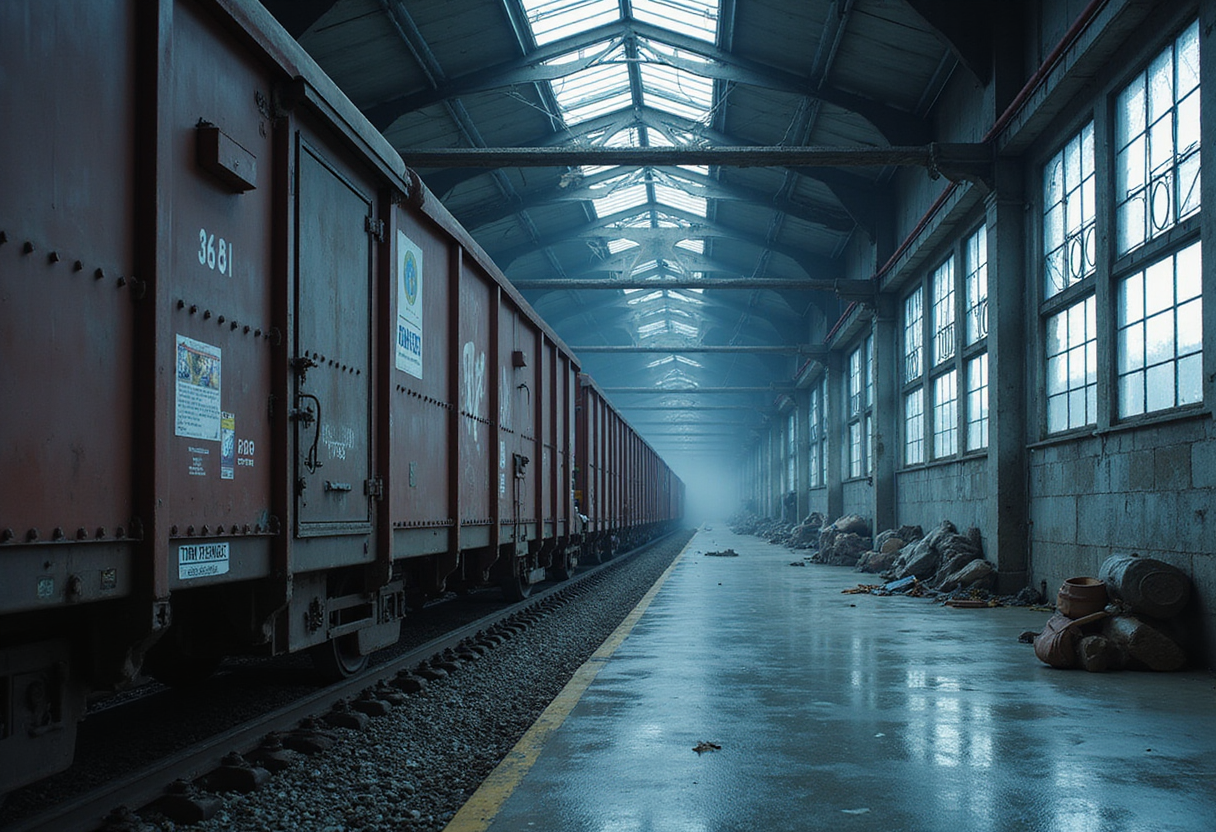
Construction of a freight wagon manufacturing plant has begun in Bulgaria, adding new rolling stock production capacity inside the EU for Balkan and wider European operators.
· 3 min journey
Calling at
- A new freight wagon manufacturing plant is under construction in Bulgaria.
- The announcement does not yet specify investor, capacity, product range or commissioning date.
- The plant would add freight vehicle production capacity inside the EU single market.
- EU wagon authorisation is administered by the European Union Agency for Railways.
Bulgaria has become the site of a new freight wagon plant, with construction of the manufacturing facility now under way, according to an announcement carried by the trade publication rollingstock.
The project adds a second dimension to the country's rail freight economy. Bulgaria currently moves wagonloads across its network as an operator and lessor market; the new plant would let it supply the vehicles themselves, rather than import them. That distinction matters for procurement timelines across southeastern Europe, where operators have historically sourced rolling stock from manufacturers in Germany, Poland, Romania and Türkiye.
What do we actually know?
The announcement confirms three things: a plant is being built, it will produce freight wagons, and it is located in Bulgaria. The source material does not specify the investor, the site, the production capacity in wagons per year, the product range, or a commissioning date. Those gaps are not trivial in this sector. A wagon plant's economics hinge on volume — a line assembling tank wagons for oil and chemical traffic differs sharply from one built around intermodal flat wagons or coal hopper units.
Until the promoter publishes a capacity figure and a launch customer, the project should be read as an intention with committed construction work behind it, not as confirmed output.
Why does a new wagon plant matter now?
Freight wagon demand in the European Union has run unevenly since the surge years of 2021-22, when container flows and grain movements pushed operators to expand fleets. Capacity for building standard-gauge freight vehicles is concentrated in a handful of countries, and new entrants are rare. Manufacturing capacity is also a bottleneck question: wagon bodies are steel-intensive products, and delivery lead times stretch when plate and casting supply tightens.
A plant inside the EU single market and customs union shortens logistics chains for Balkan customers. It can also simplify conformity work. Every wagon placed in service in the EU needs authorisation under the framework administered by the European Union Agency for Railways (ERA), the regulator that issues vehicle type authorisations and keeps the register of authorised rolling stock. Building inside the bloc does not remove that process, but it puts the manufacturer closer to the notified bodies that perform conformity assessment.
What does this change for operators?
In the short term, nothing. A plant under construction produces no wagons. The practical question for fleet planners at BDZ Cargo, private Bulgarian operators and neighbouring railways is whether the facility will offer competitive lead times and lifecycle support — spare bogies, wheelsets, spare parts and overhaul capacity — once it reaches series production.
If it does, the plant could pull forward fleet replacement decisions in a region where wagon fleets skew old. If it does not, the project will live or die on export pricing against established Central European builders.
What to watch next
The decisive disclosures will come in stages: the identity of the investor, the annual output target, the first product family, and the first signed order. Rolling stock suppliers typically anchor a new plant with a launch contract, because financing partners want evidence of demand before committing to tooling. Watch for a fleet announcement from a Balkan or EU operator naming the Bulgarian site as supplier; that would mark the transition from construction story to manufacturing story.
Commissioning of the first production line, when a date is confirmed, will be the moment the plant's claims can be checked against actual wagon deliveries.
via Google News: Rolling stock (Source)
More from Priya Raman
Show full bio
Staff writer covering companies, deals and strategy in Rail industry news and analysis at Mainline Report.
320 articles