12:50ROPlt 8591 words
Alstom starts building rolling stock assembly plant in Portugal
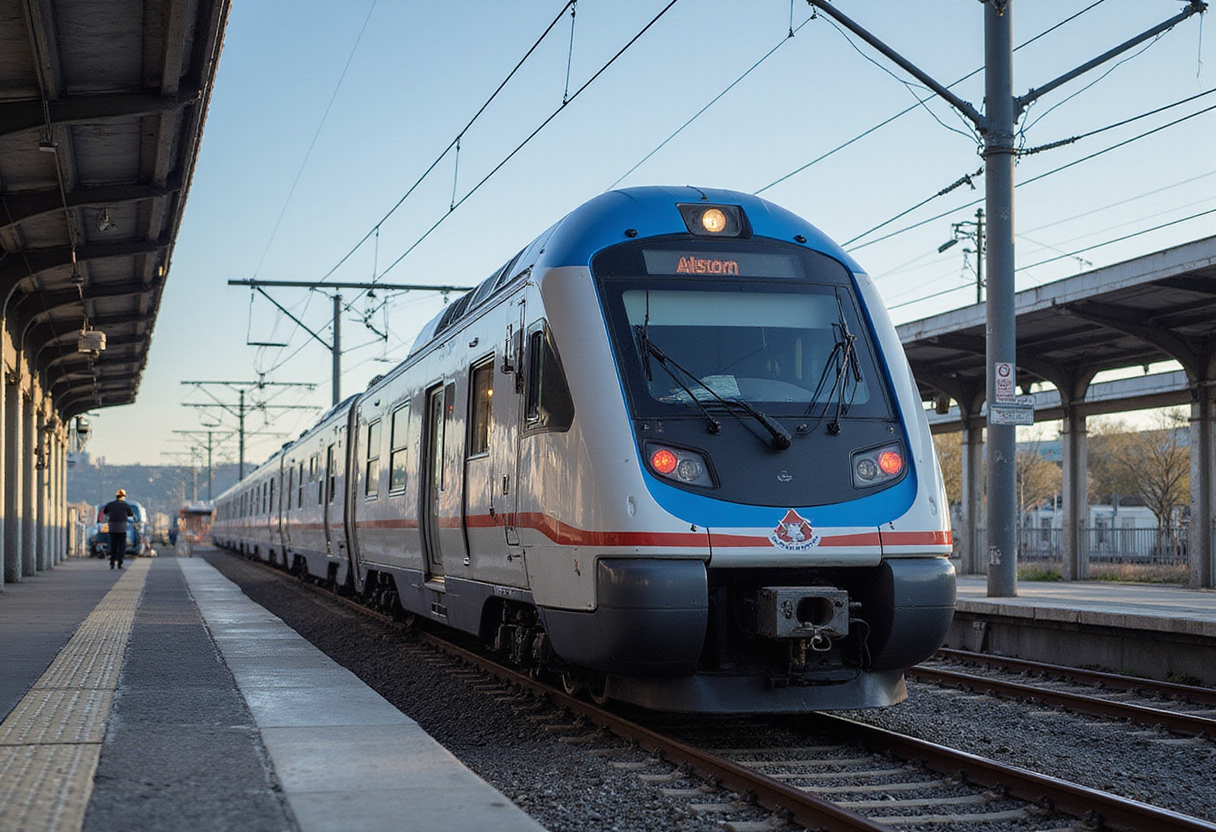
Alstom has begun building a rolling stock assembly plant in Portugal, adding Iberian production capacity as CP faces a large-scale fleet renewal and electrification programme.
· 3 min journey
Calling at
- Alstom has started construction of a rolling stock assembly plant in Portugal
- Plant capacity, headcount and commissioning date have not yet been disclosed by Alstom
- The site would be Portugal's first major rolling stock assembly facility from an international manufacturer
Alstom has begun construction of a rolling stock assembly plant in Portugal, adding a new manufacturing location to its European industrial footprint as the country scales up investment in rail infrastructure and fleet renewal.
The start of works on the Portuguese site marks the transition of the project from planning to execution. For Alstom, the plant extends the manufacturer's assembly capacity on the Iberian Peninsula, a market where operators have moved in recent years to replace ageing diesel multiple units, expand regional fleets and prepare for broader electrification programmes.
An assembly plant of this kind typically serves a dual function for a rolling stock manufacturer. It localises production close to the customer, which can shorten delivery logistics for national operators and position the supplier to meet domestic content expectations that increasingly shape public tenders across the European Union. It also gives the manufacturer a base from which to bid for follow-on orders beyond the contracts that justified the initial investment.
Alstom has not yet published full details of the construction timeline, the plant's planned output capacity or the number of jobs the site is expected to create. Those figures, once confirmed, will determine whether the facility functions as a final assembly point for trainsets largely built elsewhere in the group's European network, or as a deeper manufacturing site with its own welding, painting and testing capability. The distinction matters for Portugal's industrial policy goals, since final assembly generates a narrower skills and supplier base than full-scale production.
The investment arrives at a moment when the Portuguese rail sector is entering a sustained procurement cycle. Infraestruturas de Portugal, the national infrastructure manager, is delivering electrification and station works under the country's rail investment plan, while operator CP — Comboios de Portugal — faces a fleet profile in which a substantial share of regional and long-distance vehicles is approaching or has passed its intended service life. Fleet replacement at that scale normally requires either imported rolling stock or a domestic assembly capability, and Alstom's decision points toward the second route.
For the Portuguese government, a manufacturing plant operated by one of Europe's largest rolling stock builders supports broader economic objectives: skilled industrial employment, technology transfer, and the development of a domestic supplier ecosystem around welding, cabling, interior fit-out and component supply. The value of those benefits depends heavily on the plant's eventual size and its order book, both of which remain to be confirmed as construction progresses.
Alstom operates assembly and component plants across Europe, including sites in France, Spain, Italy, Germany, Belgium and Poland. Portugal has not previously hosted a major rolling stock assembly facility from a primary international manufacturer, so the site would represent a structural addition to the country's industrial base rather than an expansion of an existing cluster.
The commercial logic for the plant rests on Alstom winning and delivering contracts from Portuguese and potentially wider Iberian customers. Until the manufacturer discloses the orders assigned to the site, the plant's utilisation rate — the single most important variable for any new assembly facility — cannot be assessed against its capacity.
Construction milestones at the site, together with the first confirmed allocation of rolling stock orders to the plant, will indicate whether Alstom intends the facility as a dedicated response to the Portuguese market or as a flexible assembly node serving contracts across southern Europe. The next disclosure to watch is the commissioning date, which will set the clock on when the first trainsets assembled in Portugal can enter testing.
via Google News: Rolling stock (Source)
More from Olivia Hart
Show full bio
Market editor covering industry trends and analytics at Mainline Report.
149 articles
Connecting services · Related articles
- 11:13
Alstom secures rolling stock contracts on Mexican passenger projects
- 13:05
Siemens Mobility opens Lexington passenger rolling stock factory
- 13:05
Alstom wins €800m rolling stock order in AMECA region
- 13:45
Knorr-Bremse Buys Alstom's North American Signalling Unit
- 09:15
Alstom completes S$1·16bn Singapore metro fleet renewal